

Best Boat Insurance for Florida Boat Owners
A good day on the water can turn expensive fast when a lower unit meets an unmarked obstruction, a storm
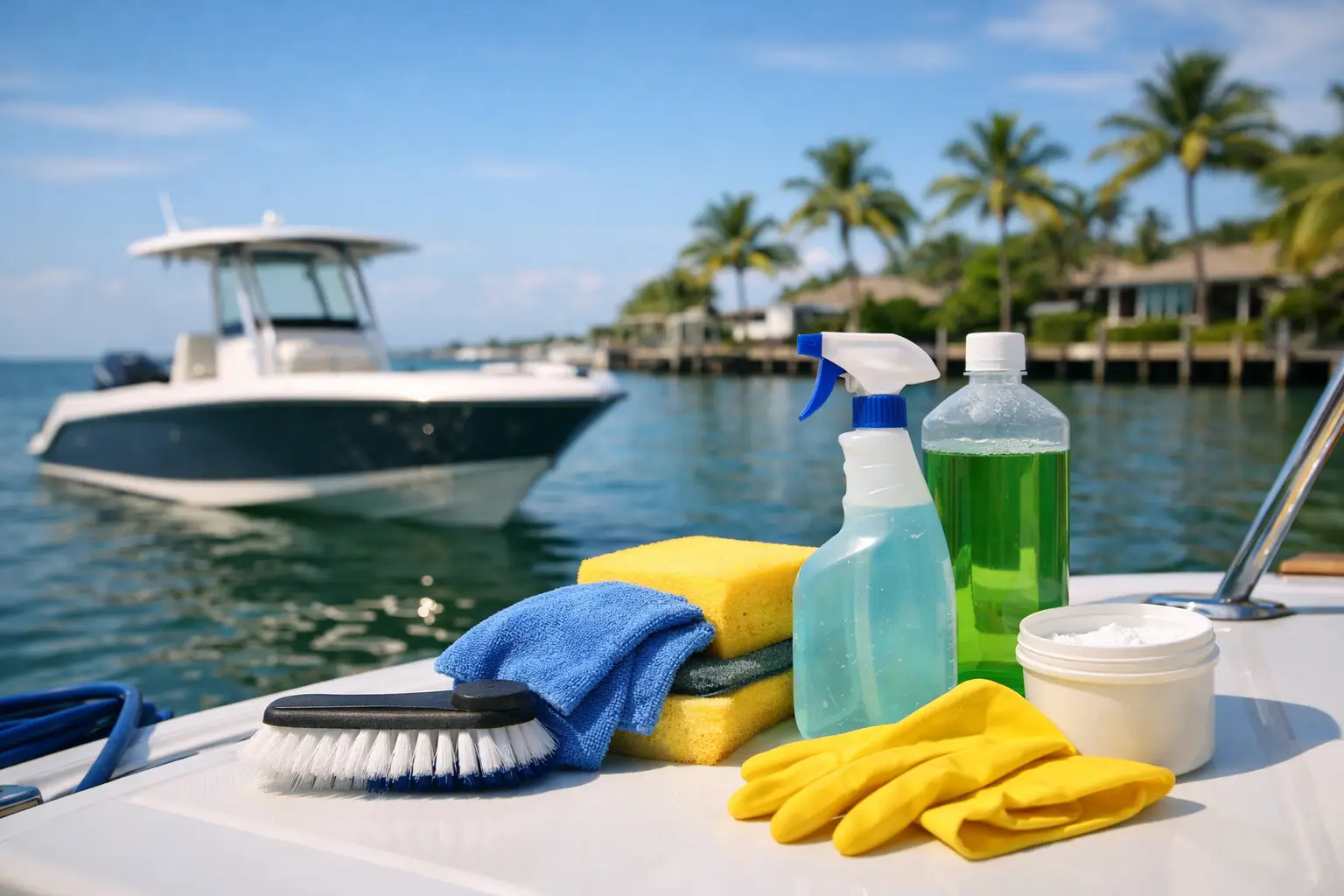
Salt never takes a day off in Florida. It settles on railings, dries in nonskid texture, creeps into canvas stitching, and leaves a dull film across gelcoat before the boat is even back on the trailer. The best boat cleaning products are not necessarily the strongest formulas on the shelf. They are the products matched to the surface, the mess, and how often you realistically clean your boat.
A good cleaning routine protects more than appearances. It helps preserve gelcoat, vinyl, brightwork, clear panels, and hardware that cost real money to repair or replace. It also makes a pre-trip walkaround more useful, because you can spot a loose fitting, cracked hose, or damaged seam without grime hiding the evidence.
There is no single bottle that should be used on every part of a boat. A harsh hull cleaner may remove a waterline stain quickly, but it can be a poor choice for polished metal, painted surfaces, vinyl, or regular washdowns. Likewise, a mild boat soap is right for frequent cleaning but will not erase heavy oxidation or an old rust streak by itself.
For most recreational boaters and anglers, the practical approach is a small, purpose-built cleaning kit. Keep the products you use often onboard or in the truck, and save stronger specialty treatments for periodic maintenance. That keeps the job manageable after a hot day offshore, when nobody wants to turn a simple rinse into a three-hour project.
A pH-balanced marine wash is the foundation of any kit. It lifts salt, fish slime, sunscreen, light dirt, and dock dust without stripping wax or leaving a residue that attracts more grime. Look for a concentrated formula that rinses clean and is labeled safe for fiberglass, painted finishes, vinyl, and metal.
Avoid the temptation to use dish detergent as your regular wash soap. It can cut grease, but frequent use may remove protective waxes and leave surfaces less protected from UV exposure. A dedicated marine soap costs a little more upfront, yet dilution means one bottle usually goes a long way.
Use plenty of water, a soft wash mitt, and separate brushes for different areas. A brush that has been scrubbing sandy nonskid should not be used on glossy gelcoat. That small bit of discipline prevents the fine scratches that show up in direct Florida sun.
A salt-removing wash or rinse additive earns its place on boats kept near the coast. It is especially useful around outboards, lower units, trailer hardware, T-tops, rod holders, rails, and fittings where salt crystals collect in corners. These products are designed to break down salt deposits rather than simply wet them again.
For exterior engine surfaces, rinse first, apply according to the label, and avoid forcing water into electrical connections, intakes, or places the engine manufacturer says to keep dry. A salt remover is a helpful follow-up to fresh water, not a substitute for a thorough rinse.
The trade-off is simple: salt-removal products add a step and an expense. On a boat used occasionally in freshwater, you may not need one often. For a saltwater boat that sees weekly use, especially one stored outdoors, it can help protect the small hardware details that are easy to overlook until corrosion has started.
Choosing cleaners by surface is where boat owners avoid the most expensive mistakes. Read the label, test a hidden spot when trying a new product, and never assume that “marine safe” means safe for every finish.
Use marine soap for normal cleaning. When the hull has a chalky look, dull color, or faded shine, move to a dedicated oxidation remover, polish, or compound based on the severity. Mild oxidation may respond well to a cleaner wax or polish. Heavy oxidation usually needs compound first, followed by polish and a durable protectant.
Do not reach for heavy compound just because a hull looks dirty. Compound removes a small amount of oxidized material, which is useful when needed but should not be your weekly fix. Start with the least aggressive product that can do the job.
Nonskid deserves its own approach. A stiff but nonabrasive deck brush and a nonskid cleaner can pull dirt from textured surfaces without turning the deck slick. Bleach is often used as a shortcut, but repeated use can be hard on fabrics, nearby metal, and the environment. If you need a mildew treatment, choose one intended for marine surfaces and control where the runoff goes.
Vinyl needs a gentle cleaner that removes sunscreen, food, fish residue, and body oils without drying the material. Follow it with a UV protectant made for marine vinyl. This is one of the easiest ways to slow fading, cracking, and the sticky feel that can develop on neglected cushions.
For mildew spots, use a vinyl-safe mildew cleaner rather than a harsh all-purpose degreaser. Apply sparingly, allow the recommended dwell time, then wipe and rinse. Aggressive scrubbing can damage the protective top layer of vinyl, making future staining more likely.
Canvas and clear vinyl panels are even less forgiving. Use cleaners specifically marked for the material, soft microfiber towels, and plenty of gentle rinsing. Paper towels and household glass cleaners can scratch clear panels or weaken them over time. Keep clear canvas out of direct sun while cleaning whenever possible, since hot panels dry fast and can streak.
Stainless steel, aluminum, and chrome look their best when cleaned often with a mild metal cleaner and protected with a corrosion inhibitor or polish. The key is frequency. Light salt film wipes away easily; hardened deposits and tea-colored rust streaks take more work and sometimes require an acid-based specialty product.
Use acid cleaners carefully. They can be effective on rust stains and waterline discoloration, but they may etch or discolor nearby materials. Wear gloves and eye protection, work in a ventilated area, and keep the product off trailers, painted surfaces, and decorative finishes unless the label specifically approves it.
For windshields and hatches, use a marine-safe glass cleaner on glass and a plastic-safe cleaner on acrylic or polycarbonate. Those materials are not interchangeable. A cleaner that leaves glass spotless may haze or crack a clear plastic panel over time.
Even the right cleaner disappoints when applied with the wrong tool. A well-stocked wash bucket should include soft microfiber towels, a wash mitt, a soft deck brush, a medium-stiff nonskid brush, a detail brush for hardware, and separate towels for polishing metal or applying protectant.
Color-coding towels is a simple habit that pays off. Use one color for hull and gelcoat, another for vinyl, and another for greasy jobs around the bilge, engine, or trailer. Sand, metal particles, and oily residue have no business migrating onto cushions or glossy surfaces.
A quality spray nozzle also matters. Start at the top of the boat and work down so dirty water does not run across a section you just cleaned. Keep the surface wet in hot weather, especially when using specialty cleaners. Products allowed to dry on gelcoat, glass, or metal can leave stubborn spots that create more work than the original mess.
The most useful cleaning system is one that fits your boating schedule. After every saltwater outing, rinse the boat thoroughly, wash high-touch areas and fish residue, dry clear panels, and wipe salt from metal hardware. This is the short routine that prevents a weekend of cleanup later.
Every few weeks, give the boat a fuller wash and inspect vinyl seams, drains, hatches, rod holders, and rub rails. Apply vinyl protectant as needed and touch up metal protectant where water collects. A few times a year, assess the hull for oxidation, stains, and lost water beading so you can polish or protect before sun damage gets ahead of you.
If you are stocking up for the season, start with marine soap, salt remover, vinyl cleaner and protectant, a nonskid cleaner, a metal protectant, and a purpose-made stain remover for the waterline or rust streaks you actually see. Boatsmans is built around that practical mindset: dependable gear, fair value, and no need to buy a cabinet full of products that solve problems you do not have.
Keep the kit simple, use each product where it belongs, and rinse the boat before salt has time to settle in. Your next launch will feel less like catching up on maintenance and more like getting back to why you bought the boat in the first place.
Safe boating,
William B.
A good day on the water can turn expensive fast when a lower unit meets an unmarked obstruction, a storm
A calm morning at the ramp can make any boat look like the right boat. The real difference shows up