Is Marine Supply Pricing Transparent? A Buyer’s Guide
Marine supply pricing is transparent only when you check the full cost. Our Florida veteran’s checklist shows how to compare the full cost before you buy.


Last Updated: October 22, 2026
Quick Summary
You can buy marine supplies online cheap by comparing the same OEM part number across several sellers and judging each on total landed cost, not sticker price. The deepest savings sit in maintenance consumables, hardware, and older-model replacement parts, while electronics rarely see deep discounts.
Shopping for marine supplies online beats the big box store because you can compare prices across dozens of sellers in minutes, find parts for older boats that physical shelves stopped stocking years ago, and often pay less even after shipping.
Here’s what most buying guides get wrong: they treat the lowest sticker price as the win. It isn’t.
Online sellers with tighter operations can pass savings along to customers.
Three things separate cheap marine supplies from expensive ones: inventory model, order volume, and where the seller warehouses stock. A seller holding less real estate per part can price lower. High-volume sellers negotiate better terms with distributors and pass some of that along. Sellers shipping from regional warehouses cut transit costs, which shows up at checkout.
Trustworthy online marine supply stores share four traits: clear stock status, published return terms, real product support, and verifiable business details. Everything else is marketing. But a checklist alone won’t tell you which of two similar-looking sellers is actually cheaper for your order. The gap most buying guides leave open is a side-by-side comparison framework, so build one before you commit.
Instead of judging sellers one at a time, score the two or three you’re considering against the same criteria. A simple grid forces the comparison that storefront homepages avoid.
|
Comparison criterion |
What to record |
Why it matters |
|---|---|---|
|
Price range and specialty |
Lowest and highest price seen for your part; whether the seller specializes in OEM, aftermarket, or used |
A generalist may list the part but not stock it; a specialist usually has it and knows the fitment |
|
Shipping minimum and free-shipping threshold |
Flat rate, threshold amount, and estimated transit time |
A low item price with a high shipping minimum can lose to a slightly higher price with free shipping |
|
Return window and who pays return shipping |
Number of days, restocking fee percentage, and whether return labels are prepaid |
Fitment errors are common; the return terms decide who absorbs the cost |
|
Product strengths |
Categories where the seller is deepest (electronics, anchoring, engine parts, fishing) |
Buying from the specialist in that category usually means better stock and support |
|
Support channel |
Phone, chat, or email only; stated hours |
Fitment disputes resolve faster by phone |
|
Business verification |
Physical address, about page, authorized-dealer status |
A seller you can hold accountable is less likely to disappear mid-order |
Fill the grid with the same part number across every seller. Comparing different listings tells you nothing; comparing the same OEM number across sellers tells you who is genuinely cheapest for that exact part.
A seller wins the comparison when it has the part in stock, ships within your timeline, and its total landed cost, item plus shipping plus tax plus return risk, is lowest.
The Federal Trade Commission’s online shopping guidance is worth a read before your first order from any new seller. It covers your rights on shipping delays and misrepresented products.
Cheap boat parts online are safe to buy when you verify fitment before checkout and confirm the seller’s return policy covers fitment errors. The part that fits is the cheap part.
The single biggest mistake we see is ordering by product name instead of part number. “Fuel filter for a 150hp outboard” describes a dozen different parts. The part number describes one.
Compatibility verification is the process of matching a part to your specific engine or hull using manufacturer documentation rather than a seller’s general description. Do it in this order:
The U.S. Coast Guard’s boating safety resources are a useful reference for equipment requirements if you’re replacing safety gear alongside maintenance parts.
The deepest discounts on marine parts and accessories sit in three categories: maintenance consumables, hardware, and older-model replacement parts. These are high-volume, low-margin items where online sellers compete hardest on price.
Big-ticket electronics and major components rarely see deep discounts. Consumables do. That’s where a cheap online order actually saves money.
|
Category |
Savings Potential |
Why |
|---|---|---|
|
Maintenance consumables |
High |
High volume, easy to ship, heavy competition |
|
Rope, shackles, snaps and hooks |
High |
Standardized sizes, low return risk |
|
Older-model replacement parts |
High |
Physical stores stopped stocking them |
|
Low |
Protected pricing, installation support matters |
|
|
Seating and major components |
Moderate |
Bulky shipping offsets part savings |
Never skimp on boat maintenance supplies that keep water out and keep you safe: through-hull fittings, hose clamps, fuel lines, and bilge equipment. A cheap clamp that fails offshore costs far more than the few dollars you saved.

The line between smart savings and false economy runs right through this category. Buy consumables cheap. Buy anything holding back water or fuel at full quality.
Boatsman’s offers a selection of these essential parts.
The total cost of an online order is the item price plus shipping, tax, return shipping risk, and the cost of a wrong part. A lower sticker price with slow shipping and a restocking fee is often the more expensive choice. Most buying guides stop at that sentence. The useful version is a line-item worksheet you can run against two sellers before checkout.
For each seller, write down the same six numbers for the same part number:
Add the first five to get a landed cost for a correct order. Then add the return shipping and restocking fee to get the landed cost of a wrong order. The seller that wins on a correct order may lose badly on a wrong one, and fitment errors are common enough that the wrong-order number deserves real weight.
A common pattern: Seller A lists the part a few dollars lower but charges flat shipping and a restocking fee on returns. Seller B lists it slightly higher but ships free above a threshold and offers a prepaid return label within its window. On a correct order, Seller A may edge ahead by a small margin. On a wrong order, Seller B’s prepaid return can erase the difference and then some.
Compare the full landed number for a correct order and a wrong order, not the listing price. That is the only comparison that tells you which seller is genuinely cheapest for the part you actually need.
Used and open-box marine gear pays off on non-safety items with simple construction: anchors, dock lines, storage bins, and seating hardware.
An open-box anchor is an anchor. An open-box bilge pump with unknown service history is a gamble. Know which category you’re buying in.
Used gear is worth considering when the part is mechanical or structural with no wear-critical function.
Counterfeit marine parts are the hidden risk in cheap online orders. Spot them by checking seller authorization, part packaging, and price sanity. A part priced far below every other seller is a red flag, not a deal.
Genuine parts come through authorized distribution. Counterfeits often show up as:
The U.S. Customs and Border Protection guidance on counterfeit goods explains how counterfeit products enter the supply chain and what buyers can do about it.
They can be, if you know what to check. Price alone does not tell you quality. Look for ABYC-certified or manufacturer-listed components, read customer reviews for durability complaints, and confirm the seller states the part number and material. Budget-friendly is fine for consumables like cleaners, gloves, and fenders. For anything load-bearing, like shackles, anchor lines, or through-hull fittings, buy rated hardware from a seller that publishes the specification. Cutting cost on safety-critical parts is the one place cheap becomes expensive.
Start with the engine or hull serial number, not the year alone. Match the manufacturer part number against the listing, and confirm the seller shows OEM and aftermarket options separately. Check the return window before you buy, and message product support with your exact model, year, and engine setup.
A practical kit covers safety and repairs: life jackets, a throwable flotation device, fire extinguisher, first aid kit, VHF radio, spare fuses, hose clamps, duct tape, a basic tool set, extra line, and fenders. Add sun protection and water. For maintenance, keep spare impellers, fuel filters, and zinc anodes matched to your engine. Buying these as a bundle during seasonal sales keeps the total order cost down and means you are not hunting for a clamp mid-trip.
Compare the landed cost, not the listed price. Add shipping, tax, and any handling fee, then check whether the seller has a free shipping threshold you can hit by bundling items. Factor in the return policy: a cheaper part with a 14-day window and a restocking fee can cost more than a slightly higher-priced one with free returns. Track prices across a few weeks during seasonal sales, and buy maintenance supplies in bulk when discounts appear.
Buying marine supplies online cheap comes down to discipline: verify fitment, compare total cost, and buy safety-critical parts from sellers with real support. Boatsman’s was founded by a U.S. Coast Guard Disabled Veteran with 26 years of experience protecting coastlines, and we’ve built our catalog around affordable, expertly curated marine supplies with the product support to back them. Shop our selection and get the right part the first time.
Marine supply pricing is transparent only when you check the full cost. Our Florida veteran’s checklist shows how to compare the full cost before you buy.
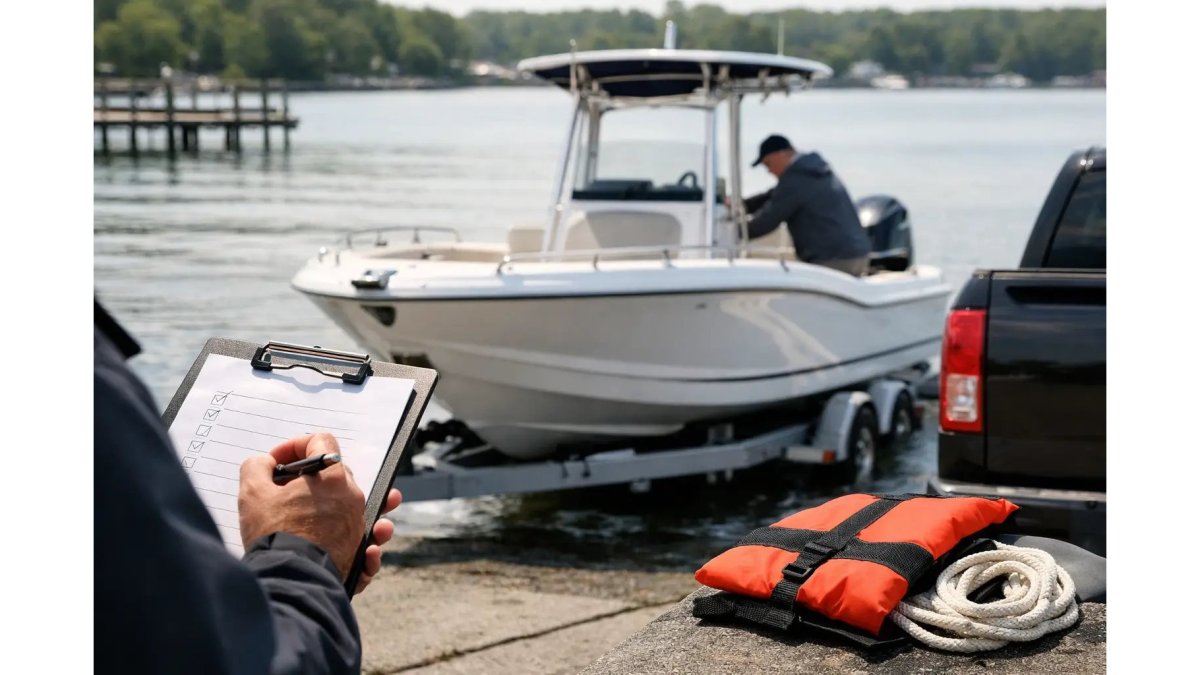
Affordable marine gear for center consoles starts with safety, lighting, and corrosion protection. Compare real prices and find gear that fits your layout.