
Is Marine Supply Pricing Transparent? A Buyer’s Guide
Marine supply pricing is transparent only when you check the full cost. Our Florida veteran’s checklist shows how to compare the full cost before you buy.


Last Updated: October 23, 2026
Quick Summary
A boat maintenance checklist is the difference between a vessel that runs reliably for decades and one that leaves you stranded. This essential boat maintenance checklist covers seasonal maintenance, engine care, pre-launch preparation, and winterization tasks you need to perform throughout the year to prevent costly repairs and keep your boat in top condition.
A comprehensive boat maintenance checklist is the difference between a vessel that runs reliably for decades and one that leaves you stranded. At Boatsman’s, we’ve seen countless boat owners face expensive repairs that could have been prevented with routine inspection and preventive maintenance.
This guide covers the essential boat maintenance checklist tasks you need to perform throughout the year. We’ll break down seasonal maintenance, engine care, pre-launch preparation, winterization, and the tools you’ll need to keep your boat in top condition.
The real value of a maintenance checklist isn’t just preventing breakdowns. It’s knowing exactly what’s been serviced, when it was done, and what needs attention next. That’s why we recommend keeping detailed maintenance records from day one.
Seasonal maintenance is where most boat owners go wrong. They either over-maintain during off-season or neglect critical tasks when the boat sits idle. The truth is simpler: match your maintenance intensity to what your boat is actually doing.
Spring commissioning is your chance to catch problems before they become emergencies on the water. Start by inspecting the hull for any damage that occurred during winter storage.
Battery condition is critical at spring launch. If your battery sat unused all winter, test its charge capacity. Clean any corrosion from battery terminals and connectors.
Inspect your fuel system carefully. Fuel can develop corrosion and water contamination over months of storage. If your boat has a fuel filter, this is the time to replace it.
Check your navigation lights, personal flotation devices, and sound-producing devices to ensure they meet current safety equipment standards. These items deteriorate over time and may need replacement.
During the boating season, your routine inspection schedule should focus on weekly pre-departure checks and monthly deeper maintenance. Before each outing, verify that your bilge pump operates correctly by running it briefly. Check oil levels in the engine. Ensure all safety equipment is accessible and in good condition.
Monthly, inspect the propeller for damage or marine growth. Clean the topsides and below-waterline surfaces if you notice algae or barnacle buildup. In saltwater environments, rinse the engine cooling system with fresh water after each use to prevent salt corrosion.
As boating season winds down, prepare your boat for storage. Drain water from systems that could freeze. Change your engine oil if you haven’t done so recently, fresh oil protects internal components during dormancy. Top off your fuel tank to prevent condensation inside the tank during storage.
Clean the entire boat thoroughly, inside and out. Remove any organic material that could decompose and damage surfaces or create odors. Inspect the hull one more time before putting the boat away.
Winter storage requires a different maintenance mindset. Your goal is preventing deterioration, not running the boat. Apply antifouling paint to the below-waterline surfaces if you haul the boat out of the water. This paint prevents marine organism growth and protects the hull from corrosion.
If your boat stays in the water, inspect the antifouling paint regularly and reapply as needed. Monitor the bilge pump to ensure it’s clearing water that accumulates during rain or from condensation.
Match your maintenance tasks to what your boat is actually doing throughout the year.
| Season | Primary Focus | Key Tasks |
|---|---|---|
| Spring | Pre-launch preparation | Inspect hull, check hoses and clamps, test battery, replace fuel filter |
| Summer | In-season care | Weekly bilge pump checks, monthly propeller inspection, rinse engine cooling system |
| Fall | Transition to storage | Drain water systems, change engine oil, top off fuel tank, clean boat thoroughly |
| Winter | Storage and protection | Apply antifouling paint, monitor bilge pump, prevent deterioration during dormancy |
Your engine is the most complex system on your boat, and it demands the most attention. Monthly maintenance takes just a few minutes but catches problems early.

Monthly Engine Tasks:
Annual Engine Maintenance:
Engine oil and filter changes are fundamental. Change your engine oil every season or at the interval specified in your engine manual.
The water pump impeller is a critical cooling component. Many experienced boat owners replace the impeller annually, particularly if the boat runs in saltwater.
Inspect all hoses for cracks, brittleness, or soft spots. Marine hoses degrade from UV exposure and heat cycling. Replace any hose that shows wear.
Check your fuel system annually. Fuel filter replacement prevents fuel corrosion issues from reaching the engine.
Before you leave the dock, a thorough pre-departure checklist prevents emergencies on the water. This is where your boat maintenance checklist becomes a safety tool, not just a maintenance schedule.
Hull and Topsides:
Engine Systems:
Safety Equipment:
Documentation:
Winterization is the most critical maintenance task of the year if your boat will sit unused during cold months.
Engine Winterization:
Drain all water from the engine cooling system. Flush the system with fresh water first to remove salt and mineral deposits.
If your engine has a raw-water cooling system (common in saltwater boats), consider adding antifreeze to the system to prevent freeze damage.
Fuel System Winterization:
Top off your fuel tank to minimize air space, which reduces condensation and oxidation. Add fuel stabilizer according to the product instructions.
Water Systems:
Drain all fresh water from tanks and lines. Open all water faucets to release trapped water.
Battery Care:
Remove the battery from the boat if possible. Store it in a cool, dry location and keep it charged.
Your boat’s hull is its primary defense against water intrusion and corrosion. Regular inspection and cleaning extend its life significantly.
Hull Cleaning and Inspection:
Inspect the hull regularly for cracks, soft spots, or areas where the gel coat has failed.
Clean the topsides (the visible hull above the waterline) with appropriate marine soap. For below-waterline surfaces, use a hull bottom cleaner to remove algae and buildup.
Below-Waterline Protection:
The below-waterline surface is where corrosion and marine organism growth are most aggressive.
If your boat is hauled out of the water for storage, this is the ideal time to inspect and repaint the below-waterline surfaces.
Hoses and Clamps:
Marine hoses deteriorate faster than you might expect. UV exposure, temperature cycling, and salt corrosion all shorten hose life.
Use stainless steel or anti-seize coated hose clamps to prevent corrosion. Tighten clamps firmly but don’t over-tighten, which can damage hose material.
Safety equipment is non-negotiable. You can assemble a Boatsmans Essential Safety Kit to ensure you have the core items required.
Required Safety Equipment:
Personal flotation devices must be aboard in sufficient quantity for every person on the boat. Life jackets degrade over time, check condition annually and replace as needed.
Fire extinguishers are essential.
Navigation lights must function for night operation. Sound-producing devices (air horn or whistle) are required for signaling. Distress signals (flares or mirrors) should be aboard and within their expiration date.
Documentation:
Carry your boat’s registration and documentation at all times. Insurance papers should be accessible.
A maintenance log transforms your boat maintenance checklist from a general guide into a personalized record of your vessel’s history.
Detailed maintenance records serve multiple purposes. They help you identify patterns (if your fuel filter clogs every season, something else may be wrong). They document that you’ve maintained the boat properly if you ever sell it.
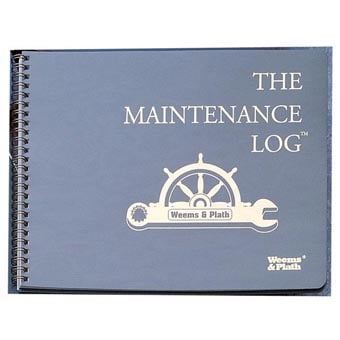
Record the date, task performed, time spent, and any parts replaced. The Maintenance Log provides a dedicated waterproof format designed for this purpose.
A comprehensive boat maintenance checklist isn’t busywork, it’s the foundation of reliable, safe boating.
At Boatsman’s, we stock the supplies and tools you need to maintain your boat affordably.
Annual boat maintenance includes oil and filter changes, fuel system inspection, battery testing and replacement if needed, impeller replacement, hose and clamp inspection, hull cleaning and antifouling paint assessment, propeller inspection, safety equipment checks, and a full engine service. Saltwater boats require additional corrosion inspection and flushing of cooling systems. Document all work in your maintenance log to track service intervals and identify patterns.
Engine oil and filters should be changed every 50-100 engine hours or annually, whichever comes first. The water pump impeller requires replacement yearly, even if it appears functional. Fuel filters need inspection every season and replacement if contaminated. Spark plugs, belts, and hoses should be inspected annually and replaced as wear dictates. Keep detailed records of all service intervals to stay ahead of potential failures.
Before launch, inspect the hull for cracks or damage, test all through-hull fittings and seacocks, verify the bilge pump operates correctly, check battery charge and connections, inspect hoses and clamps for deterioration, test navigation lights and electrical systems, review safety equipment accessibility, confirm fuel system integrity, and inspect the propeller for damage. Run the engine briefly at the dock to verify cooling water flow and check for unusual sounds or leaks.
Winter preparation includes draining fuel tanks or adding fuel stabilizer, flushing fresh water through the cooling system, changing engine oil and filters, removing and storing the battery in a warm location, adding antifreeze to plumbing and engine block, closing all through-hull fittings, cleaning the hull and applying protective coating, securing loose items, and covering the boat to prevent water accumulation and UV damage. Document all winterization steps in your maintenance log for reference when recommissioning in spring.
Essential tools include adjustable wrenches, socket sets, screwdrivers (Phillips and flathead), pliers, a multimeter for electrical testing, hose clamps of various sizes, anti-seize compound for fasteners, lubricants for moving parts, and basic hand tools for engine access. Saltwater boaters should add corrosion-fighting products and stainless steel fasteners. Keep these tools organized and accessible, and store them in a dry location to prevent rust and deterioration.
Saltwater boats require more frequent corrosion inspections, more aggressive hull cleaning, and more frequent antifouling paint reapplication. Saltwater flushing of the cooling system is essential after every outing. Fasteners and hardware need anti-seize compound and should be stainless steel. Battery corrosion is more common in saltwater environments. Freshwater boats face less corrosion but still require routine engine maintenance, hull inspection, and seasonal care. Both require careful documentation of maintenance intervals.
Hire a professional for engine overhauls, transmission service, electrical system repairs, through-hull fitting replacement, and structural hull repairs. Complex cooling system issues, fuel system contamination, and battery charging system problems also warrant professional expertise. If you lack the tools, experience, or physical ability to complete a task safely, professional service is the right choice. Document professional service in your maintenance log to maintain your vessel’s service history and resale value.
Marine supply pricing is transparent only when you check the full cost. Our Florida veteran’s checklist shows how to compare the full cost before you buy.
Affordable marine gear for center consoles starts with safety, lighting, and corrosion protection. Compare real prices and find gear that fits your layout.