
Best Boat Insurance for Florida Boat Owners
A good day on the water can turn expensive fast when a lower unit meets an unmarked obstruction, a storm
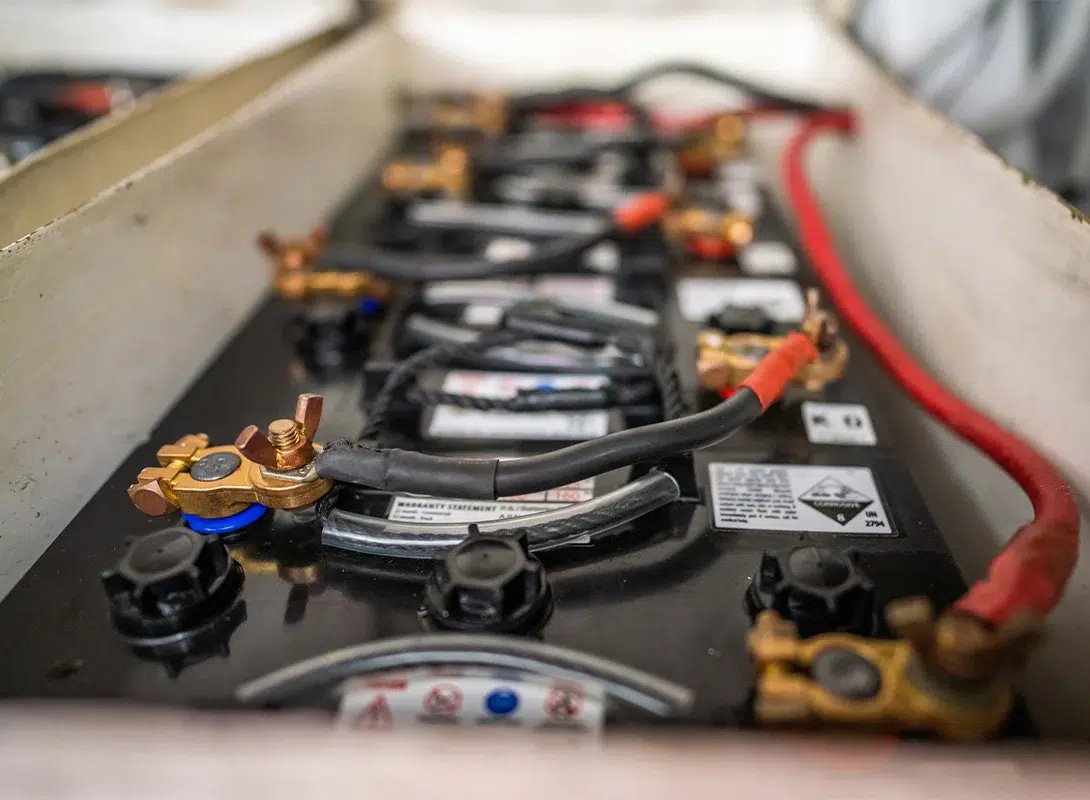
Trust me. Being on the water with a dead battery absolutely sucks. Even with a jump pack on board, you have so many other issues it could be. Boat batteries do far more than start an engine: they support electronics, livewells, pumps, trolling motors, lighting, and the safety equipment you count on when weather changes. Choosing the right setup is less about buying the largest battery that fits the tray and more about matching power capacity to how you actually use your boat
For a center console that runs offshore, battery reliability is a safety issue. For an inshore angler, it can determine whether the trolling motor holds through a full tide cycle. Start with your boat’s electrical demands, then choose a battery type, size, and charging routine that can meet them without draining your budget on capacity you will never use.
Most marine battery decisions begin with three jobs: starting an engine, powering accessories over time, or doing both. A starting battery is designed to deliver a strong burst of current to crank an outboard or an inboard. It recovers quickly after the engine starts, but repeated deep discharges shorten its life.
A deep-cycle battery is made for steady, repeated draws. It is the better choice for a trolling motor, house bank, fishfinder, stereo, baitwell pump, cabin lights, and other equipment that may run when the engine is off. Deep-cycle designs tolerate discharge better, although they may not provide the same cranking output as a dedicated starting battery.
A dual-purpose battery sits between the two. It can start an engine and handle moderate accessory loads, making it a sensible solution for smaller boats with one battery location and modest electrical needs. The trade-off is simple: it rarely performs either role as well as a properly sized dedicated starting or deep-cycle battery.
On boats with enough space, a two-bank arrangement is usually the more dependable path. One starting battery is reserved for the engine, while a separate house or deep-cycle bank handles accessories. A battery switch, automatic charging relay, or voltage-sensitive relay can keep both banks charged while helping protect the starting reserve.
The chemistry matters because it affects cost, weight, charging requirements, and how much usable power you can expect. There is no single best choice for every boat.
Traditional flooded batteries are familiar, widely available, and often the most affordable option. They can be a good fit for a basic runabout or a boat that is used regularly and has straightforward electrical needs. They do require attention: terminals should stay clean, the case must remain upright, and some models need periodic water checks.
Their main drawbacks are weight, vibration sensitivity, and a lower tolerance for deep discharge than premium alternatives. In Florida heat, neglect can shorten their life quickly. If a flooded battery is the right value for your boat, secure it properly and keep a close eye on charging voltage and fluid levels where applicable.
Absorbed glass mat, or AGM, batteries are sealed lead-acid batteries designed for better vibration resistance and lower maintenance. They are a popular choice for saltwater boats because they do not spill, generally recharge efficiently, and handle accessory loads well. They also tend to have lower self-discharge during storage than conventional flooded batteries.
AGM batteries cost more upfront, and they still need a charger with the correct AGM profile. But for boaters who want dependable performance without checking electrolyte levels, the extra investment often makes sense. They are especially practical in consoles, compartments, and other locations where access is limited.
Lithium iron phosphate, commonly called LiFePO4, has changed the conversation for serious trolling-motor and house-bank users. These batteries are far lighter than lead-acid, deliver more usable capacity, and maintain voltage well as they discharge. For anglers carrying several batteries forward in a bass boat or bay boat, the weight savings can be meaningful.
The trade-off is price and system compatibility. Lithium batteries need an appropriate charging profile and a quality battery management system. Some outboard charging systems, alternators, and older onboard chargers may require upgrades or manufacturer-approved components. Lithium can be an excellent long-term investment, but it is not a simple drop-in replacement without first checking the full electrical system.
Battery group size tells you the physical case dimensions and terminal layout, not necessarily the amount of power available. Common marine sizes include Group 24, 27, 31, and 4D. A larger group size may offer more capacity, but compare the actual ratings before assuming it is stronger.
For engine starting, look at Marine Cranking Amps, or MCA. This rating measures cranking power at 32 degrees Fahrenheit and is especially relevant for marine engines. Follow the engine manufacturer’s minimum recommendation, then allow a reasonable margin for age, temperature, and real-world loads.
For deep-cycle use, amp-hours and reserve capacity matter more. Amp-hours estimate how much current a battery can provide over time. Reserve capacity indicates how long it can deliver a specified load before voltage falls too low. Neither number is perfect on its own, but both help compare batteries intended for sustained use.
Think through a typical day before choosing capacity. A large multifunction display, radar, livewell pumps, stereo, VHF, and underwater lights can pull far more energy than many owners expect. Add an electric trolling motor, and the battery bank becomes a central part of the boat’s operating plan. If you often return to the dock with low voltage alarms, more capacity or better charging discipline is usually needed.
A quality battery is only as reliable as the wiring around it. Use marine-grade, tinned copper cable sized for the current and cable length. Automotive wire may look fine at first, but salt air and moisture quickly expose weak materials. Keep all connections tight, clean, supported, and protected from standing water.
Every battery should be held in a proper tray or box with a secure strap. Boats pound, vibrate, and heel. A loose battery can damage wiring, crack its case, or become a serious hazard in rough water. Cover positive terminals with insulating boots to reduce the risk of accidental shorts caused by tools or shifting gear.
If you run multiple batteries, label the banks and switches clearly. Your crew should know which position starts the engine and which bank supplies house loads. A common mistake is leaving a battery switch on both all day, then finding both batteries too weak to crank the engine at sunset. An automatic charging relay or a dedicated battery monitor can make this arrangement easier to manage, but neither replaces knowing your system.
The engine alternator is designed to replenish a battery after starting, but it may not fully recharge a deeply discharged house or trolling bank during a short run. An onboard smart charger is one of the best upgrades for boats that spend time on a trailer, at a lift, or on dock power.
Match the charger profile to the battery chemistry. Flooded, AGM, and lithium batteries have different charging needs. Using the wrong setting can undercharge the battery, shorten its life, or trigger protection issues in a lithium battery. When replacing only the batteries, verify that your existing charger is still suitable.
For storage, fully charge the batteries first. Disconnect loads that create slow drains, such as electronics memory circuits, stereos, or accessories wired directly to the battery. Check voltage periodically, especially during the hot, humid months when boats may sit unused between trips. A maintained battery is less likely to surprise you when the next weather window opens.
Slow cranking, dim electronics at idle, repeated low-voltage alarms, or a battery that will not hold a charge are all signs to investigate. Do not assume the battery is automatically at fault. Corroded terminals, a poor ground, loose connections, a failed charger bank, or an accessory draw can create the same symptoms.
A basic multimeter and a load test provide more useful information than guessing. Check resting voltage after the battery has been off the charger and unused for several hours, then check voltage while cranking and while the engine is charging. If you are unsure what the readings mean, a marine technician can test the system before you spend money replacing components that are still sound.
Battery age also matters. Even a well-maintained lead-acid battery eventually loses capacity. Replacing one weak battery in an old, mixed bank can create an imbalance, so paired batteries should generally be the same chemistry, capacity, and age.
Reliable power is not glamorous gear, but it makes every other piece of gear work when it should. Choose a setup that leaves a real starting reserve, charge it correctly, and inspect it before small problems become ramp-day problems. That is the kind of preparation that keeps the focus where it belongs: a good run, a full tide, and a safe ride back in.
Safe Boating,
William B.
A good day on the water can turn expensive fast when a lower unit meets an unmarked obstruction, a storm
A calm morning at the ramp can make any boat look like the right boat. The real difference shows up