
Is Marine Supply Pricing Transparent? A Buyer’s Guide
Marine supply pricing is transparent only when you check the full cost. Our Florida veteran’s checklist shows how to compare the full cost before you buy.


Last Updated: November 19, 2026
Quick Summary
Effective boat engine maintenance means servicing on a written schedule tied to engine hours or calendar dates instead of waiting for breakdowns. Follow your owner’s manual intervals, flush after every saltwater trip, and log each task so nothing gets skipped.
Learning how to maintain a boat engine comes down to one habit: service it on a schedule instead of waiting for something to break.
A maintenance schedule is a written plan that ties each service task to engine hours or a calendar date. It removes the guesswork.
Why does timing matter more than effort? Because salt water, heat, and humidity work on your motor every single day, running or not.
Below, we’ll walk through eight tasks, the tools you need, and the warning signs that mean stop and call a mechanic. Keep reading, because the first task is the one most owners skip.
U.S. Coast Guard boating safety resources
Two clocks run at once: engine hours and the calendar. Whichever comes first wins.
| Interval | Tasks |
|---|---|
| Every trip | Visual inspection, freshwater flush after salt water, check oil level |
| Every 50-100 hours or annually | Oil and filter change, gearcase oil check, fuel filter inspection |
| Every 100 hours or annually | Spark plugs, impeller inspection, grease fittings |
| Seasonally | Battery terminals, corrosion protection, full exterior clean |
Manufacturer recommendations in your owner’s manual always override this table. Every outboard brand sets its own intervals, so read the book that came with your motor.
The right kit saves a second trip to the ramp. A basic preventive maintenance box for an outboard motor should hold:
Before any service, do three safety steps. Turn the engine off. Pull the kill switch lanyard. Let the motor cool completely. Never work near a spinning propeller or a hot exhaust housing.
Watch out: skipping the kill switch is the most common cause of accidental starts during service. Pull the lanyard every time.
New owners ask the same question first: where do I even start? Start with a walk-around, not a wrench. This is the safest first lesson in how to maintain boat engine basics, and it also tells you which engine configuration you are actually working on.
Before you buy a single part, confirm three things: the engine make and model, the serial number, and whether it is a two-stroke or four-stroke. Outboards, inboards, and sterndrives each route maintenance differently. An outboard has a self-contained powerhead and lower unit you can tilt and flush at the dock. An inboard sits inside the hull, so oil changes, impeller access, and winterization happen in a tighter space and often need a remote oil drain kit.
Check the serial number against the parts listing before ordering, and if fit is unclear, contact the seller before you buy.
With the cowling off and the engine cold, do a visual inspection:
Write down anything that looks off and take photos. A first-timer’s best tool is a baseline record of what normal looks like, so next month you can tell what changed.
Then check the oil level on a four-stroke. Pull the dipstick, wipe it, reinsert it, and read the level. Low oil is a red flag, not a topping-off chore. On a two-stroke, check the oil reservoir level and confirm the oil type matches the manual.
Some tasks are safe for a new owner with basic hand tools: oil and filter changes, gearcase oil checks, spark plug inspection, freshwater flushing, battery terminal cleaning, and greasing fittings.
A good rule: if the task needs a special gauge or a torque value you cannot source, hand it off.
Watch out: never run the motor on flush muffs without water flow, even for a few seconds, and always pull the kill switch lanyard before putting a hand near the propeller or flywheel.
Oil, filters, and spark plugs form the core of boat engine maintenance because they wear on a predictable cycle. Change engine oil and the filter together, following the manual’s interval. Warm oil drains better, so run the motor briefly first, then shut it off and let it cool enough to touch safely.
Fuel system care matters just as much in Florida. Warm, humid air and temperature swings cause condensation inside fuel tanks. That moisture ends up in the fuel system.
Inspect the fuel filter and water separator at every oil change. Drain a little fuel into a clear container and look for water or grit. Replace the filter on schedule rather than waiting for rough running.
Owners replacing a separator can use a Sierra fuel water separator filter, which separates water from gasoline and filters dirt and rust before they reach the engine.
Spark plugs come next. Pull each plug and read the tip. A dry, tan-gray color is normal. Black soot, oil fouling, or heavy corrosion means something upstream needs attention.
Rinsing after every saltwater trip is the single best defense against corrosion. Salt left on the powerhead and lower unit eats metal, wiring, and fittings. This one habit separates motors that last from motors that fail early.

Follow this order:
Never run the motor without water flow, even for a few seconds. A dry water pump destroys its impeller fast.
For boats kept in a slip, a permanent flush kit makes this routine far easier. A GROCO engine flush kit and adaptor lets you flush the cooling system dockside at idle speed, which turns a chore into a two-minute habit.
Two-stroke motors skip the crankcase oil but demand more attention elsewhere. 2 stroke outboard maintenance centers on oil mixing, spark plugs, and carbon buildup.
Key differences from a four-stroke engine:
Use the oil ratio and type the manufacturer specifies. Guessing at the mix risks a seized powerhead.
Four-stroke owners, by contrast, change crankcase oil and filters, and they should never run the motor tilted too far up, because oil can pool in the wrong places.
A worn impeller is the quiet killer of outboard motors. The boat impeller is a rubber vaned wheel inside the water pump that pushes cooling water through the engine. When the vanes stiffen or break, water flow drops and the motor overheats.
Signs of a failing impeller include:
Replace the impeller on the manual’s schedule, and always after a season of heavy sand or shallow-water use. A Johnson Pump F7B impeller is one option for replacing a worn impeller, and matching the impeller to your pump model is essential.
While the lower unit is apart, inspect the pump housing for scoring. If the pump itself needs replacement, an Albin Group engine cooling pump for Kohler is available for that job. For flange-mount setups, a Jabsco flange mount engine cooling pump is another replacement option.
Some symptoms mean stop boating and diagnose now. Treat these as warning signs:
Milky gearcase oil is the one owners most often ignore. Water inside the gearcase ruins bearings quickly, and a reseal is far cheaper than a rebuild.
Safety comes before any wrench work. Disconnect the battery before touching electrical parts. Support the motor or trailer securely.
Know when to call a professional. Compression testing, lower unit reseals, and fuel injection service are jobs where the right tools and training matter.
For official safety guidance, check the Florida Fish and Wildlife Conservation Commission boating pages and the NOAA marine weather and safety information before heading out.
Eight tasks, one logbook, and a rinse after every trip. That routine keeps a motor running and keeps repair bills small. Boatsman’s is a veteran-owned, Florida-focused marine supply store built by boaters, for boaters. The team stocks the impellers, flush kits, fuel filters, and corrosion supplies these jobs call for, with free shipping on qualifying orders of $199 or more. Shop the maintenance essentials and keep your engine on schedule.
Follow the manufacturer’s schedule in your owner’s manual first, then build around it. A practical baseline is an oil and filter change plus a lower-unit gearcase oil check at least once a season or every 100 hours, whichever comes first. Florida boats that run year-round in saltwater often need freshwater flushing after every trip and more frequent impeller inspection. Keep a written log of engine hours so intervals are based on use, not memory.
Flush the cooling system with fresh water after every saltwater run, using the flush port or muffs with the engine at idle. Rinse the exterior cowling and lower unit with a garden hose and mild detergent, then dry thoroughly. Inspect the sacrificial anodes and grease fittings, and check battery terminals for corrosion. This routine is the core of boat engine maintenance in Florida, where warm, humid air and salt spray accelerate corrosion faster than in cooler climates.
Most modern outboards have a tell-tale indicator that shows cooling water circulating, but not every model routes it the same way, and some designs use different indicators. Check your owner’s manual for how your engine signals water flow. If the tell-tale weakens or stops, shut down and investigate the water pump and impeller before running again. A worn boat impeller can cause overheating and serious engine damage.
Two-stroke engines typically mix oil into the fuel or use an oil injection system, so there is no crankcase oil change, but you must monitor oil level and use the correct oil type. Spark plugs usually foul faster and need more frequent inspection. Decarbonizing and checking fuel lines matter more because two-strokes are sensitive to stale fuel. Always confirm the specifics in your manufacturer’s manual, since procedures vary by model.
Marine supply pricing is transparent only when you check the full cost. Our Florida veteran’s checklist shows how to compare the full cost before you buy.
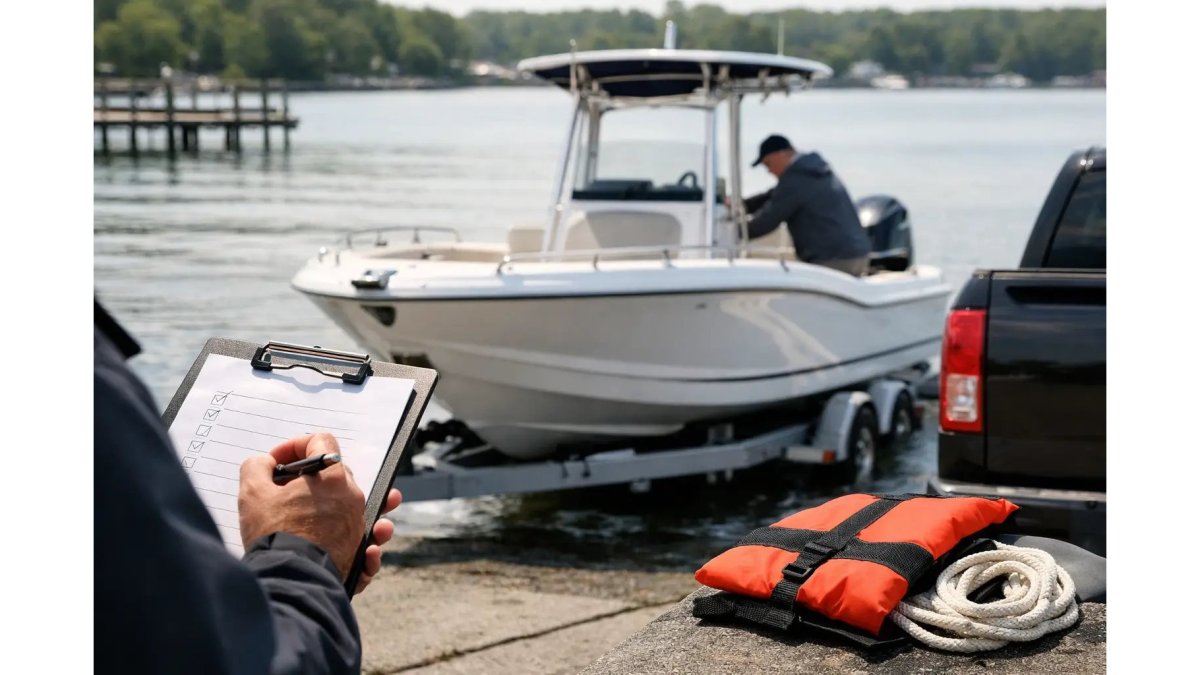
Affordable marine gear for center consoles starts with safety, lighting, and corrosion protection. Compare real prices and find gear that fits your layout.