
Is Marine Supply Pricing Transparent? A Buyer’s Guide
Marine supply pricing is transparent only when you check the full cost. Our Florida veteran’s checklist shows how to compare the full cost before you buy.


Last Updated: October 30, 2026
Quick Summary
Choosing the right marine engine parts starts with your engine’s make, model and serial number, found on the data plate. Match the part number against the manufacturer’s application list, then confirm mounting dimensions, fittings and a marine rating before you buy.
Choosing the right marine engine parts starts with knowing exactly which engine you have. The process of matching parts to your vessel is simpler than most people expect. Get the engine make, model and serial number right, and most of the guesswork disappears.
Many boaters order the wrong part because they skip the identification step. A water pump or starter that looks identical can differ in mounting, shaft length or electrical connection.
The engine make, model and serial number are the three details that drive every parts decision. Find them on the engine’s data plate, usually on the powerhead or transom bracket. Write them down before you shop.
Good records make ordering easier:
Keep a photo of the data plate on your phone. Parts suppliers ask for these details, and a clear image prevents typos.
Identifying a part takes a repeatable process. Follow these steps in order and you will reduce returns and mismatches.

Parts diagrams show how components fit together. Each part has a callout number that matches a line in the parts list. Find your engine’s diagram by make and model, then locate the assembly you need.
Pay attention to these details in a catalog:
An application match confirms that a part fits your exact engine. Many part numbers cover several engines, so do not stop at the first match. Check the listed horsepower, model years and engine family against your data plate.
Watch out: a part that fits one year of a model may not fit the next. Confirm the model year range before you buy.
Compatibility is not the same as a part number match. A part can carry the right number and still fail if its dimensions, connections, materials, or marine rating do not match your engine and its operating environment. Confirm all four before you buy.
Run every candidate part through these four checks in order. Stop at the first failure.
Marine engines operate in a wet, salty, high-load environment that automotive parts are not designed for. Key differences to verify:
Application tables list the engines a part fits. Read them carefully:
If the listing does not name your model year or serial range, contact the supplier before ordering. A quick question beats a return.
When the original number is discontinued or superseded, cross-reference carefully:
A superseded number is only valid if the new part fits your engine, not just the old part’s description.
Sierra 118-7968 Fuel Water Separator Filter →
Before you buy, run each candidate part through these four checks, in order, and stop at the first failure.
| Check | What to confirm | Why it matters |
|---|---|---|
| Part number and application | Listed for your make, model, model year and engine family | A number that fits one year may not fit the next |
| Mounting dimensions | Bolt-hole spacing, flange thickness, shaft diameter and length | Measure with calipers rather than eyeballing |
| Connections and fittings | Hose barb sizes, thread pitch, quick-connect styles, plug shape and pin count | A wrong fitting can leak or fail to seal |
| Materials and marine rating | Marine-rated and corrosion-resistant | Automotive parts are not sealed for marine duty |
OEM parts come from the engine manufacturer, while aftermarket parts come from other producers. Both can work well. The right choice depends on the part, your engine’s age and your budget.
Use these criteria to decide:
For a fuel water separator kit, the Sierra 118-7982-1 Fuel Water Separator Kit is a practical option for routine fuel-system service. Verify its application before installation.
Marine engines live in a harsher environment than automotive engines: constant moisture, salt air, vibration, and sustained high load. Those conditions accelerate wear on specific components and make some failures dangerous rather than merely inconvenient. Knowing which parts are safety-critical, and why, helps you prioritize OEM quality, inspection, and professional help.
Fuel system. Fuel leaks and vapor accumulation are the leading cause of marine fires. Inspect fuel lines, filters, fittings, and the fuel pump for cracks, softness, or weeping.
Electrical and charging. Marine electrical systems operate in a wet, corrosive environment. The Arco Marine voltage regulator for Yamaha outboard engines is one charging-system part to inspect and confirm as marine-rated.
Cooling system. A failed raw-water pump impeller can overheat an engine within minutes.
Exhaust system. Exhaust leaks can introduce carbon monoxide into the cabin. Inspect manifolds, risers, and elbows for rust-through and cracks, especially on raw-water-cooled engines.
Some jobs are not DIY-friendly. Consult a qualified marine mechanic for:
Professional installation also protects your warranty and gives you a documented service record, which matters at resale.
Record each inspection and part replacement with the engine hours and date. A simple log makes the next parts order faster and helps you spot recurring failures.
Use this checklist before you place an order:
Gather your engine details, check the part number and confirm the application before you order. The Sierra 118-7983-2 Fuel Water Separator Filter with Bonus Pack is useful for routine maintenance and spares. Browse the selection and shop with confidence.
Have your engine make, model, and serial number ready before you search. The serial number is usually stamped on a plate or cast into the engine block, and it often identifies the exact configuration better than the model name alone. Note the horsepower rating, the year of manufacture, and the part number from the old component if you can still read it. Compare these details against the parts catalog or application table, and when a listing does not clearly state the engine application, contact the supplier before you buy.
Start with the engine make, model, and serial number, then locate the matching engine diagram in the manufacturer’s parts catalog. Find the component’s position on the diagram, note its reference number, and confirm that number against the old part if it is accessible. Cross-check the application list for your specific engine, because the same model can be built with different fuel, cooling, or electrical components across production years. Verify the result before installation rather than relying on a visual match alone.
OEM parts are made by or for the engine manufacturer and are designed to match the original specifications exactly. Aftermarket parts can cost less and may be widely available, but quality and fit vary between manufacturers. For safety-critical components such as fuel system parts, cooling system components, and anything tied to engine performance, weigh the fit and warranty terms carefully. Choose based on verified compatibility, documented specifications, and the supplier’s return policy.
Match the part number, engine make, model, and serial number against the manufacturer’s application table or the supplier’s compatibility listing. Confirm the part’s dimensions, thread size, connection type, and mounting points against the original component. Pay attention to operating conditions as well, since a part suited to freshwater use may not perform the same way in saltwater or in a humid, high-heat environment. If any detail is unclear, ask the supplier to confirm fitment in writing before you order.
Marine supply pricing is transparent only when you check the full cost. Our Florida veteran’s checklist shows how to compare the full cost before you buy.
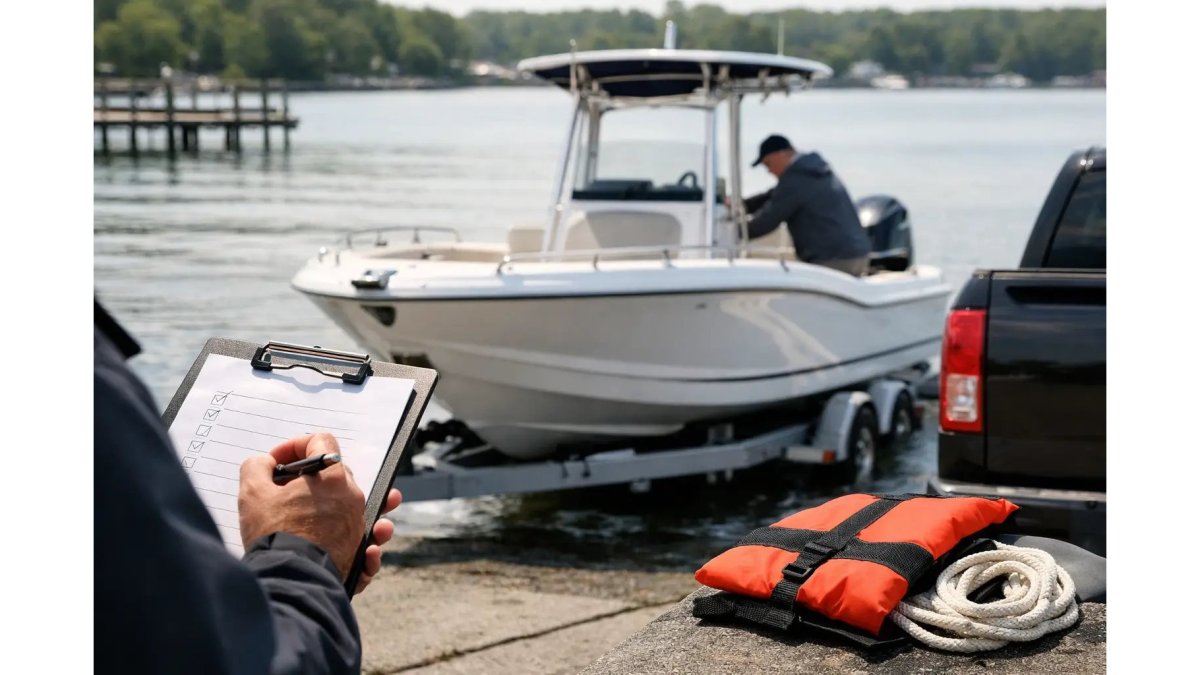
Affordable marine gear for center consoles starts with safety, lighting, and corrosion protection. Compare real prices and find gear that fits your layout.