
Is Marine Supply Pricing Transparent? A Buyer’s Guide
Marine supply pricing is transparent only when you check the full cost. Our Florida veteran’s checklist shows how to compare the full cost before you buy.


Last Updated: November 4, 2026
Quick Summary
You save money on boat parts by shopping with the exact manufacturer part number and comparing total cost, including shipping, tax, returns, and warranty, instead of sticker price alone. Batching small maintenance items into one order beats freight, and aftermarket parts cut costs on filters, belts, and hardware while OEM stays worth it for electronics and critical fuel components.
Boat parts cost more than car parts for three reasons: marine-grade materials, smaller production runs, and the saltwater environment that eats cheap metal for breakfast. Florida boaters often pay dealer markup on parts they could source for less with a little research.
Below, we walk through how to save money on boat parts without gambling on quality: know the part number, compare total cost, and never cheap out on anything that keeps water out or keeps you running.

Price comparison is the habit that saves the most money, and most boaters do it wrong. They compare sticker prices and stop. The real comparison includes shipping, tax, return terms, warranty, and downtime.
Start with the part number, not the product name. A part number is the manufacturer’s exact identifier for a component, and it removes all guesswork from shopping.
Watch out: a listing that shows a photo of a similar part but never states the part number is a guess, not a match. Skip it.
Total cost is the part price plus shipping, tax, return cost, and the value of your downtime. Build a simple worksheet with one column per seller and one row per cost factor.
| Cost Factor | What to Record | Why It Matters |
|---|---|---|
| Part price | Listed price only | The starting number, never the final one |
| Shipping | Flat rate, weight-based, or free threshold | Kills small-order savings fast |
| Tax | Applied at checkout | Varies by seller and destination |
| Return terms | Restocking fee, return window, who pays freight | Protects you on a wrong fit |
| Warranty | Length and who honors it | A short warranty shifts risk to you |
| Delivery time | In stock versus backorder | A week of downtime has a real cost |
| Core charge | Refundable deposit on rebuilt parts | Easy to forget on pumps and alternators |
Run this worksheet once and the pattern shows up quickly. The lowest sticker price is often not the lowest total cost, especially on small orders where freight dominates.
Suppose you need a fuel water separator filter and a spare impeller for a routine service. Seller A lists both at the lowest sticker price but charges weight-based freight and a restocking fee.
On paper, Seller A wins. Add freight and the gap narrows. Add the restocking fee you would pay if the impeller is the wrong revision, and Seller B often comes out ahead.
Two costs never show up on a listing: downtime and warranty risk.
Freight is the silent savings killer on small orders. The fix is batching: group maintenance items like filters, anodes, belts, and hardware into one order so freight spreads across several parts, and plan the batch around your service schedule.
Keep a running list of needed maintenance items, order when the list reaches your seller’s free-shipping threshold, and confirm every part number against your engine before checkout.
Save your worksheets. After a season, you will know which sellers delivered on time, honored returns without friction, and had the part numbers right, a record worth more than any single comparison.
Aftermarket parts are components made by a company other than the original engine manufacturer. OEM parts are made or branded by the manufacturer itself.
Aftermarket parts usually cost less because you are not paying for the manufacturer’s brand and dealer network.
Where OEM earns its price:
Where aftermarket makes sense:
Watch out: a bargain aftermarket part with no part number cross-reference is a coin flip. Confirm the listing names your engine model before you order.
Used parts can reduce repair costs, but only if you inspect before you pay. Marine salvage yards, consignment shops, and marketplace sellers hold plenty of good components, and plenty of corroded junk pulled from a boat that sat in a Tampa Bay yard for three summers.
Not every part belongs on the used market. Sort the part into one of three buckets before you shop.
Usually safe used:
Buy used only with inspection:
Buy new, period:
Watch out: a used fuel component with hidden corrosion can fail offshore. For anything that feeds the engine or steers the boat, buy new.
Sierra 118-7968 Fuel Water Separator Filter →
Use this before money changes hands:
A good part from a bad seller is still a bad purchase. Vet the seller the same way you would vet a contractor.
Sellers use condition labels loosely. Here is what they usually mean in practice:
Compatibility is where used-part purchases fail. A part that bolts up but does not match the engine’s spec can cause real damage.
Used wins when the part is simple, inspectable, and not safety-critical. A used stainless cleat or hatch is often indistinguishable from new after a cleaning.
The rule we use: if you cannot inspect the failure mode, buy new. If you can inspect it and the price gap is real after shipping and returns, used is a smart move.
Saltwater corrosion prevention costs a few minutes and a small bottle. Repairing a corroded engine fitting costs far more, and it usually happens at the worst possible time.
Florida boats live in the hardest environment in the country for metal. Warm temperatures, humidity, and constant salt exposure accelerate corrosion on anything unprotected. The fix is routine, not dramatic:
A quality corrosion inhibitor is the cheapest insurance on the boat. We stock the Kroil Shield corrosion inhibitor aerosol for exactly this job, and a single can covers a season of fittings and terminals.

A DIY boat repair guide starts with one rule: do the jobs where your labor replaces a shop rate, and pay for the jobs where a mistake sinks you.
Jobs worth doing yourself:
Jobs to leave to a professional:
If you are planning a repair season, work from a boat maintenance checklist so you catch related jobs while the tools are already out. Doing two jobs in one session saves the setup time twice.
Searching “boat parts near me” usually returns the closest dealer, and the closest dealer is rarely the cheapest option.
When local wins:
When online wins:
The practical move is to price the part online first, then call the local counter with a number in hand.
Community recommendations help here too. Ask on local boating groups which sellers Florida boaters actually trust for fit and returns.
The cheapest part is the wrong choice when failure means danger, downtime, or damage to something more expensive.
Skip the bargain bin on:
The rule we use: if the part’s failure puts people, the engine, or the hull at risk, buy quality.
Boat parts will never be free, but the gap between a smart purchase and an expensive one is wider than most owners realize.
Often yes, but only after you verify the part number matches your engine or hull, inspect for corrosion, cracks, and stripped threads, and confirm the seller accepts returns. Ask for photos of the actual part, not a stock image, and check that castings and mounting surfaces are intact. Skip used parts for anything tied to fuel delivery, steering, or flotation unless a marine mechanic has inspected them. Anything safety-critical is worth buying new.
Quality aftermarket parts from established marine brands often match OEM performance at a lower price, especially for wear items like filters, impellers, and hose clamps. The difference shows up in fit and materials. Compare part numbers, confirm the listing names your engine model, and check whether the part is rated for saltwater use. Cheap no-name parts can cost more over time when they fail early or corrode in Florida humidity.
Routine jobs that pay back fastest include replacing fuel water separator filters, flushing the engine after every saltwater trip, rinsing and lubricating hardware, checking hose clamps, and keeping battery terminals clean. These tasks need basic hand tools and cost little in parts. Work that involves fuel systems under pressure, electrical faults, or lower-unit internals is better left to a mechanic who can pressure-test the result.
Look for sellers who list exact part numbers, state whether an item is in stock, publish clear return policies, and answer compatibility questions before you buy. Search for boat parts near me to compare local pickup against online shipping, then check the total cost including tax and freight. A retailer that explains fitment and stands behind returns is worth a few dollars more than the cheapest listing with no support.
Marine supply pricing is transparent only when you check the full cost. Our Florida veteran’s checklist shows how to compare the full cost before you buy.
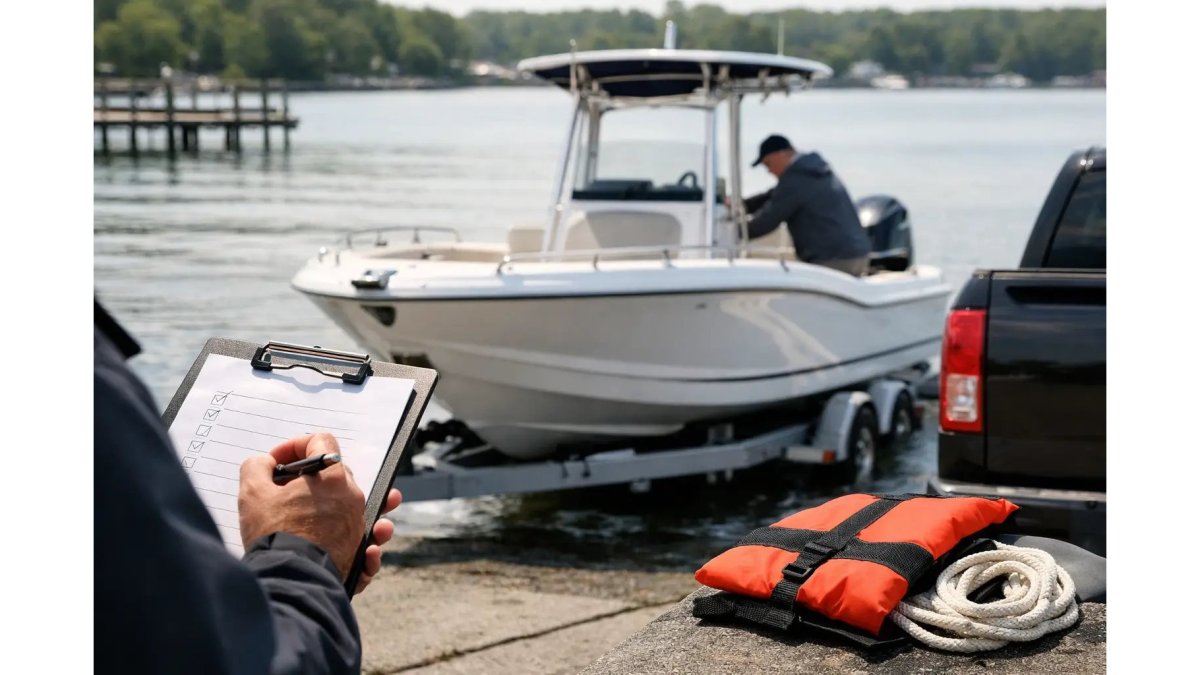
Affordable marine gear for center consoles starts with safety, lighting, and corrosion protection. Compare real prices and find gear that fits your layout.