
Best Boat Insurance for Florida Boat Owners
A good day on the water can turn expensive fast when a lower unit meets an unmarked obstruction, a storm
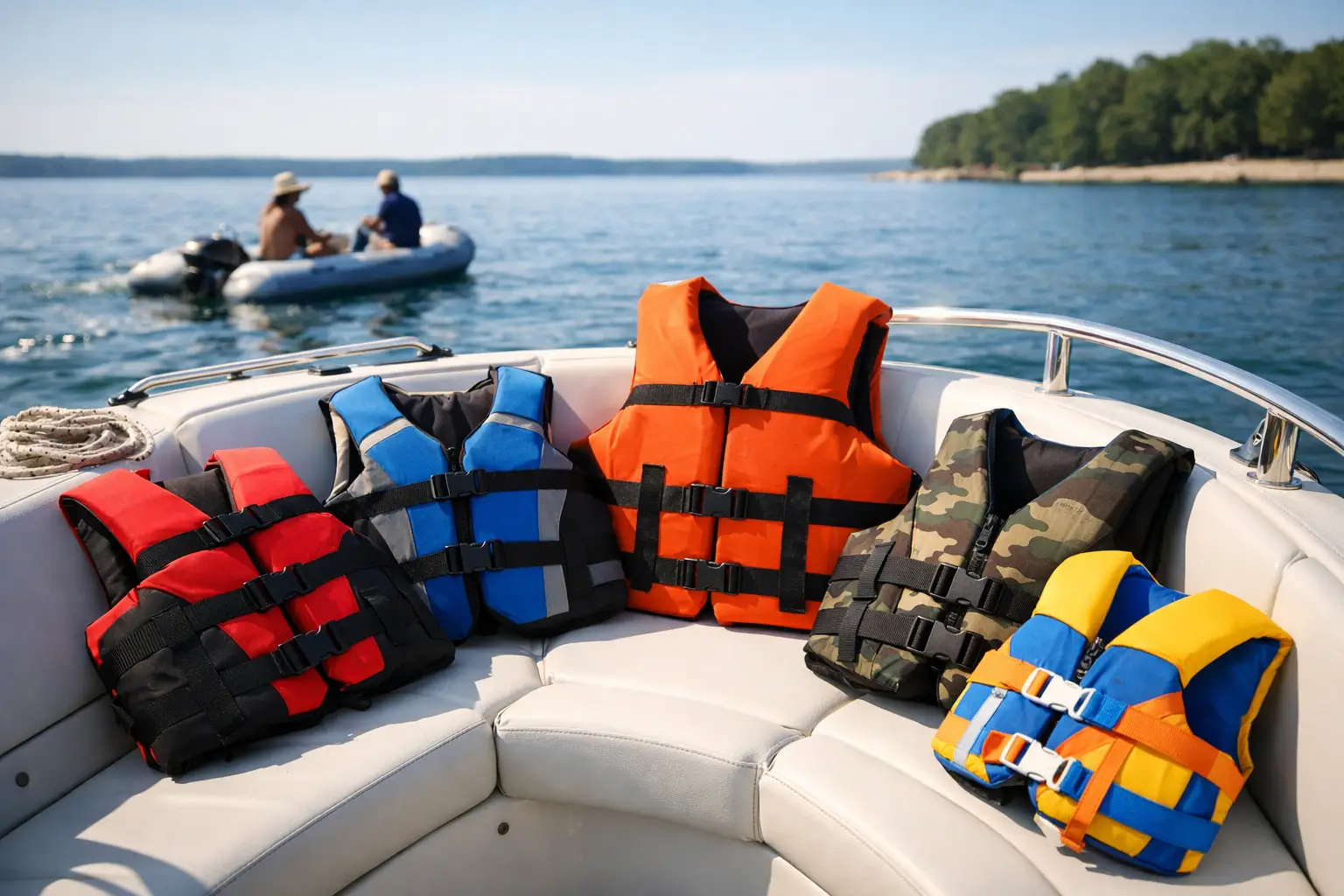
If you ever get boarded by the Coast Guard, one of the very first introductory questions/requests you will get is to produce a life jacket for everyone on board. Now, depending on the types of people you have on board (adults, children, infants), that may dictate the amount, style, and type you need to carry. You will also hear terms like in workable condition, Coast Guard approved, and “Readily accessible.” The term “readily accessible” means you can reach the lifejackets within a couple of seconds. When incidents happen on a boat, they happen fast, and the last thing you want to be doing is climbing into the forward hull to find lifejackets when the boat is taking on water. A life jacket that gets tossed under a console and forgotten is not the right one for your boat. The best life jackets for boating are the ones people will actually wear for a full day in the sun, in chop, while casting, cruising, docking, or keeping an eye on grandkids near the transom.
That is where many buying decisions go sideways. Boaters often focus on price or a familiar label first, when the better question is simpler – what kind of boating are you doing, and who needs to stay comfortable in that jacket for hours at a time? A good PFD should fit the person, the conditions, and the way you use your boat.
For most recreational boaters, the right answer starts with USCG approval, proper buoyancy, and a secure fit. After that, comfort matters more than many people expect. If a jacket rides up, rubs your neck raw, traps too much heat, or gets in the way of casting and line handling, it will spend more time in a storage hatch than on a person.
Material and cut make a real difference. Softer foam tends to flex better and feel less bulky, while segmented panels move with your torso instead of fighting every reach and twist. Mesh backs can be useful on boats with high-back helm seats, and larger arm openings help anglers and active passengers avoid that stiff, boxed-in feeling.
Then there is visibility. On inland lakes, bays, or Florida coastal runs, bright colors still have value. Gray and navy may look cleaner, but high-visibility shades are easier to spot if someone goes overboard in low light or rough water. That is not a fashion point. It is a recovery point.
If you shop long enough, this usually becomes the main fork in the road. Foam jackets are simple, reliable, and ready the second you put them on. Inflatable models are lighter and less bulky, which is why many experienced boaters prefer them for cruising and long days at the helm.
Foam has the edge for simplicity. There is no cylinder to inspect, no inflator mechanism to maintain, and no concern about accidental activation. That makes foam a strong choice for family boating, guests, kids, watersports support, and anyone who wants a grab-and-go option with fewer variables.
Inflatables win on wearability. A lot of adults who dislike traditional life jackets will tolerate, and often prefer, an inflatable belt pack or suspender-style vest because it feels far less intrusive. The trade-off is that inflatables are not ideal for every user or every situation. They require maintenance, they are generally intended for older users rather than small children, and some models are better for offshore or cruising use than for high-impact activity.
If you are buying for a mixed crew, it often makes sense to have both. Keep dependable foam vests on board for general use and as a backup, then use quality inflatables for regular adult operators who understand inspection and rearming.
Rather than pretending that one product is best for everyone, it is more useful to think in terms of categories. These are the styles that consistently make sense for recreational boating.
This is the everyday workhorse for most boaters. A well-cut Type III vest offers a comfortable balance of flotation, mobility, and easy wear. It is a solid pick for cruising, sandbar runs, inshore boating, and casual fishing.
These usually have larger arm openings, slimmer shoulder designs, and, in some cases, pockets or attachment points. They are useful for anglers who need range of motion. The caution here is not to let extra features distract from fit.
If you spend long hours in a leaning post or helm seat, a high-back design can be noticeably more comfortable. The foam sits higher so it does not bunch against the seatback.
These are popular with experienced boaters and coastal cruisers because they are light and easy to wear all day. They can inflate when submerged, which is a real advantage in an unexpected fall overboard. You do need to inspect them regularly.
These reduce the chance of inflation from spray or heavy rain and are often favored in certain boating conditions. The trade-off is obvious – the wearer has to pull the cord.
These appeal to boaters who want minimal bulk. They can work well for calm-water use and some inshore applications, but they are not the best match for every boater because deployment is less intuitive than a vest-style inflatable.
For bigger water, stronger current, and rougher conditions, extra flotation and a more secure cut matter. These jackets are bulkier, but that bulk exists for a reason.
Kids need a proper youth-sized jacket, not a tightened-down adult vest. Look for crotch straps where appropriate, head support for smaller children, and a fit that stays secure when lifted at the shoulders.
For the youngest passengers, safety and sizing are non-negotiable. A child’s life jacket should match the child’s weight range exactly and be tested in a controlled setting before any real trip.
Not legally the same category, of course, but if the family dog is a regular passenger, a well-fitted flotation vest with a grab handle is a smart addition. Dogs can tire, panic, or struggle in current faster than owners expect.
Start with who is actually on board most often. A center console used for inshore fishing with two adults calls for a different setup than a pontoon with grandchildren aboard every weekend. The best life jacket for boating is not one perfect model. It is the mix of jackets that covers your real crew and real use.
Fit comes first. A jacket should feel snug without restricting breathing. When you raise your arms, they should stay in place rather than sliding toward your ears. For kids, this matters even more. If a child can slip downward inside the jacket, the size is wrong.
Next, consider heat and wear time. Florida boaters know this well. Heavy, stiff foam can feel fine at the dock and miserable two hours later. If you want family members to keep their PFDs on, lighter materials and better venting are worth the extra cost.
Think about storage too. Boats already have to make room for lines, fenders, tackle, tools, and safety gear. Bulky jackets are harder to store neatly, but ultracompact options should not come at the expense of suitability. This is one of those areas where it depends on the boat and the crew.
One mistake is buying for the cheapest legal minimum instead of actual onboard safety. Another is choosing a jacket based on brand reputation alone, without trying it on. Even respected manufacturers fit differently across product lines.
A third mistake is forgetting maintenance. Foam jackets should be checked for tears, broken buckles, and compressed flotation. Inflatables need more attention, including cartridge status and general inspection. A neglected premium PFD can be less reliable than a basic foam vest that has been properly stored and maintained.
There is also the guest factor. Plenty of boat owners invest in a great operator vest, then keep a pile of old, uncomfortable extras for everyone else. If you want passengers to wear them when conditions change, those backup jackets need to be wearable too.
For casual family cruising, comfortable Type III foam vests are usually the sweet spot. They are easy to understand, easy to hand out, and practical for mixed experience levels.
For anglers, low-profile foam vests or fishing-focused designs tend to work best, especially when they allow unrestricted casting and net handling. For long days at the helm, many experienced adults prefer automatic inflatables because they are more comfortable for all-day wear.
For kids, there is no shortcut around proper sizing and testing. For rougher coastal runs or bigger offshore water, many boaters step up to jackets with more flotation and a more secure fit, even if they give up some comfort in the process.
That balance between comfort and protection is really the whole game. At Boatsmans, that is the kind of decision we respect most – gear that matches how you actually boat, not how product packaging says you should.
Before you make a final call, read the label, confirm the intended use, and try the jacket on with realistic boating clothing. A vest that fits over a T-shirt may feel different over a light rain shell or fishing shirt. Adjust every strap. Sit down in it. Reach overhead. Turn your torso. Small annoyances on land become big ones on the water.
It also pays to think one season ahead. If your boating is expanding from short harbor runs to longer coastal trips, buy for where you are headed, not just where you have been. The right life jacket should feel like part of your routine, not emergency gear you hope nobody needs. When it fits well and gets worn without complaint, you made the right call.
One last thing, you are free to carry your lifejackets as you wish, but if they are not in good working order or not readily accessible, then the USCG boarding officer could issue you a violation for them. This could result in a fine or termination of the voyage if other issues arise. In addition, in the State of Florida, Children under 6 and infants should ALWAYS wear life jackets.
Safe Boating,
William B.
A good day on the water can turn expensive fast when a lower unit meets an unmarked obstruction, a storm
A calm morning at the ramp can make any boat look like the right boat. The real difference shows up