
Boat Broker Versus Dealer: Which Fits Your Buy?
A clean center console catches your eye at the marina. The price looks fair, the electronics are current, and the
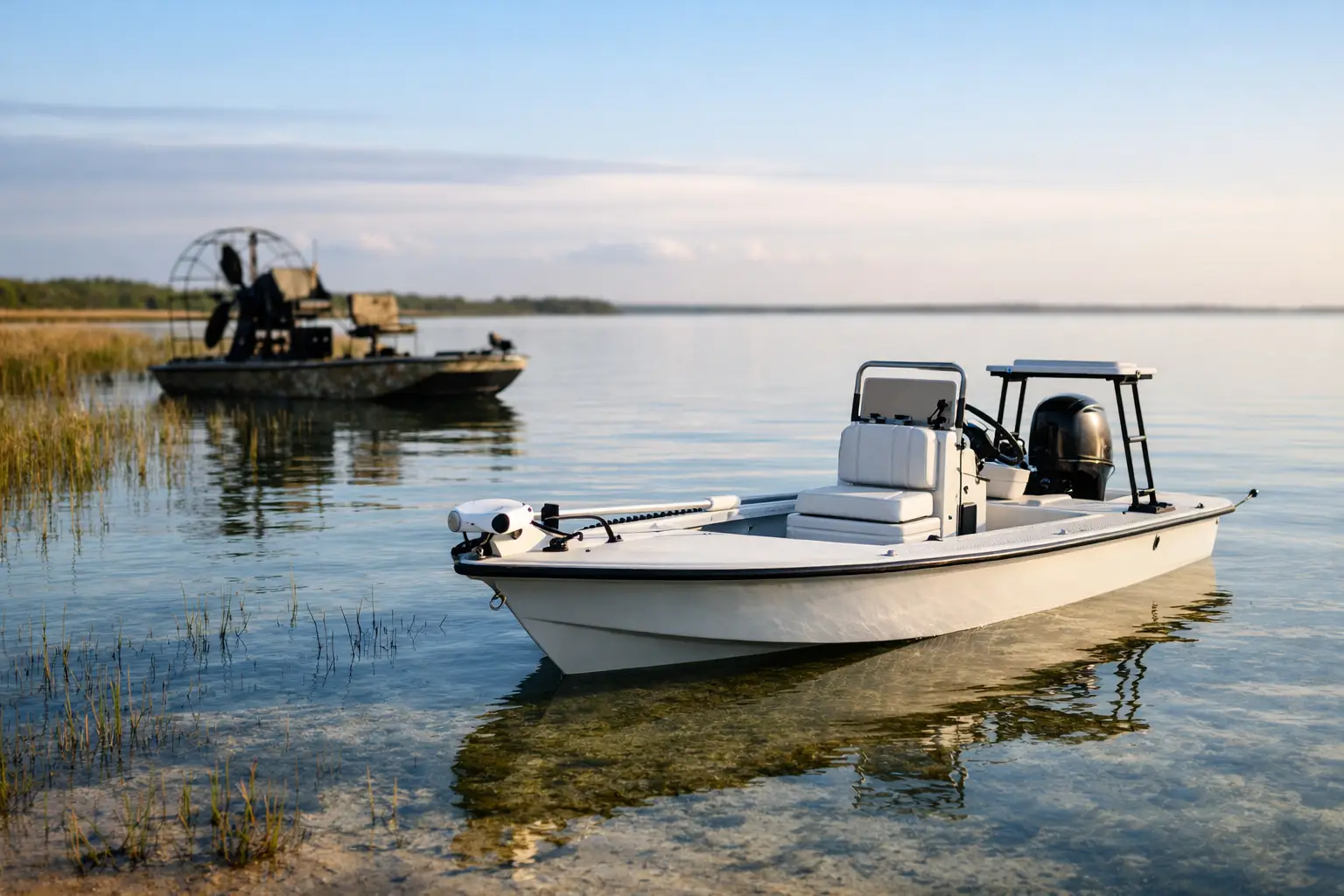
If anyone has done skinny water fishing in the back of Florida Bay near Islamorada, you know that having the right equipment is crucial. (Especially bug spray!) Skinny water has a way of exposing bad boat choices fast. One wrong hull, too much draft, or the wrong prop setup, and a fun day turns into a long push off a flat. If you are shopping for the best boat for shallow water, the right answer is not one model for everyone – it depends on where you run, how you fish, and how much comfort you want to keep.
For most boaters, the best shallow-water boat is not simply the one that floats in the least amount of water. It is the one that lets you go shallow enough for your needs without sacrificing too much ride quality, stability, storage, or reliability. That trade-off matters in Florida, along the Gulf Coast, in back bays, on flats, and anywhere tides can make a good channel disappear quicker than expected.
The first thing to understand is that shallow-water performance starts with draft, but it does not end there. Draft is how much water the boat needs to float, and yes, less is better if you are creeping over grass flats or slipping into oyster-lined backwater. But hull shape, boat weight, engine size, fuel load, passenger count, and gear all change how shallow a boat can really run.
A light skiff with a simple hull can float shallower than a heavier bay boat, even if both are marketed for inshore use. At the same time, that same skiff may pound your teeth loose when the afternoon chop builds. That is why smart buyers look at the whole picture – not just the brochure number.
In practical terms, the best shallow-water boats usually share a few traits. They have low draft, modest weight, efficient hulls, and setups designed for clean hole shot in skinny water. Many owners also pair them with jack plates, trim tabs, trolling motors, or push poles to squeeze out a little more capability.
If your world revolves around stalking redfish, bonefish, snook, or trout on clear flats, a flats boat is often the closest thing to a purpose-built answer. These boats are designed to float and pole in very little water, and many can run surprisingly shallow with the right load and setup.
A true flats boat is usually low-profile, light, and fast, with a clean deck layout for casting. The trade-off is comfort. In calm morning conditions, they are a dream, but when the wind picks up, or you have to cross open water, the ride can get sporty in a hurry. For serious anglers who prioritize access over everything else, that is often a fair deal.
For many recreational boaters, a skiff is the best boat for shallow water because it balances simplicity, cost, and versatility better than a specialized flats boat. Skiffs tend to be lightweight, easy to trailer, economical to run, and forgiving for owners who want to fish, cruise a creek, and maybe pull up on a sandbar now and then.
Not all skiffs are equal. Some are bare-bones workhorses, while others are polished inshore rigs with casting decks, livewells, and higher-end finishes. What they generally share is a shallow draft and straightforward design. If you want a practical shallow-water boat without stepping into a highly specialized niche, this is where many buyers land.
Jon boats deserve more respect than they get. In freshwater shallows, back marsh, and protected areas, they are hard to beat for basic function and value. Their flat or nearly flat bottoms let them run and float in skinny water, and they are easy to maintain.
The downside is obvious if you have ever crossed rough water in one. They are not built for comfort in chop, and saltwater use demands careful choices in materials and rigging. For hunters, freshwater anglers, and boaters sticking to calm, protected water, a jon boat can be the smartest low-cost option. For exposed coastal use, it is more of a niche tool than an all-around solution.
Bay boats sit on the more versatile end of the shallow-water spectrum. They generally draw more water than flats boats and skiffs, but they give you a better ride, higher freeboard, and more room for family, gear, and mixed-use boating.
For many Florida boaters, this is the compromise that makes sense. You can still fish inshore, work shorelines, and handle moderate shallows, but you also have a boat that feels more confident crossing a bay or handling an afternoon breeze. If your idea of boating includes both fishing and family time, a bay boat may be the better long-term buy, even if it is not the absolute shallowest option.
A lot of boats get labeled shallow-water capable. That phrase covers a wide range of real-world performance. The hull is what tells the truth.
Flat-bottom and tunnel hull designs are the usual stars in truly skinny water. They reduce draft and can help feed water to the prop in very shallow conditions. But flat bottoms slap in chop and can feel less refined offshore. Modified-V hulls improve ride quality and handling, though they usually need a little more water under them.
Tunnel hulls are worth a close look if your priority is extreme shallow running, but they are not perfect for every boater. Some owners love them in marsh and flats conditions, while others find the handling quirks or ride trade-offs less appealing for general use. That is a classic case of knowing how you really boat, not how you imagine boating once or twice a year.
A common mistake is buying more boat and more engine than the job requires. Bigger boats bring more comfort, more storage, and often more confidence in rougher water. They also bring more draft, more weight, and less forgiveness in shallow areas.
Engine setup matters just as much. A jack plate can help lift the motor higher and reduce draft while running. A hydraulic jack plate gives even more control, but it adds cost and complexity. Trim management is another big factor. An experienced operator in a properly rigged boat can often work in shallow water more effectively than someone with a theoretically better hull and poor setup habits.
Prop choice also matters. Some props favor hole shot and shallow performance, while others are better for top-end or load-carrying. There is no magic answer here. The best setup depends on the hull, motor, typical load, and how often you really need to run skinny.
Start with where you boat most, not where you might boat someday. If you spend 80 percent of your time on protected flats, creeks, and back bays, chasing the shallowest draft you can reasonably afford makes sense. If your route includes open bays, wind-blown chop, or family cruising, a little extra draft may be worth it for a much better ride.
Next, be honest about passenger load. Many boats perform great in shallow water with one angler, half a tank, and light gear. Add three adults, a full cooler, extra tackle, and a full fuel load, and the numbers change. Real shallow-water performance is always tied to how the boat is actually used.
The budget should include more than just the hull. Trailer quality, push-pole storage, trolling-motor setup, shallow-water anchoring systems, electronics, and safety gear all shape how happy you will be after the purchase. A cheaper boat with the right layout and rigging can be a better buy than a flashier hull that does not fit your water.
If you are torn between categories, sea trial both ends of the spectrum. Run the shallowest rig you are considering, then run the more versatile one in less-than-perfect conditions. That comparison usually clears things up quickly.
If we are talking about the broadest audience – recreational coastal boaters and inshore anglers who want shallow access without giving up everyday usefulness – a well-built skiff is usually the best overall answer. It keeps draft low, ownership costs manageable, and operation straightforward. It also leaves room to fish, cruise, and trailer without demanding the compromises of a dedicated tournament flats boat.
For serious technical anglers, a flats boat may still be the better call. For families and mixed-use inshore boaters, a bay boat can be the smarter compromise. But if someone at the dock asked for the most practical all-around answer to the best boat for shallow water, skiff would be the first word out of many experienced captains’ mouths.
A shallow-water boat should make your days easier, not more complicated. Buy for your real conditions, leave some room in the budget for proper rigging, and choose the hull you will still appreciate when the tide falls and the wind comes up. If you haven’t fished the Back Bay waters near Islamorada, you are missing out on life.
Safe Boating,
William B.
A clean center console catches your eye at the marina. The price looks fair, the electronics are current, and the
A good day on the water can turn expensive fast when a lower unit meets an unmarked obstruction, a storm