
Best Boat Insurance for Florida Boat Owners
A good day on the water can turn expensive fast when a lower unit meets an unmarked obstruction, a storm
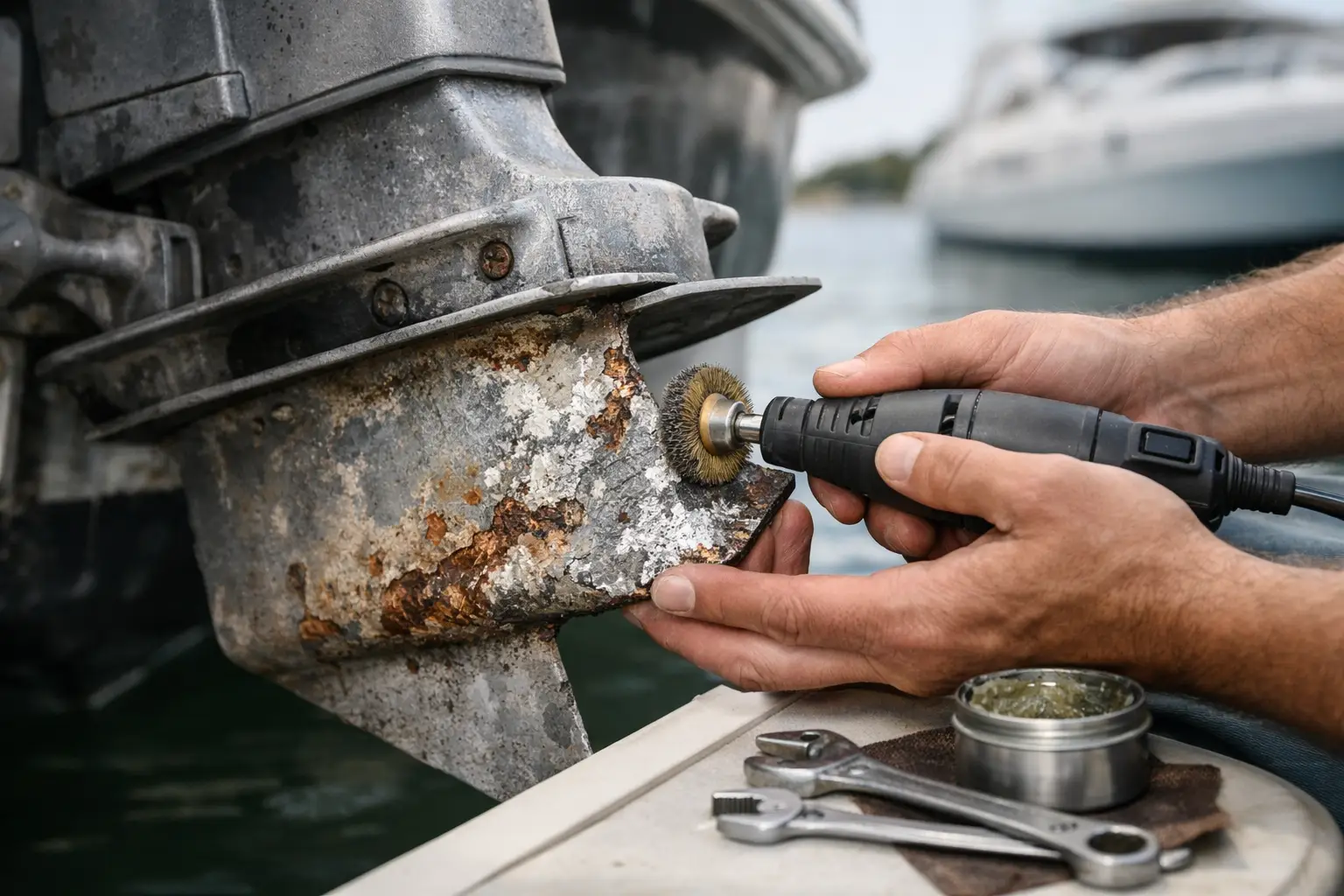
That white fuzz on an aluminum fitting, the green crust on a battery terminal, the rusty stain creeping out from a fastener – that is your boat telling you something early, before it gets expensive. If you are wondering how to fix boat corrosion, the real job is not just cleaning up what you can see. It is finding the cause, stopping the reaction, and making sure it does not come right back after the next weekend on the water.
Corrosion shows up on almost every boat eventually, especially in saltwater and humid coastal climates like Florida. The good news is that most of it can be slowed down, repaired, or prevented with the right approach. The bad news is that quick cosmetic fixes rarely last if the underlying problem is ignored.
A lot of boat owners treat corrosion like mildew or oxidation – scrub it off, wipe it down, move on. That works for appearance, not for protection. Corrosion is an electrochemical process. Different metals, trapped moisture, salt residue, poor bonding, stray current, and worn sacrificial anodes can all contribute to it.
There are a few common types. Surface rust on steel hardware is the familiar one. Galvanic corrosion happens when dissimilar metals are in contact in the presence of an electrolyte, which, in boating, usually means saltwater. Electrolytic or stray-current corrosion is more aggressive and can destroy underwater metals surprisingly quickly if current leaks from wiring or shore power. Aluminum boats and outboards are especially vulnerable if something in the electrical system is off.
Before you start sanding or replacing parts, take a minute to figure out what you are dealing with. If corrosion is isolated to one old hose clamp or a neglected battery terminal, the repair may be simple. If you are seeing pitting on an outboard lower unit, rapid zinc loss, or multiple underwater fittings deteriorating at once, that points to a larger system issue.
Good corrosion repair starts with a full look around, not just the ugly spot that caught your eye. Check battery terminals, fuse blocks, bonding wires, ground connections, hose clamps, trailer components, rail bases, T-top fasteners, through-hulls, trim tabs, steering parts, and anything below the waterline. On aluminum boats, inspect seams, welds, transom brackets, and areas where stainless hardware meets aluminum.
Pay attention to color and texture. White powder often shows up on aluminum. Green or blue buildup is common on copper-based wiring and terminals. Red-brown staining indicates rust from steel or iron. Bubbling paint on underwater metal surfaces can signal active corrosion beneath the surface, not just a paint failure.
This is also the point where honesty matters. If a part is deeply pitted, structurally weakened, or flaking apart, cleaning it is not a real fix. Replace it. A badly corroded hose clamp, battery cable end, or through-hull fitting is not the place to save twenty bucks.
For light-to-moderate corrosion on hardware, start by removing salt, grime, and loose buildup with fresh water and a marine-safe cleaner. Dry the area fully so you can see what remains. Then use the least aggressive method that gets the job done. A nylon brush, Scotch-Brite pad, or fine hand sanding is often enough for early corrosion. Jumping straight to heavy grinding can remove protective coatings and shorten the part’s life.
Once the metal is clean, inspect it closely. Stainless steel that only has surface discoloration can often be cleaned and passivated, but stainless steel that shows crevice corrosion around fasteners or welds may need replacement. Aluminum fittings with minor oxidation can usually be cleaned and protected. If you find pitting that looks deep or widespread, especially on load-bearing parts, replacement is the safer call.
After cleaning, protect the metal. That may mean a corrosion inhibitor, dielectric protection where appropriate, a primer and topcoat for painted surfaces, or an anti-seize compound on threaded assemblies exposed to salt. The right protection depends on the metal and the location. What works on a trailer jack is not necessarily what you want on electrical terminals or underwater gear.
This is where many corrosion problems start and where many boat owners lose reliability. Corroded electrical connections create resistance, heat, voltage drop, and intermittent failures that always seem to show up at the wrong time.
Disconnect power before working on any circuit. Remove the affected terminal or connector and clean it down to bright metal if the corrosion is light. If the wire strands are blackened, brittle, or heavily green beneath the insulation, replace the terminal and trim the wire back until you reach clean copper. Sometimes that means replacing the entire cable, and that is usually the better move than trying to save a compromised connection.
Use marine-grade tinned wire and adhesive-lined heat shrink terminals when you rebuild the connection. That extra protection matters in a wet, salty environment. Battery terminals should be clean, tight, and lightly protected with the correct terminal treatment. Dielectric grease has its place, but it should not be used as a substitute for a proper mechanical connection.
If corrosion keeps recurring at the same connection, look for water intrusion, poor routing, unsupported wire runs, or an undersized component that is overheating.
Sacrificial anodes are supposed to corrode so your more expensive metal parts do not. If your shaft zincs, trim tab anodes, or outboard anodes are gone, painted over, loose, or the wrong material for your water type, corrosion protection is already compromised.
Replace wasted anodes with the correct type for where you boat – zinc, aluminum, or magnesium, depending on salt, brackish, or fresh water use. Make sure there is clean metal-to-metal contact when installing them. An anode that looks fine but is insulated by paint or buildup is not doing much.
There is a trade-off here. Fast anode loss can be normal in some marinas and unusual in others. If your anodes are disappearing far faster than expected, do not just keep replacing them and call it maintenance. That can be a sign of a stray current or a bonding issue that needs to be diagnosed.
If underwater metals are getting eaten up quickly or corrosion is showing up in multiple places at once, you may be beyond simple cleanup. Stray current corrosion can destroy aluminum outboards, sterndrives, and metal fittings in a short time. It may come from your own boat, from shore power, or from nearby vessels.
This is the point to bring in a qualified marine electrician, especially if you suspect AC leakage, bonding faults, or marina-related issues. A proper meter check can reveal problems that are invisible during a visual inspection. For many boat owners, this is money well spent. Guessing wrong with corrosion can turn a manageable repair into a major replacement.
The best way to fix boat corrosion is to give it less opportunity to start. Rinse metal surfaces with fresh water after saltwater use. Dry areas that trap moisture. Inspect anodes regularly. Keep bilges cleaner and drier. Use marine-grade hardware and electrical components instead of household substitutes. Isolate dissimilar metals where practical with the right washers, sealants, or barriers.
Storage matters too. Boats left in the water full-time face a different corrosion risk than trailered boats, and covered dry storage changes the equation again. A center console kept at a dock in brackish water may need more frequent anode checks and underwater inspections than a bay boat that lives on a trailer but still suffers corrosion on trailer brakes, lights, and connectors.
One of the smartest habits is setting a simple inspection rhythm. Give the boat a quick look after each outing and a more serious check every month or two. Small corrosion, caught early, is usually a cleaning-and-protection job. Corrosion ignored for a season tends to become a parts order.
You do not need to overcomplicate it. Start with clean metal, sound wiring, proper anodes, and regular inspections. That approach handles most corrosion problems before they can ruin your weekend. And if something looks worse than surface-level, trust that instinct and deal with it early. On the water, small maintenance decisions often turn into big reliability decisions later.
A good day on the water can turn expensive fast when a lower unit meets an unmarked obstruction, a storm
A calm morning at the ramp can make any boat look like the right boat. The real difference shows up