

Florida Vessel Numbering: Why it matters.
If you have ever registered a boat in Florida, you have likely had the pleasure of visiting the Tax Collector’s
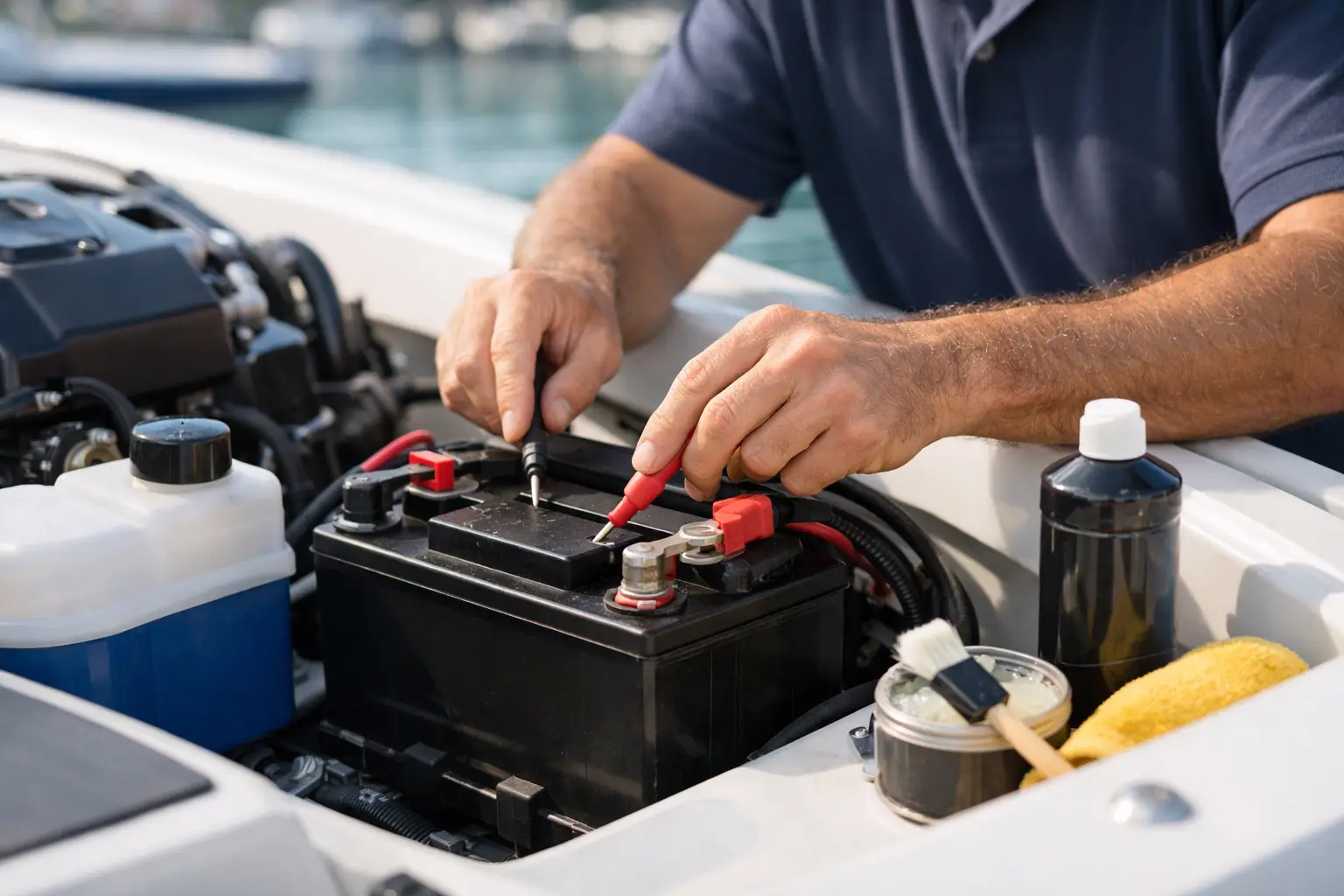
The importance of a healthy battery system cannot be overstated. With more and more electronics being installed on boats these days, the average draw increases. Industry leaders are even discussing electric boats. ( I dont see that happening, but I digress) A boat battery usually waits until the worst possible moment to remind you it has been neglected. It is rarely a problem at the dock on a calm afternoon. It shows up at first light before a fishing trip, or after a long day on the sandbar when the engine turns over more slowly than it should. That is why knowing how to maintain boat batteries is less about squeezing out every last month of service and more about keeping your time on the water predictable.
For most recreational boaters, battery care is not complicated. What trips people up is inconsistency. A battery can look fine from the outside and still be losing capacity because it is undercharged, overcharged, corroded, or just sitting too long in Florida heat. Good maintenance comes down to a few habits done on schedule.
The simplest approach is to treat your battery like part of your regular pre-trip and post-trip routine. Check its charge, keep the terminals clean, ensure it is properly secured, and do not leave it sitting discharged. Those four habits prevent the most common battery failures.
It also helps to know what kind of battery you have. Flooded lead-acid batteries require more hands-on care, especially regarding water levels. AGM batteries are lower maintenance and handle vibration well, which is one reason many boaters prefer them. Lithium batteries bring advantages in weight, cycle life, and usable capacity, but they require a compatible charging setup and a little more attention to system matching. The right maintenance plan depends on the chemistry, not just the battery’s size.
If there is one thing that matters most in boat battery life, it is charging. Batteries do not like being left partially discharged for long periods. Lead-acid batteries, especially, can sulfate when they sit low, and once that buildup hardens, you do not easily get that lost capacity back.
After each outing, recharge the battery as soon as practical. If your boat sits on a trailer or at a lift, a quality marine charger makes this easy. A smart charger that can manage bulk, absorption, and float stages is worth it because it reduces the risk of overcharging while still bringing the battery back to full charge.
This is where some boaters make an expensive mistake. They assume a quick engine run or a basic automotive charger is close enough. It often is not. Outboard and inboard charging systems help maintain batteries underway, but they may not fully recharge deeply used house or trolling motor batteries. Automotive chargers can also be too aggressive or poorly matched for marine use. Salt, vibration, and heat already work against your electrical system. The charger should not.
For boats with multiple batteries, pay attention to how each one is being used. A starting battery that only cranks the engine has a different workload than a deep-cycle battery powering electronics, pumps, or trolling motors. If one battery keeps coming back weaker than the others, do not ignore it. That imbalance usually gets worse, not better.
Storage is where many batteries lose their life. If the boat is parked for weeks or months, disconnecting the battery may reduce parasitic drain, but it does not solve self-discharge. A maintenance charger or onboard smart charger is the better answer for most lead-acid setups.
If you store the boat through hot weather, check more often, not less. Florida heat speeds up battery aging and fluid loss. Cold weather can be hard on batteries too, but in coastal southern climates, heat is often the bigger long-term problem.
Corrosion does not always look dramatic at first. A little white or bluish buildup on terminals may seem minor, but it increases resistance and makes charging and starting less efficient. That can turn into a voltage drop, weak cranking, and electronics acting strangely.
Inspect terminals regularly and clean them when needed. Disconnect the negative cable first, then the positive. Clean the posts and cable ends with a battery brush or terminal cleaner, and reinstall everything tightly. Finish with a marine terminal protectant or corrosion inhibitor to slow future buildup.
While you are there, inspect the cables themselves. Stiff insulation, greenish corrosion creeping under the jacket, loose lugs, or cracked ends are all signs the cable may need replacement. A healthy battery cannot do much if the power connection is compromised.
Boat batteries take a beating from vibration and wake impact. If the hold-down strap is loose or the battery box is cracked, internal damage can happen over time even if the battery still tests okay today. Make sure the battery is mounted securely, the tray is solid, and nothing nearby can rub through a cable.
This is especially important for anglers and boaters who often run in choppy water. Repeated pounding shortens the life of both batteries and connections.
Flooded lead-acid batteries need occasional water checks. That does not mean topping them off every time you think about it. It means checking the electrolyte level on a reasonable schedule and adding distilled water only when needed.
Never use tap water. Minerals can affect battery performance and shorten life. Check levels after charging unless the plates are exposed; if so, add just enough water to cover them before charging, then top off properly afterward. Overfilling is just as sloppy as letting the cells run low because fluid can expand and spill during charging.
AGM and lithium batteries do not require this step, which is one reason many owners move away from flooded batteries when it’s time to replace them. Still, flooded batteries can serve well if maintained correctly and priced right for your needs.
A battery can show decent voltage and still be weak under load. That is why simple visual checks are not enough. Periodic testing gives you a clearer picture of battery health.
Use a digital multimeter to check the resting voltage after the battery has been disconnected from the charger and allowed to rest. For lead-acid batteries, a fully charged reading is generally around 12.6 to 12.8 volts. Lower numbers may point to partial charge or declining health. For a more complete picture, a load test or conductance test is better, especially before peak boating season or a long trip.
If your electronics reset during engine start, your trolling motor runs out sooner than it used to, or the charger takes unusually long to complete, those are warning signs worth checking right away. Batteries rarely fail without giving some hints first.
One of the biggest truths in battery maintenance is that usage patterns matter. A bay boat that runs every weekend needs a different routine than a center console that sits for a month between offshore trips. A pontoon that spends all day with stereo, lights, and pumps running puts different demands on the battery bank than a skiff that mostly starts and idles.
If your boat makes frequent short runs, your charging system may not fully replace the energy used during startup and accessory use. In that case, shore charging becomes more important. If you use a trolling motor heavily, depth of discharge becomes an issue. Regularly running deep-cycle batteries too low will shorten their life, even if you recharge them afterward.
This is also where battery upgrades should be considered carefully. More expensive does not always mean better for every boater. AGM may be the sweet spot for someone wanting lower maintenance and good reliability. Lithium may make sense for serious anglers or heavy accessory loads, but only if the charging system and budget support it. Honest battery care starts with honest use patterns.
Most battery damage comes from a short list of avoidable issues. Letting a battery sit discharged is near the top. So is using the wrong charger, ignoring corrosion, and assuming all marine batteries do the same job.
Mixing old and new batteries in the same bank can also create problems, especially when capacities or chemistries differ. So, replacing a failed battery without checking whether the charging system helped cause the failure in the first place. If a battery keeps dying young, the battery may not be the whole story.
At Boatsmans, we tend to favor solutions that hold up in the real world, not just on a spec sheet. Battery maintenance is a good example. Fancy equipment helps, but consistency helps more.
If you want long battery life, think in seasons, not weekends. Build a habit of charging after use, inspecting monthly, cleaning the terminals before corrosion sets in, and testing before a battery becomes unreliable. If you store the boat, keep the batteries maintained instead of forgotten. If you run in heat, rough water, or with heavy electronics loads, tighten up your schedule a little more.
A well-maintained battery usually does not call attention to itself. That is the whole point. It starts the engine, powers what it should, and lets you leave the dock with one less thing on your mind. On the water, that kind of reliability is worth more than most people realize until they have gone without it.
Safe boating,
William B.
If you have ever registered a boat in Florida, you have likely had the pleasure of visiting the Tax Collector’s
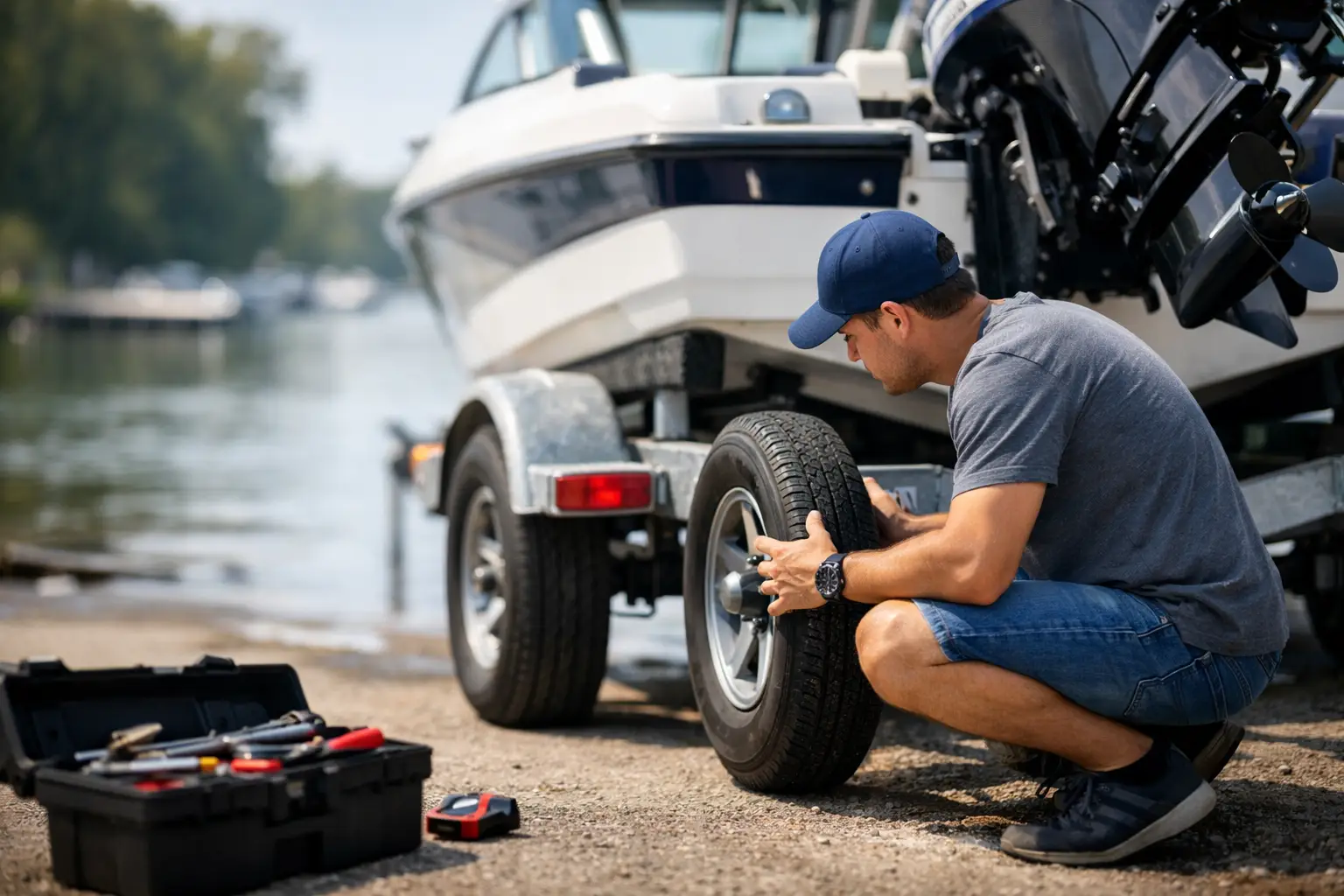
A boat trailer can look fine in the driveway and still leave you stranded on the shoulder of I-95 or