
Best Boat Insurance for Florida Boat Owners
A good day on the water can turn expensive fast when a lower unit meets an unmarked obstruction, a storm
Long lines at the gas station for ethanol-free gas with boats. But why? A boat that ran cleanly last month can suddenly stumble leaving the dock, lose RPM offshore, or refuse to start after sitting for a few weeks. Ethanol fuel damage is often part of that story, especially in Florida’s heat and humidity, where water management is already a constant concern. The trouble is not that every gallon of ethanol-blended gasoline automatically harms a boat. The real problem is how ethanol interacts with moisture, aging fuel systems, and fuel that sits too long.
For recreational boaters, the goal is simple: understand what is in the tank, know where your system is vulnerable, and avoid letting a manageable fuel issue become a day-ending repair.
Most roadside gasoline sold today contains up to 10 percent ethanol, commonly called E10. Ethanol is an alcohol that helps raise octane and supports cleaner-burning fuel, but it is also hygroscopic, meaning it attracts and absorbs water. That matters far more on a boat than in a car that burns through a tank every week.
Moist air enters a boat fuel tank through its vent as temperatures rise and fall. In a humid coastal climate, that air carries moisture. Over time, ethanol can hold a limited amount of that water in suspension. Once it reaches its limit, the fuel and water can separate into layers. This is known as phase separation.
The upper layer is lower-octane gasoline that may no longer provide the performance your engine needs. The lower layer is a corrosive mix of water and ethanol. Since the fuel pickup sits near the bottom of the tank, that damaging mixture is often the first to reach the engine when you turn the key.
Phase-separated fuel cannot be fixed by pouring in an additive. It must be professionally removed and disposed of correctly. Trying to run it through the engine can lead to corrosion, rough running, injector or carburetor problems, and a repair bill that spoils more than one weekend on the water.
Not every fuel system faces the same level of risk. A newer outboard with ethanol-compatible hoses, a well-maintained water-separating filter, and fuel used regularly may handle E10 without much drama. Older boats, seldom-used boats, and boats with certain legacy components deserve more attention.
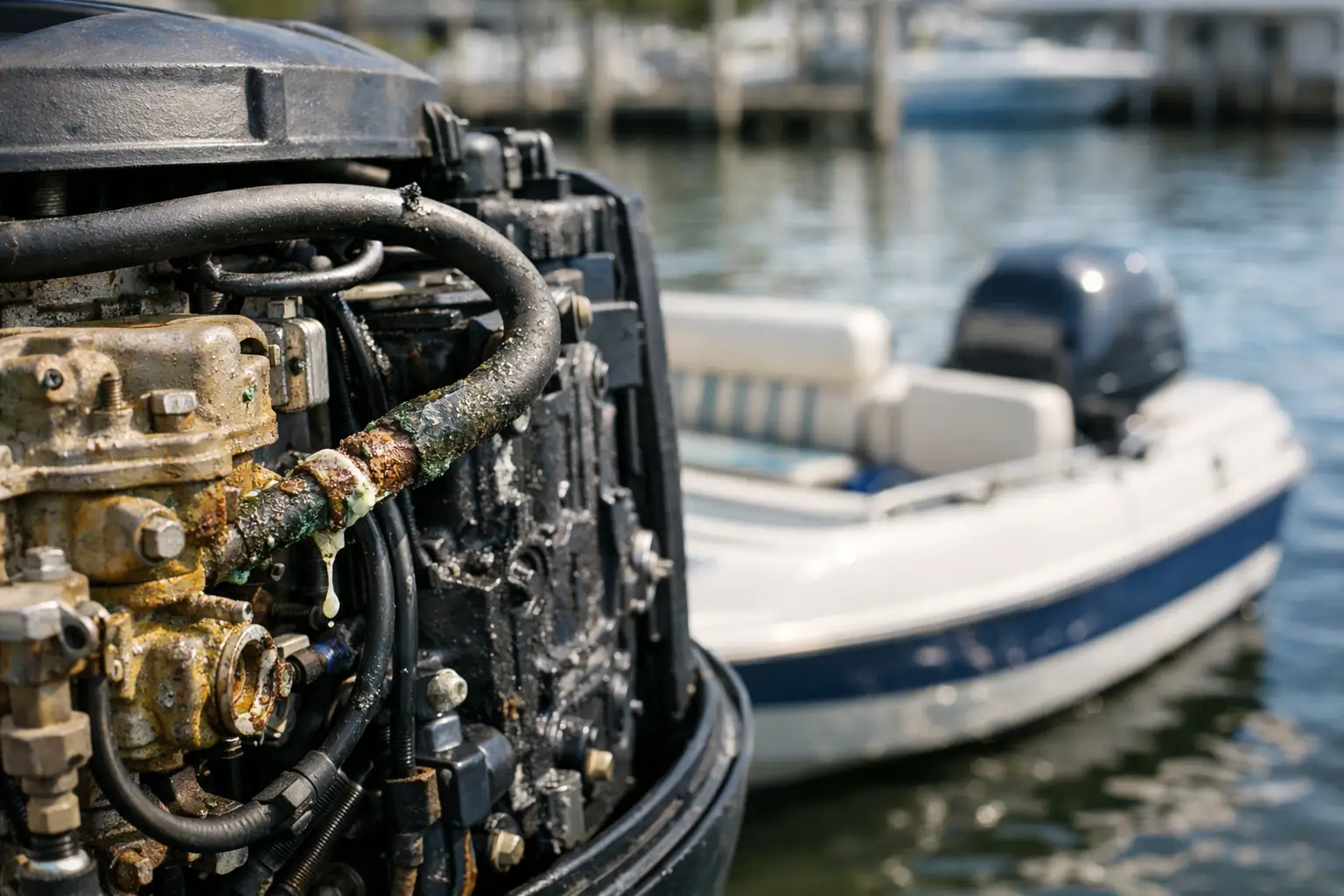
Older fuel hoses, gaskets, O-rings, and primer bulbs may not be rated for modern ethanol-blended fuel. Ethanol can soften or degrade certain materials, causing them to swell, crack, or shed particles into the fuel. A hose that looks fine from the outside may be breaking down internally.
Watch for black residue in the fuel filter, a soft or sticky primer bulb, fuel odor in the bilge, visible cracking, or a hose that feels unusually stiff. Any fuel leak is a safety issue, not just a maintenance item. Replace questionable components with current USCG-approved, ethanol-compatible marine fuel hose and fittings.
Some older fiberglass tanks can be vulnerable to ethanol blends. Ethanol may act as a solvent, pulling compounds from the tank material into the fuel. The resulting contamination can foul carburetors and injectors, damage engine components, and make cleanup difficult.
This concern is most associated with certain older boats, not every fiberglass boat afloat. If your boat has an original fiberglass tank and you are unsure of its construction or fuel compatibility, confirm the tank specifications before relying on E10. A marine technician familiar with your boat’s make and era can help you make a sound call.
A water-separating fuel filter is your first line of defense, but it can only catch what reaches it. As ethanol loosens varnish and old deposits inside a tank or fuel line, the filter may load up quickly. That is useful protection, but a clogged filter can also cause hesitation, surging, a loss of top-end power, or an engine that dies under load.
Carbureted engines are particularly sensitive to stale fuel because small passages can clog with gum and varnish. Fuel-injected engines are not immune. Contaminated fuel can restrict injectors, affect spray patterns, and cause an engine to idle poorly or run lean.
Fuel problems do not always announce themselves with a dead engine. Often, they start as small changes that are easy to blame on weather, a dirty prop, or an engine that is “just getting older.” Pay attention when a familiar boat begins behaving differently.
Common signs include hard starting after storage, rough idle, hesitation when accelerating, unexplained loss of RPM, repeated filter clogging, or a clear layer of water in the filter bowl. A sharp varnish smell from the fuel, dark debris in a drained sample, or cloudy-looking fuel can also indicate contamination.
If you suspect water or phase separation, stop experimenting at the dock. Do not keep cranking the engine or add more fresh fuel in hopes of diluting the problem. Pulling a sample from the bottom of the tank or having a qualified marine technician inspect the fuel is the smarter move.
The best defense is not a miracle bottle on the shelf. It is good fuel habits matched to how you use your boat. A boat run every weekend has different needs than a center console that sits at the lift for two months during the hottest part of summer.
Buy fuel from busy, reputable stations or marinas with high turnover. Fresh fuel matters. If ethanol-free marine gasoline is available and practical for your engine and budget, it can reduce moisture-related concerns during storage. Still, clean, fresh E10 is generally preferable to old ethanol-free fuel that has been sitting too long.
Avoid E15 gasoline unless your engine manufacturer specifically approves it. Many marine engines are not designed for it, and the additional ethanol content increases the margin for trouble. Check the label at the pump rather than assuming every gasoline grade is appropriate for the boat.
For boats that will sit more than a few weeks, use a quality fuel stabilizer formulated for ethanol-blended marine gasoline, following the product’s dosage directions exactly. Stabilizer slows oxidation and helps control fuel degradation, but it does not remove water, repair phase-separated fuel, or make year-old gas trustworthy.
A practical maintenance routine should include these habits:
There is a trade-off with tank level that is worth understanding. A fuller tank leaves less room for moisture-laden air, which is helpful during storage. But do not fill it to the brim in hot weather. Fuel expands, and an overfilled tank can force fuel out the vent, create a mess, and pose a fire hazard.
Fuel additives have a place, but they are often asked to do more than they can. Adding a stabilizer to fresh fuel before storage can be worthwhile. A detergent additive may help keep an otherwise healthy system cleaner. Water-removing products can sometimes address very small amounts of moisture before phase separation occurs.
What additives cannot do is restore old fuel, reverse corrosion, or safely blend a separated water-and-ethanol layer back into usable gasoline. If the fuel has separated, the tank needs to be drained and cleaned as needed. That is one of those situations where spending money once on proper service is cheaper than feeding bad fuel through an outboard, generator, or inboard system.
Fuel care is not glamorous boat ownership, but it is one of the easiest ways to protect an engine you rely on. Treat fuel like the perishable supply it is, especially through long stretches of heat, rain, and idle time at the dock.
Know your engine’s fuel requirements, use fresh fuel, maintain the filtration system, and investigate small performance changes early. A little attention before the next run can keep ethanol fuel damage from becoming the reason a perfect Florida boating day ends at the ramp instead of out on the water.
Safe Boating,
William B.
A good day on the water can turn expensive fast when a lower unit meets an unmarked obstruction, a storm
A calm morning at the ramp can make any boat look like the right boat. The real difference shows up