
Is Marine Supply Pricing Transparent? A Buyer’s Guide
Marine supply pricing is transparent only when you check the full cost. Our Florida veteran’s checklist shows how to compare the full cost before you buy.


Last Updated: November 8, 2026
Quick Summary
Adaptive boating equipment for mobility includes boarding handles, steps, transfer aids, and seating that make getting on and off a boat safer and more independent. The best setup depends on how you transfer, your balance and grip, and your boat’s freeboard and entry type. Start with the boarding point that gives you the most trouble.
Getting on and off a boat is where mobility problems show up first.

The good news is that most of this problem has practical fixes. Adaptive boating equipment for mobility covers everything from boarding handles and steps to transfer aids and lifts.
Florida conditions make this harder. Saltwater spray, afternoon thunderstorms, and summer heat all make decks slick and hardware wear out faster. Plan for those conditions before you buy.
Making a boat more accessible is less about one big change and more about a series of small ones. Work through the steps in order.
Check each change against your own mobility needs before you commit. A handhold that helps one boater can be useless for another.
The best equipment depends on how you move and what you ride. A pontoon boat with low freeboard and a wide gate needs different solutions than a center console with a high gunwale and a narrow entry. Most ranking articles list gear without connecting it to a specific boater, so use this section as a decision guide rather than a catalog.
Start by writing down four things about yourself:
Then note three things about your boat:
Use this matrix to narrow your options before you shop. It is a starting point, not a prescription, test any aid with a helper present before you rely on it.
| Mobility profile | Boarding challenge | Equipment to consider |
|---|---|---|
| Walks with a cane, needs light support | Balance on a moving deck | Boarding handle mounted within arm’s reach; non-slip mat at the entry |
| Walks but cannot manage a tall step | Height from dock to deck | Foldable step or ladder with slip-resistant treads; second grab handle at the top |
| Limited grip strength | Holding a standard rail | Larger-diameter grab rail or a rope-loop extension; textured handle wrap |
| Transfers from a wheelchair | Moving from chair to seat | Transfer bench or board, stable seat, and a helper; consider a lift for repeated trips |
| Limited balance, stays seated | Stability while underway | Fixed or swiveling adaptive seat with back support; non-slip cushion base |
Boarding handles are often the simplest and most affordable upgrade. Browse the Whitecap S S Boarding Handle and the Lectrotab Ez Board Boarding Handle 36 or the Lectrotab Ez Board Boarding Handle 48 if you want to compare sizes for different boat heights.
Mount handles where your hand naturally falls when you reach. Test the mount with your full weight before you rely on it. Watch out: a handle bolted through thin gelcoat without a backing plate can pull out under load, so confirm the mounting surface is solid.
Steps help when the height from dock to deck is too much for a comfortable step. Look for slip-resistant treads and a foldable design that stores easily on a boat. The Garelick 12350 2-4 Step Fold Pontoon Ladder is designed for pontoon boats and features slip-resistant steps and a foldable design. It is priced at $315.99 at Boatsmans.com.
Adaptive seating matters as much as boarding gear. A seat with back support and a non-slip base keeps you stable once you are aboard, especially on a center console that pounds in a chop. For wheelchair users who boat often, a transfer board or a small hoist reduces the strain of every trip. These are larger investments, so measure your deck space and confirm the load rating before you buy. A transfer aid works best when the seat height and the chair height are close, so check that gap first.
Pontoon boats are the easiest platform to adapt because of their wide gates and flat decks. Center consoles and bay boats have higher gunwales and narrower entries, so a foldable step and a well-placed handle do more work. Sailboats add heeling and sheet lines to the equation; adaptations there tend to focus on seat security and control-line extensions rather than boarding alone. Match the aid to the boat you actually own, not the one in a brochure.
Used adaptive gear can save real money, but it needs a careful look. Check for corrosion on mounting hardware, cracks in plastic bases, and worn non-slip surfaces.
Before you buy used, consider a companion read: our Adaptive Boating Equipment for Disabled: A Practical Buying Guide covers the same topic and helps you know what to look for.
Also confirm that the piece fits your boat’s mounting surface. A used part that does not match your gunwale or deck will cost you more in modifications than you saved on the purchase.
Saltwater is hard on hardware. Choose corrosion-resistant materials and rinse fittings with fresh water after every trip. Inspect mounts each season for loosening or rust.
Check compatibility before you order. Measure your boat’s deck, freeboard, and gunwale width, and confirm the product fits those dimensions. Measure carefully, and check product listings or contact Boatsman’s before you order.
Maintenance is simple. Tighten fasteners, clean the non-slip surfaces, and replace any worn pieces before they fail.
A safe transfer starts before you step. Lock the boat in place, make sure the dock is stable, and have a helper nearby if you need one. Keep a phone or radio within reach. But a transfer plan is more than a checklist, it is a short risk assessment you repeat every trip.
Before any transfer, look at four things:
If any of those look wrong, fix them before you move. Watch out: transferring while the boat is still surging against a piling is one of the most common ways boaters lose their footing.
Wear a life jacket for the transfer, not just for the ride. A sudden fall between the dock and the hull is the scenario most adaptive boaters should plan for. Keep a throwable flotation device on the dock, and know how you would get back to a ladder if you went in. For older boaters and anyone with limited mobility, a properly fitting life jacket is an important piece of safety gear on board.
Getting off the boat in an emergency is a different problem than boarding. If you use a wheelchair or need a helper to transfer, plan how you would exit if the boat were sinking, on fire, or taking on water. Identify the widest exit, keep it clear of gear, and make sure a helper knows your transfer method. Practice a dry run at the dock so the steps are familiar. For official safety guidance, consult the United States Coast Guard boating safety resources and verify current requirements with the appropriate authorities.
Any lift, step, or transfer aid can fail. Check fasteners and moving parts before each trip, and keep a simple backup, a sturdy step stool or a second grab handle, within reach. Tell a dock neighbor or family member your boating plans and expected return time, especially on solo trips where cell coverage can be spotty. A short float plan and a charged VHF radio do more for safety than any single piece of hardware.
Adaptive boating equipment makes the dock and the deck safer, and it can help you keep boating for years. Start with the boarding point that gives you the most trouble, then add support where you need it.
Explore boarding handles, steps, and other mobility gear at Boatsman’s, where we believe boating is expensive but maintaining your boat shouldn’t be.
Common options include boarding handles, boat steps, transfer benches, non-slip seating and wheelchair-accessible ramps or lifts. The right mix depends on how much support the boater needs to stand, sit and move across the deck. Start with the boarding point, since that is where most falls and strained transfers happen. Check that any product you add is rated for marine use and suits your boat’s freeboard and deck layout. If you are unsure, talk with a therapist or occupational therapist who works with boaters, and test equipment at a dock before committing to a purchase.
Used adaptive equipment often appears through boating clubs, disability sailing programs, marine swap groups and online marketplaces. Inspect any used item closely for cracked welds, corroded fasteners, worn non-slip surfaces and UV-damaged fabric, especially after years in Florida’s sun and salt air. Confirm the mounting pattern matches your boat before buying. Ask for measurements and clear photos, and expect to replace hardware and rubber components even on a good used piece.
Lower the height difference first with a boat step or stable transfer bench, and keep the boat tied off so it cannot drift away during the move. Position the wheelchair or walker as close as practical, lock brakes, and use a grab point on the boat that does not flex. Have a helper on the dock who knows how to assist without lifting the boater by the arms. Practice the transfer in calm water with the same people you will boat with, so everyone knows the sequence before conditions get rough.
Many boats can be adapted, but the approach depends on hull type, deck height, cockpit layout and whether the boater will transfer to a seat or stay in a chair. Common adaptations include widened walkways, removable seat cushions, boarding platforms, and lifts or hoists for transfers. Some changes require professional installation and a check that the boat remains stable and within its rated capacity. Before any modification, confirm the work will not compromise the hull, electrical systems or safety equipment, and verify requirements with your boat’s manufacturer and a qualified marine installer.
Marine supply pricing is transparent only when you check the full cost. Our Florida veteran’s checklist shows how to compare the full cost before you buy.
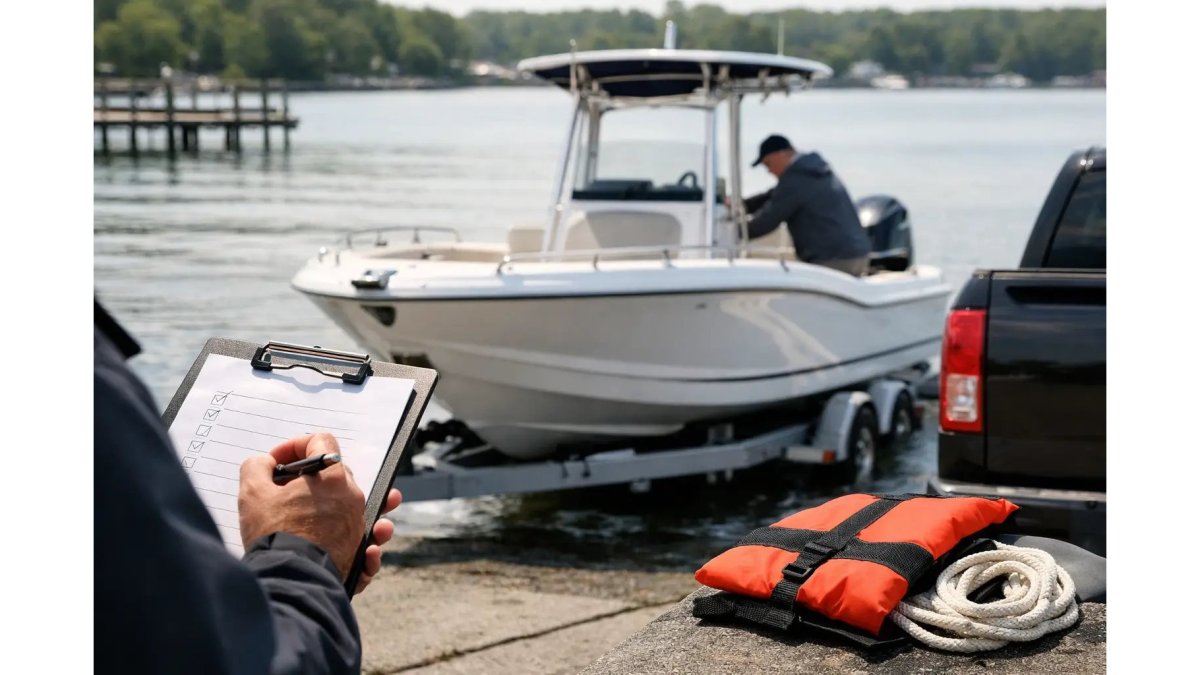
Affordable marine gear for center consoles starts with safety, lighting, and corrosion protection. Compare real prices and find gear that fits your layout.