
Is Marine Supply Pricing Transparent? A Buyer’s Guide
Marine supply pricing is transparent only when you check the full cost. Our Florida veteran’s checklist shows how to compare the full cost before you buy.
Use code SAVE25 for 25% off!
Discount may not be used for Weems and Path products Dismiss

Trust me when I say this. A fire on a boat rarely gives you time to plan. Smoke fills a small space quickly, an engine compartment can become too hot to approach, and the route back to the dock may not be an option. Good boat extinguisher placement is less about finding an empty patch of bulkhead and more about ensuring an extinguisher is reachable before you are standing in the middle of the problem.
For Florida boaters, that practical approach matters. Heat, salt air, aging wiring, fuel vapors, and long days running to the reef or across the bay all make routine prevention essential. The right marine fire extinguisher helps, but its location is what makes it usable.
Mount a portable extinguisher where someone can grab it while still having a clear way out. That simple standard eliminates many poor locations. An extinguisher buried in a cabin locker, tucked under a berth, or mounted deep in the engine compartment may technically be aboard, but it won’t help when a fire starts.
Consider the likely source of a fire and where you’ll be when you first notice it. On many center consoles, the helm is the natural primary location because it is central, visible, and usually accessible from the cockpit. On a cabin cruiser, one extinguisher near the helm and another near the galley or cabin exit often makes more sense than clustering them in one area.
Do not mount an extinguisher so close to a likely fire source that reaching for it would put you in danger. Mount an extinguisher for an engine-space fire outside the engine compartment, near the access hatch or another route, so you can discharge it without opening the compartment unnecessarily. Opening a hatch can feed an engine fire with fresh oxygen.
No single mounting layout fits every boat, but the following approach works well for many recreational vessels.
The helm is often the first choice for the primary extinguisher. Mount it within easy reach of the operator or a passenger, ideally in plain sight and low enough to release without stretching or stepping around a seat. A center console, inside-console bulkhead, front face of the leaning post, or protected side panel can work well.
Avoid locations exposed to constant spray, direct pounding, or feet and tackle bags. A secure, marine-rated bracket keeps the cylinder from becoming a projectile in rough water and prevents the mount from rattling loose over time.
Cooking appliances, shore-power equipment, battery chargers, and portable generators can create fire risks around enclosed spaces. Place an extinguisher near the galley or cabin exit, not behind the stove or at the far end of the cabin. The goal is to keep an escape route behind you as you respond.
On smaller cuddy cabins, this may mean mounting one just outside the companionway rather than inside. This small decision can make a major difference if smoke blocks the cabin.
Fuel, oil, hot exhaust components, starter wiring, and battery cables make the engine area a high-priority concern. Keep a portable extinguisher immediately outside the compartment access point. If the boat has a built-in fixed fire-suppression system, make sure every regular operator knows how to activate it and whether the engine shutdown procedure must be followed.
A fixed system protects the enclosed machinery space, but it doesn’t replace portable extinguishers at the helm, in the cabin, galley, or open cockpit. Check the system’s status indicator regularly and service it on schedule.
Battery banks, inverters, chargers, and distribution panels deserve special attention, particularly on boats with added electronics, trolling motors, or house-battery upgrades. If the electrical equipment is in a compartment, place the extinguisher outside it so you can reach it without opening a smoky door or hatch.
This is also a good reason to protect battery terminals, properly fuse wiring, and keep charger installations dry and well ventilated. An extinguisher is the last line of defense, not a substitute for sound electrical work.
An extinguisher rolling in a console or wedged behind life jackets does not count as ready. Use the correct bracket for the extinguisher’s size and weight, and fasten it to a solid surface with corrosion-resistant hardware. The retaining strap or latch should hold firmly but release in one simple motion.
Before drilling, look behind the mounting surface for wiring, fuel lines, plumbing, and hidden rigging. A convenient screw location is not convenient if it pierces a cable bundle or the side of a fuel tank. On fiberglass boats, you may need backing material for a durable installation.
Keep the label facing outward when possible. In a stressful moment, a quick glance at the operating instructions can help a passenger who has never used an extinguisher. It also makes routine inspections easier.
U.S. Coast Guard fire-extinguisher rules depend on factors such as boat length, propulsion type, installed fuel tanks, enclosed compartments, and the date the boat was built. Some newer recreational boats use a system based on the boat’s installed fire-extinguishing system capacity, while older boats may follow the familiar portable-extinguisher quantity requirements.
The detail that applies to nearly every boat owner is this: required portable extinguishers must be readily accessible and in serviceable condition. Federal requirements set a minimum, not necessarily the best arrangement for your boat.
A 22-foot bay boat may meet the requirement with one properly rated extinguisher, but carrying a second one can be a sensible choice if you run offshore, carry a crowd, cook aboard, or have added electrical equipment. Larger boats with separate helm, cabin, galley, and machinery areas usually need a distributed layout so no one has to cross a hazard to reach protection.
Choose a marine-rated extinguisher with the right classification and capacity for your vessel. Many recreational boats use dry-chemical models rated for Class B and C fires, which involve flammable liquids and electrical equipment. Clean-agent models can be attractive around electronics because they leave less residue, though they may cost more and still need to meet the applicable rating requirements. The right choice depends on the boat, not just the price tag.
Placement only works when the extinguisher is charged, visible, and functional. Make it part of your pre-departure routine, especially after a long stretch between trips. If the unit has one, confirm the pressure gauge is in the operable range; the safety pin and tamper seal are intact; the cylinder has no corrosion or dents; and the bracket is secure.
Florida’s humid, salty environment takes a toll on metal cylinders and mounting hardware. Inspect more closely if your boat lives in a wet slip, rides on a lift near open water, or spends the season under a canvas cover where moisture can linger. If the extinguisher is damaged, discharged, expired according to its service guidance, or no longer serviceable, replace it promptly rather than hoping it will work when needed.
It also pays to show regular crew members where the extinguishers are. Explain that the first priority is getting people clear of danger and sending a distress call when appropriate. If it is safe to fight a small fire, keep an exit behind you, aim at the base of the flames, and do not commit to a space you cannot leave.
A well-chosen bracket, a visible location, and an extra extinguisher in the right zone cost far less than searching for one through smoke. Before the next run, walk your boat from bow to stern and ask one honest question: could anyone aboard reach an extinguisher without moving toward the fire? If the answer is no, fix it at the dock.
Safe Boating,
William B.
Marine supply pricing is transparent only when you check the full cost. Our Florida veteran’s checklist shows how to compare the full cost before you buy.
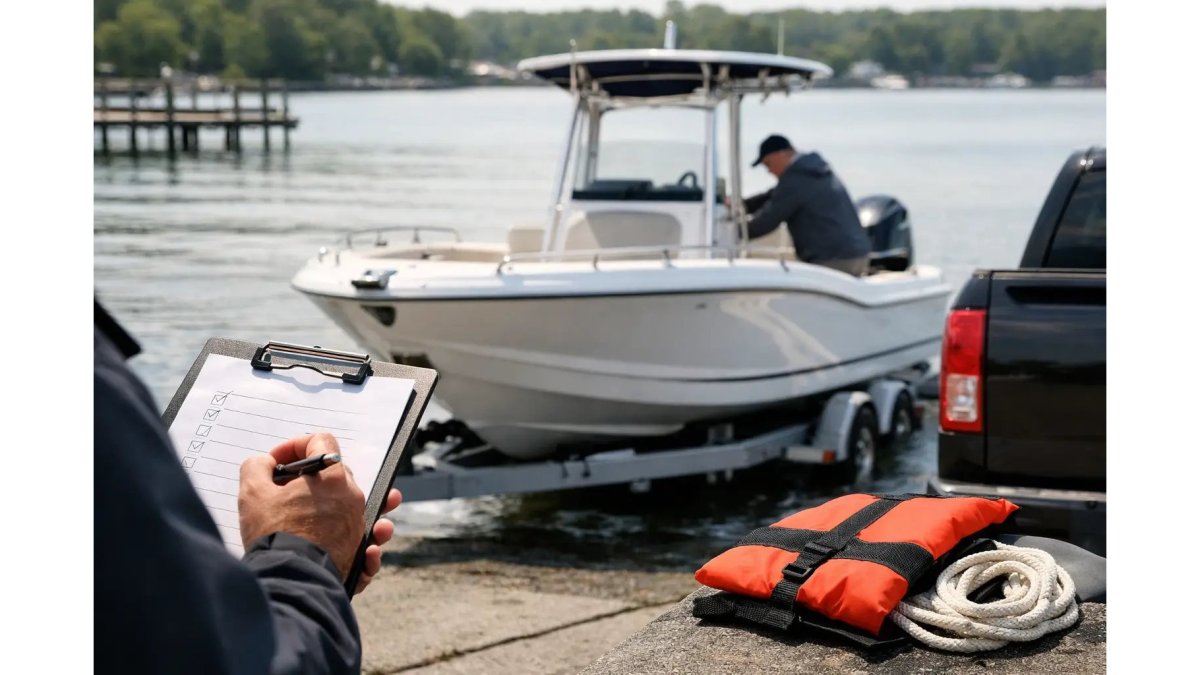
Affordable marine gear for center consoles starts with safety, lighting, and corrosion protection. Compare real prices and find gear that fits your layout.