
Is Marine Supply Pricing Transparent? A Buyer’s Guide
Marine supply pricing is transparent only when you check the full cost. Our Florida veteran’s checklist shows how to compare the full cost before you buy.
Use code SAVE25 for 25% off!
Discount may not be used for Weems and Path products Dismiss

One of the scariest feelings is being out at sea when something happens and you can’t communicate with anyone. You can hear a VHF call only if someone is within range and listening. A flare can be hard to spot in rough weather or after dark. Marine EPIRBs are built for the moment when neither option is enough, when a serious offshore emergency requires search-and-rescue authorities to know help is needed and where to start looking.
For Florida boaters who run beyond the inlet for fishing, cross to the Bahamas, cruise the Keys, or simply make long coastal passages, an EPIRB is one of the most meaningful pieces of safety equipment on board. It is not a substitute for a float plan, life jackets, a VHF radio, or sound judgment. It is the backstop for the worst-case situation: abandoning the boat, a medical emergency far from shore, fire, flooding, or a vessel that goes down fast.
EPIRB stands for Emergency Position-Indicating Radio Beacon. Modern units transmit on 406 MHz, a frequency monitored by the international Cospas-Sarsat satellite system. When activated, the beacon sends a unique identification number that is tied to the owner and vessel registration. That information helps rescue coordinators confirm the alert and gather details to guide the response.
Most current EPIRBs also include an internal GPS or other global navigation satellite system receiver. The beacon can transmit its calculated position along with the distress alert, which greatly narrows the search area. Some models also transmit a 121.5 MHz homing signal. That shorter-range signal helps aircraft or vessels locate the beacon during the final stages of a search.
The key word is emergency. An EPIRB is not a check-in device, a weather tool, or a way to request a tow. Once activated, it may set a rescue response in motion. Use it only when there is grave and imminent danger, and you need immediate assistance.
The right beacon depends less on your boat’s length than on where and how you use it. A center console that regularly runs 30 miles offshore faces a different risk profile than a pontoon that stays in protected water, even if the two boats are similar in size.
A Category I EPIRB is installed in an exterior bracket with a hydrostatic release unit. If the vessel sinks, water pressure releases the beacon from its bracket. The unit then floats free and activates automatically at the surface.
This is the strongest choice for serious offshore use because it can send a distress signal even if the crew cannot reach it. It is particularly sensible for overnight trips, extended bluewater runs, passagemaking, and boats that may encounter rapidly changing weather. The trade-off is cost, a more permanent installation, and the need to keep the bracket accessible and properly maintained.
Placement matters. Mount a Category I unit where it can float clear if the boat goes down. Do not bury it under a hardtop, lock it inside a cabin, or install it where rigging, canvas, or other equipment could trap it.
A Category II EPIRB is manually activated by a person. It is commonly stored in a bracket or grab bag, and many models float once in the water. It often suits day boaters, anglers, and owners who want the protection of a 406 MHz distress beacon without a float-free installation.
Its limitation is obvious: someone must retrieve and activate it. Keep it within reach from the helm or cockpit, not in a compartment that may be inaccessible after a fire, capsize, or sudden flooding. If you carry a ditch bag, consider how you will grab both the bag and the beacon in a real emergency.
An internal GPS receiver is worth having. It allows the beacon to report a more precise location instead of relying solely on satellite Doppler calculations. When minutes matter and sea conditions are building, a smaller search area is a major advantage.
Some newer beacons offer return link service, which can visually confirm the satellite system received the distress message. That reassurance can be valuable, but it does not mean rescuers are immediately beside you or that you should stop using every other available means of communication.
Size, battery life, buoyancy, strobe visibility, and bracket design also matter. A beacon with a long listed battery replacement interval is convenient, but it still needs regular inspection. Choose a unit approved for U.S. use, suited to your operation, and simple enough that every regular crew member can recognize and use it.
An EPIRB is registered to the vessel, while a personal locator beacon, or PLB, is registered to an individual. Both use the 406 MHz satellite system and can be lifesaving. They are not interchangeable in every situation.
A PLB is compact enough to wear on a life jacket or carry in a pocket. That makes it a strong addition for a solo angler, paddlecraft user, crew member on a delivery, or anyone who could become separated from the boat. An EPIRB is generally larger, designed for the marine environment, and easier for rescuers to associate with the vessel and its voyage details.
For regular offshore boating, an EPIRB is usually the better primary beacon. A PLB can add another layer of protection, especially when everyone aboard wears one. If the budget requires choosing only one, think first about the most likely emergency. If the boat is the central platform for your crew and gear, start with the EPIRB. If separation from the vessel is a realistic personal risk, seriously consider a PLB.
Buying the beacon is only the first step. A 406 MHz beacon must be registered with NOAA, and the registration information needs to stay current. Include accurate owner contact information, emergency contacts, vessel details, and any information that can help responders understand where and how you operate.
This is not paperwork for paperwork’s sake. When an alert reaches rescue authorities, current registration details can help them determine whether it is a true distress situation, contact your emergency people, and learn useful facts about the vessel. If you sell the boat, move, change phone numbers, or replace emergency contacts, update the record promptly.
Make sure the beacon’s identification number on the registration matches the unit in your hands. Keep a copy of the registration information with your vessel documents, and show regular crew where the EPIRB is stored and how to activate it.
An EPIRB earns its place aboard through maintenance. Before a trip, look at the unit and its bracket. Check for corrosion, cracks, a loose antenna, water intrusion, faded labels, or anything blocking the release path. Saltwater, sun, and vibration can quietly wear down equipment over time.
Follow the manufacturer’s self-test instructions. Most beacons have a built-in test function that checks basic operation without sending a real distress alert. Do not activate an EPIRB outside the approved test procedure, and never treat an activation as a demonstration for guests.
Pay close attention to the battery replacement date and, for Category I models, the hydrostatic release expiration date. These are service items, not suggestions. Replace them through an authorized service provider or according to the manufacturer’s guidance. After service, confirm that the unit is reinstalled correctly and that its registration still reflects the beacon’s identification.
A practical pre-departure routine should include more than the beacon. Confirm that life jackets are accessible, your VHF radio is charged and working, visual distress signals are current, navigation lights function, and someone ashore has your float plan. An EPIRB gives rescuers a powerful signal, but the rest of your safety gear helps you prevent trouble and manage it until help arrives.
If you are taking on water but still control the boat, use VHF first if possible. Broadcast a mayday, provide your position, state the nature of distress, describe the vessel, and say how many people are aboard. Continue using pumps, life jackets, flares, and other available equipment as conditions require.
Activate the EPIRB when the situation becomes life-threatening, particularly if communication is failing, you are abandoning ship, or the boat may not remain afloat. Keep the beacon with the survivors. If it is a manual model, activate it, deploy the antenna as directed, and keep it clear of obstructions. If the beacon is floating, avoid tying it down in a way that could interfere with its antenna or buoyancy.
No safety product can promise a perfect outcome. Satellite visibility, weather, location, and the time required to launch and reach a rescue asset all affect the response. But a registered, functioning EPIRB gives professional rescuers a far better starting point than a missing boat and an overdue float plan.
Before your next offshore run, take one quiet minute at the dock: check the beacon, confirm its date, and make sure everyone aboard knows where it is. That small habit is the kind of preparation you hope never to use, and will be grateful for when the water stops being forgiving.
Safe Boating,
William B.
Marine supply pricing is transparent only when you check the full cost. Our Florida veteran’s checklist shows how to compare the full cost before you buy.
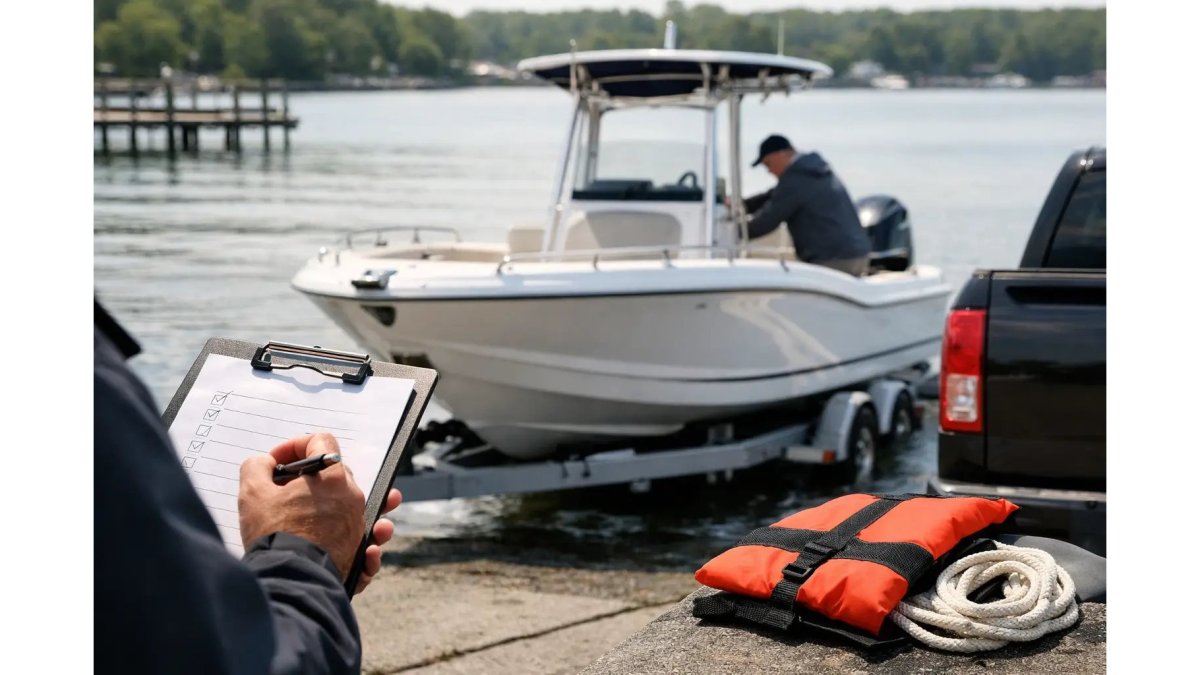
Affordable marine gear for center consoles starts with safety, lighting, and corrosion protection. Compare real prices and find gear that fits your layout.