Best Boat Insurance for Florida Boat Owners
A good day on the water can turn expensive fast when a lower unit meets an unmarked obstruction, a storm

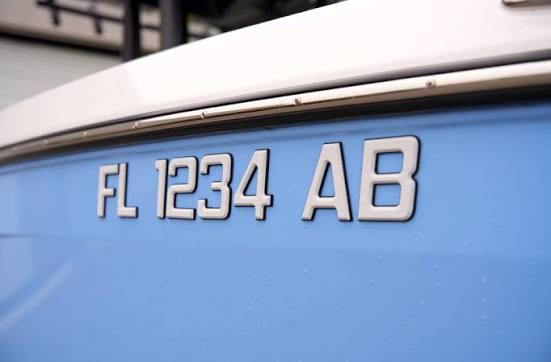
If you have ever registered a boat in Florida, you have likely had the pleasure of visiting the Tax Collector’s office. Once the process is complete, you are assigned a unique combination of letters and numbers that belong exclusively to your vessel. But what do those characters mean— and why does it matter how you display them?
Let us break it down and explain why proper placement, spacing, and compliance are more important than many boaters realize.
Florida Statutes, Chapter 328, designates Florida Highway Safety and Motor Vehicles (FLHSMV) as the agency responsible for issuing vessel titles and registrations. These registrations must be completed at your local County Tax Collector’s office or through a licensed plate agency, an unforgettable experience.
Under FLHSMV regulations, all motorized vessels operating on Florida’s public waterways must be titled and registered. You have 30 days from the date of purchase—whether new or used—to complete this process. During those 30 days, you may legally operate the vessel only if proof of purchase is carried on board.
After 30 days, if the vessel remains unregistered, operating it is considered a second-degree misdemeanor under Florida law.
So, why does the placement matter? According to FLHSMV, the Permanent Florida registration should be displayed:
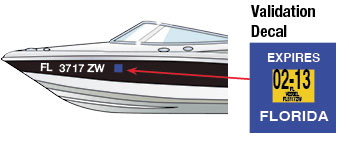
Image courtesy of FLHSMV
So, your numbers should read: FL 3717 ZW. (With one letter-width space between letters and numbers) Not FL3717ZW.
Ok, now why? This will be subjective, but it is about attention to detail.
While vessel numbering is primarily a state requirement, improper display can still draw the attention of the U.S. Coast Guard. From a boarding officer’s perspective, incorrect or noncompliant registration numbers are considered a minor infraction — but more importantly, they often raise a red flag. Seeing a vessel with improperly displayed numbers usually prompted the question, “If they’re not following the basics, what else might be wrong?” That vessel often became a candidate for boarding.
Not to suggest that there is any wrongdoing going on, but do not give law enforcement a reason to take a closer look. Small oversights can signal inexperience or lack of compliance — much like cruising with your fenders still hanging over the side. It sends the wrong message. Dont be that person.
In Florida, improper vessel numbering is classified as a civil infraction and may result in fines ranging from $120 to $500, depending on whether the matter goes before a hearing. Taking the time to display your numbers correctly is a simple step that protects you from unnecessary scrutiny and potential penalties.
For more information, see the FLHSMV website: https://www.flhsmv.gov.
Safe boating,
William B.
A good day on the water can turn expensive fast when a lower unit meets an unmarked obstruction, a storm
A calm morning at the ramp can make any boat look like the right boat. The real difference shows up