
Is Marine Supply Pricing Transparent? A Buyer’s Guide
Marine supply pricing is transparent only when you check the full cost. Our Florida veteran’s checklist shows how to compare the full cost before you buy.


Last Updated: November 14, 2026
Quick Summary
You protect Florida coastlines by slowing down before flats and channels, anchoring in sand instead of seagrass or reef, and keeping fuel, oil, and trash off the water. These habits cost attention, not money, and they prevent the wake and anchor damage that scars shallow habitat for years.
Florida’s shallow flats, seagrass beds, and mangrove shorelines are the heart of why we boat here, and the reason so many of us work to protect Florida coastlines.

At Boatsman’s, we’ve spent years helping Florida boaters gear up for these waters.
The good news is that protecting Florida coastlines while boating rarely asks you to give anything up.
Eco-friendly boating means running your vessel so the water, bottom, and wildlife come out no worse than they went in. Most of it comes down to speed, wake, and what leaves your boat.
Here are the habits that matter most:
None of these cost money. They cost attention.
A boat wake in deep water is harmless. That same wake in two feet of water scours the bottom and undercuts shoreline roots.
Wake damage shows up fast in Florida. It erodes marsh edges, muddies clear water, and uproots seagrass. Once a flat is scarred, it can take years to recover.
So ease off the throttle well before a no-wake zone, not at the sign. Idle speed through manatee zones and narrow channels. that cuts wake and protects shallow shoreline, take a look at the Dock Edge Wake Watchers mooring system.
Fuel spills and trash are the two easiest problems to prevent. Both start at the dock.
Fuel slowly and stop before the vent burps. Hold a rag under the nozzle and wipe the deck after. Keep a spill kit aboard, and never pump a bilge that holds oil overboard.
For trash, pack out everything you bring. That includes fishing line, which entangles birds and turtles long after it leaves your hand.
Learning how to protect coral reefs while boating comes down to three rules: don’t touch bottom, don’t anchor on reef, and don’t drag gear across it.
Coral grows slowly. A single anchor strike can kill a patch that took decades to build.
Use these habits on reef:
Polarized sunglasses help here. They cut surface glare so you can actually see the dark shapes of reef and grass below. Seeing the bottom is the first step to missing it.
Seagrass is the nursery for Florida’s fishery. Snapper, trout, and manatees all depend on it, and a prop scar through a flat can last for years. The tricky part is that seagrass does not look like a hazard from the helm, it looks like a dark patch of water.
That is why anchoring well is a skill, not a rule. Here is how to think about it habitat by habitat.
Polarized sunglasses are the single most useful tool for this. They cut surface glare so you can tell sand from grass from rock from live bottom.
A chartplotter with a good bottom-composition layer helps, but it is a guide, not a guarantee. Tides, storms, and seasonal growth move the edges of grass beds, so trust your eyes over last year’s chart.
Once you have found sand, lower the anchor rather than throwing it. Let out scope, set it with a slow reverse, and note your swing circle so you do not drag across the grass edge as the wind shifts.
If you are anchoring in or near grass, use a design that bites and releases without plowing. The Panther Water Spike anchor for 22 to 35 foot boats is built for that kind of work.
Where mooring buoys are installed, common in the Florida Keys and around popular reef and grass areas, use them. They exist specifically to keep anchors off sensitive bottom.
Marked channels are the other half of the equation. Idle or slow through them, and resist the shortcut across a flat even when your chartplotter shows deep water. Channels are placed where they are for a reason.
Watch out: a Danforth-style anchor that sets well in sand can skip across grass and never bite, so you may think you are anchored when you are actually drifting. If the anchor will not set, move to a different patch rather than dragging it repeatedly through the same bed.
If you run aground on a flat or your prop cuts through grass, stop and assess before you power off. Shifting weight and backing out slowly beats spinning the prop in the grass.
Anchoring well is one of the cheapest conservation tools you own. It costs attention, not money, and it keeps the flats that make Florida boating worth the trip.
Florida boating and manatee safety is simple math: slower boat, more reaction time. Manatees surface to breathe and often sit just below the surface where you can’t see them.
The rules are there for a reason. Manatee protection zones are marked and enforced, and the Florida Fish and Wildlife Conservation Commission sets them.
Post a lookout in manatee country. Ask them to watch the water ahead, not their phone.
A biodegradable boat cleaner breaks down in the environment instead of leaving a film of harsh chemicals behind. The catch is that some green cleaners give up cleaning power to get there.
They don’t have to. You want a formula that lifts dirt and grime without stripping your wax, and that rinses clean into the water you boat in.
Look for these traits:
Our pick is the Star Brite Ez On Ez Off hull and bottom cleaner.
Mistakes happen on shallow water. What you do next decides how much damage the bottom takes, and, in some cases, whether you stay legal. This is the part most boating guides skip, so treat it as your incident playbook.
If you run aground, kill the throttle and check the situation before you do anything. Shifting weight and backing out slowly beats spinning the prop in the grass. Spinning a prop in a grass bed turns a soft grounding into a scar that can last years.
Check for water intrusion, listen for unusual noises, and look at your lower unit and prop before you run hard again. A bilge pump that works matters here, water intrusion after a grounding is a real risk, and the Johnson Pump Aqua Void 800 GPH bilge pump is a solid replacement if yours is tired.
Not every bump needs a report. A light touch on sand that leaves no visible damage is different from a prop that cuts a trench through seagrass or an anchor that breaks coral.
Watch out: do not assume someone else will report it. A single unreported prop scar is easy to dismiss; a hundred of them is how a flat dies.
The most common pollution incidents are not dramatic. They are a sheen in the bilge, a burp at the fuel vent, or a holding tank valve left open. If you see fuel or oil in the bilge, do not pump it overboard.
Fuel slowly and stop before the vent burps. Hold a rag under the nozzle and wipe the deck after. Never pump a bilge that holds oil overboard.
Note the location, time, and what happened. Take photos if it is safe to do so. Report significant habitat damage to the FWC, and report fuel or oil spills to the Coast Guard. Keep a record aboard, it helps responders and it protects you if questions come later.
A grounding usually points to a navigation habit: running a flat at speed, trusting an old chart, or cutting a channel marker. After the incident, review your route and your chartplotter settings.
Mistakes are part of shallow-water boating. Responsible response is what separates a minor bump from a lasting scar.
Here is the incident playbook in brief, from the first second after you touch bottom to fixing the habit that caused it.
| Step | What to do |
|---|---|
| 1 | Stop and assess before you power off |
| 2 | Decide whether damage counts as significant |
| 3 | Handle fuel, oil, and sewage before a spill |
| 4 | Report and document location, time, and what happened |
| 5 | Fix the cause, not just the symptom |
Protecting Florida coastlines while boating is a habit, not a purchase.
That’s the whole idea behind Boatsman’s. Boating is expensive, but maintaining one shouldn’t have to be.
If you want the bigger picture on conservation, start with our guide to coastal conservation for boat owners.
The best way to protect Florida’s coastlines is to boat like you plan to come back to them.
The biggest wins come from slowing down in shallow water, staying inside marked channels, and anchoring so your chain never drags across seagrass. Keep fuel and trash off the water, use a biodegradable boat cleaner for washdowns, and give manatees and nesting birds plenty of room. These habits protect the same habitat that supports Florida fishing and boating, and they cost you almost nothing to adopt.
Use mooring buoys where they are installed instead of dropping anchor, and if you must anchor, look for bare sand. Never drag a chain across grass or reef. Stay in marked channels through shallow flats, trim up and go slow in areas you do not know, and check your chartplotter before you run a new cut. A single prop scar through seagrass can take years to recover.
Stop, check for injuries, and call the Florida Fish and Wildlife Conservation Commission hotline at 1-888-404-3922 to report it. Note your location and the animal’s condition, and stay with the manatee if it is safe to do so until help arrives. Do not try to move or tow an injured animal. Reporting quickly gives responders the best chance to help, and it is the right call for Florida boating and manatee safety.
Wash on land or at a designated washdown area where runoff can be captured, and use a biodegradable boat cleaner like TD Mop Frolic Soap instead of harsh detergents. Skip the pressure washer on gelcoat in the water, use a bucket to control how much soap goes overboard, and never rinse fuel or oil residue into the marina basin. Small choices at the wash rack keep Florida coastlines cleaner.
Marine supply pricing is transparent only when you check the full cost. Our Florida veteran’s checklist shows how to compare the full cost before you buy.
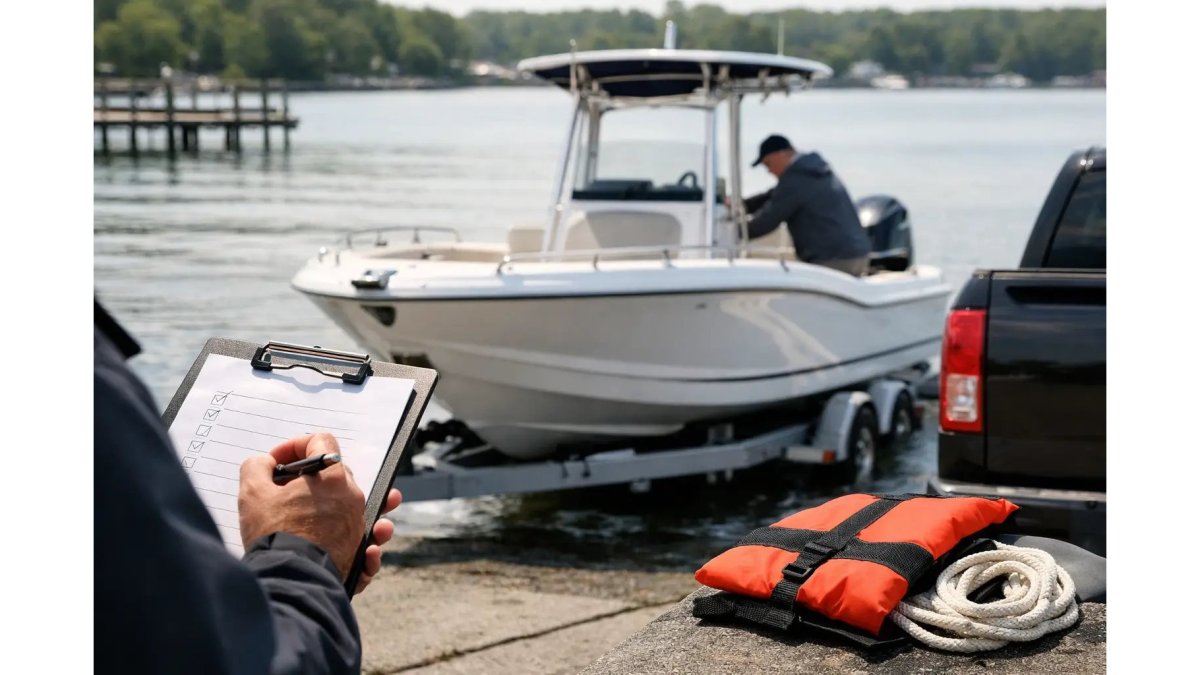
Affordable marine gear for center consoles starts with safety, lighting, and corrosion protection. Compare real prices and find gear that fits your layout.