
Is Marine Supply Pricing Transparent? A Buyer’s Guide
Marine supply pricing is transparent only when you check the full cost. Our Florida veteran’s checklist shows how to compare the full cost before you buy.
Use code SAVE25 for 25% off!
Discount may not be used for Weems and Path products Dismiss
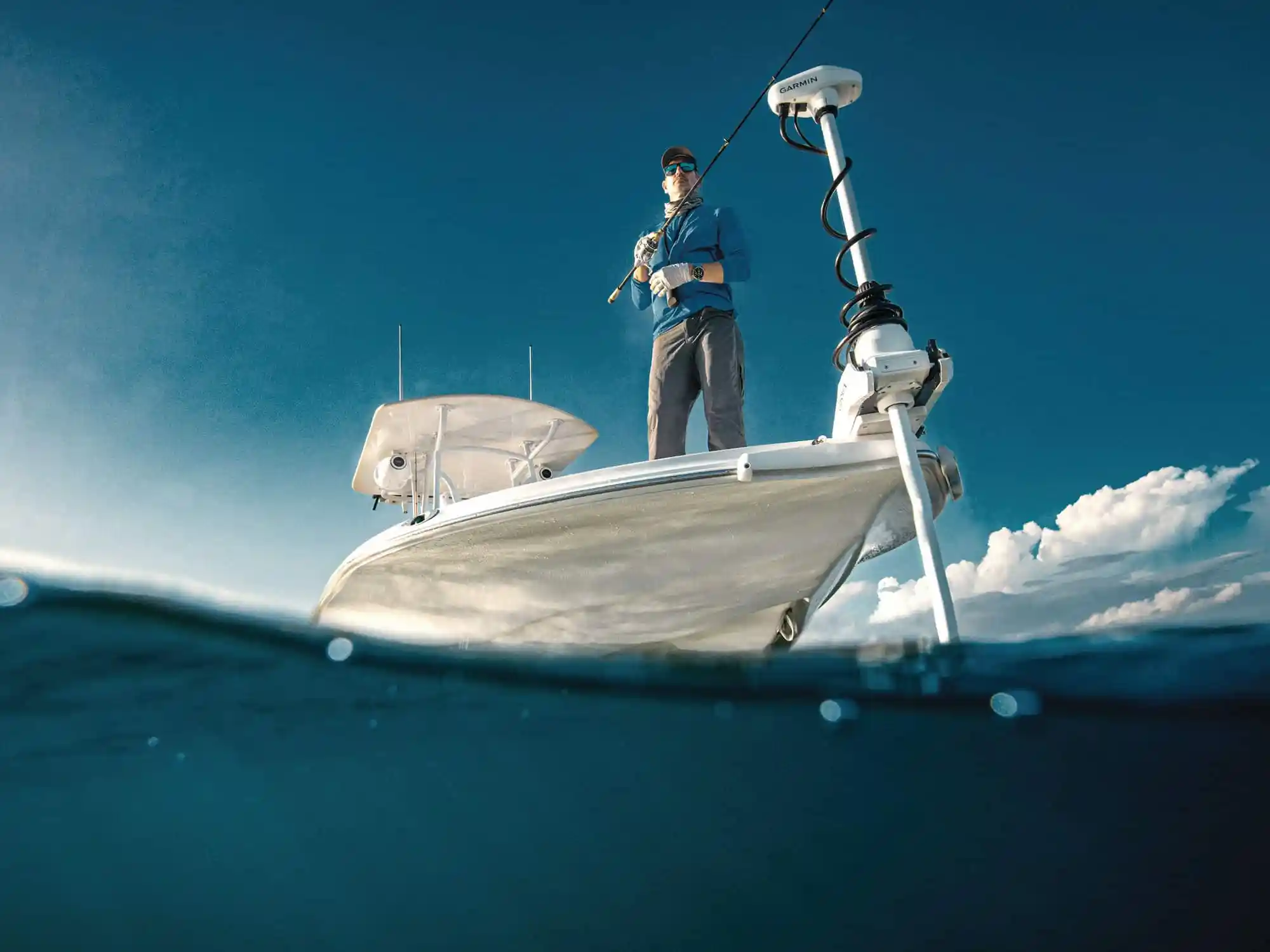
A good fish in Florida Back Bay can be sitting in three feet of water under a mangrove line, but you will not get a second chance if your approach is noisy, your motor shaft is too short, or your battery quits before the tide turns. Trolling motors are one of the most useful upgrades an angler can make, whether you run a bay boat, center console, skiff, pontoon, or bass boat. The right setup lets you hold position, work a shoreline carefully, and spend less time fighting wind and current.
Choosing one is not simply a matter of buying the highest thrust rating you can afford. Boat size, bow height, hull style, battery capacity, local conditions, and how you fish all matter. For Florida boaters, where a calm morning can turn into a breezy afternoon, and saltwater is part of the routine, getting those details right makes a real difference.
Before comparing brands, decide where and how the motor will earn its keep. A freshwater bass boat used on sheltered lakes has different needs than a bay boat fishing open grass flats, tidal creeks, or an inlet-adjacent shoreline. Wind, tide, and hull windage create load on the motor long before boat length alone tells the full story.
Saltwater anglers should prioritize a motor specifically rated for saltwater use. That generally means better corrosion protection, sealed electronics, protected connections, and hardware built to withstand brackish and saltwater exposure. Even a saltwater-rated unit needs care. Rinse it after every trip, inspect the prop for fishing line, and keep electrical connections clean and dry.
A pontoon boat can need more thrust than a similarly sized fiberglass hull because of its broad profile in the wind. A shallow-draft skiff may be light, but a strong cross-current can still make a marginal motor work hard. Think about your toughest normal day, not the occasional glass-calm morning.
Thrust is the pulling force of a trolling motor, measured in pounds. It isn’t directly comparable to outboard horsepower, and more thrust doesn’t automatically mean faster movement. It means the motor has more authority to move and control the boat when wind, current, or added load are working against it.
As a practical starting point, many smaller boats perform well with 55 pounds of thrust, while midsize bay boats and larger bass boats often benefit from 80 pounds. Boats that regularly fish exposed water, carry several passengers, or have substantial windage may call for 112 pounds of thrust. Manufacturer recommendations for boat size are helpful, but treat them as a baseline rather than the final answer.
There is a trade-off. Higher-thrust motors commonly require a 24- or 36-volt battery system, which adds cost, weight, charging requirements, and space demands. Still, running a properly sized motor at a moderate setting is usually better than running an undersized motor at full power all day. You gain control, reduce strain on the system, and preserve more battery reserve for the ride home.
A 12-volt system is straightforward and works well for smaller boats and lighter-duty use. A 24-volt system typically uses two matching batteries wired in series, while a 36-volt system uses three. The higher-voltage setups are the common choice for serious saltwater anglers because they support greater thrust and longer runtime.
Use marine deep-cycle batteries built for repeated discharge and recharge. Lithium batteries offer major weight savings and can provide consistent power through much of the discharge cycle, but they cost more up front and must match your charger and motor requirements. Quality AGM batteries remain a dependable option for boaters who want proven performance without the higher entry price of lithium.
Do not mix old and new batteries, battery types, or capacities in a multi-battery bank. A weak battery can limit the entire system. A properly sized onboard charger is equally important, particularly for anglers who fish multiple days each week.
A trolling motor needs enough shaft length to keep the propeller submerged when the boat rocks, crosses a wake, or turns into a chop. If the prop breaks the surface, it cavitates, loses thrust, makes noise, and can spook fish. Too much shaft length, on the other hand, can hang lower than necessary in shallow water and make stowing more awkward.
Measure from the mounting surface at the bow to the waterline, then account for the way your boat sits when loaded. As a general rule, low-profile bass boats often use shorter shafts, while bay boats and center consoles commonly need 60-inch shafts or longer. Boats with high bows, raised casting decks, or frequent rough-water use may require 72 inches.
When you’re unsure, choose the longer appropriate shaft. An extra few inches rarely cause trouble, but a shaft that is too short becomes frustrating the first time an afternoon sea breeze builds across the bay.
GPS anchoring has changed the way many anglers fish. Often called anchor lock or spot lock, this feature uses GPS to hold the boat near a selected position without deploying a physical anchor. It is useful when working a bridge piling, staying over a school of fish, re-rigging in a current, or holding on the edge of a channel.
It is not magic. GPS position hold can wander in heavy wind or strong current, and it will draw more battery power as the motor constantly corrects. In shallow water around seagrass, oyster bars, or sensitive bottom, though, it can reduce the need to drop an anchor and disturb the area.
Other worthwhile features include wireless foot pedals, handheld remotes, heading lock, route recording, and integration with compatible fish finders. These features are valuable when they fit your fishing style. A tournament angler who follows offshore contour lines may benefit greatly from navigation integration. A backcountry angler who wants simple, quiet control may prefer fewer electronics and a reliable cable-steer setup.
Bow-mounted motors provide the best boat control for most fishing situations. Pulling the boat from the bow makes it easier to point into wind and current, work structure, and cast ahead of the boat. They are the standard choice for bass boats, bay boats, and many center consoles with usable bow space.
Transom-mounted motors are simpler, often less expensive, and a sensible fit for jon boats, small skiffs, inflatables, and auxiliary applications. They can also be a practical choice when bow mounting isn’t possible. Their limitation is control: pushing a boat from the stern is less precise in challenging conditions.
A trolling motor is only as dependable as the installation. Confirm that your bow has enough flat, reinforced mounting area and that the stowed motor will clear rails, hatches, navigation lights, and trailer guides. A quick-release bracket can make storage and security easier, but it must be rated for the motor and mounted to a solid structure.
Pay close attention to wire size, circuit protection, and battery placement. Long cable runs with undersized wire create voltage drop, which reduces performance and can cause electronic issues. Follow the motor manufacturer’s wiring specifications, install the required circuit breaker, and use marine-grade terminals with properly sealed connections.
Weight distribution deserves a look, especially on smaller boats. Three batteries, a charger, and a large motor can add meaningful weight forward or aft depending on the layout. Keep service access in mind too. Batteries need inspection, chargers need ventilation, and connections should not be buried behind gear you have to remove every time.
Runtime depends on battery capacity, motor speed, boat load, wind, current, and how often you use position hold. No honest single-hour estimate fits every boat. A motor used at low speed while stalking a shoreline consumes far less power than one holding a boat on a windy point for hours.
For most anglers, the sensible approach is to buy enough battery capacity for a full, demanding fishing day with reserve left over. Watch your battery monitor during the first few outings and learn what your normal use looks like. If you routinely return with deeply discharged batteries, you need more capacity, a more efficient approach, or both.
The best trolling motor fits your boat, your water, and the way you actually fish. Choose enough thrust for a windy tide, enough shaft for a rough afternoon, and a battery system you can maintain confidently. Then give the equipment basic care after each trip, and it will let you spend more of your day where it belongs: quietly within casting range.
Safe boating,
William B.
Marine supply pricing is transparent only when you check the full cost. Our Florida veteran’s checklist shows how to compare the full cost before you buy.

Affordable marine gear for center consoles starts with safety, lighting, and corrosion protection. Compare real prices and find gear that fits your layout.