
Best Boat Insurance for Florida Boat Owners
A good day on the water can turn expensive fast when a lower unit meets an unmarked obstruction, a storm
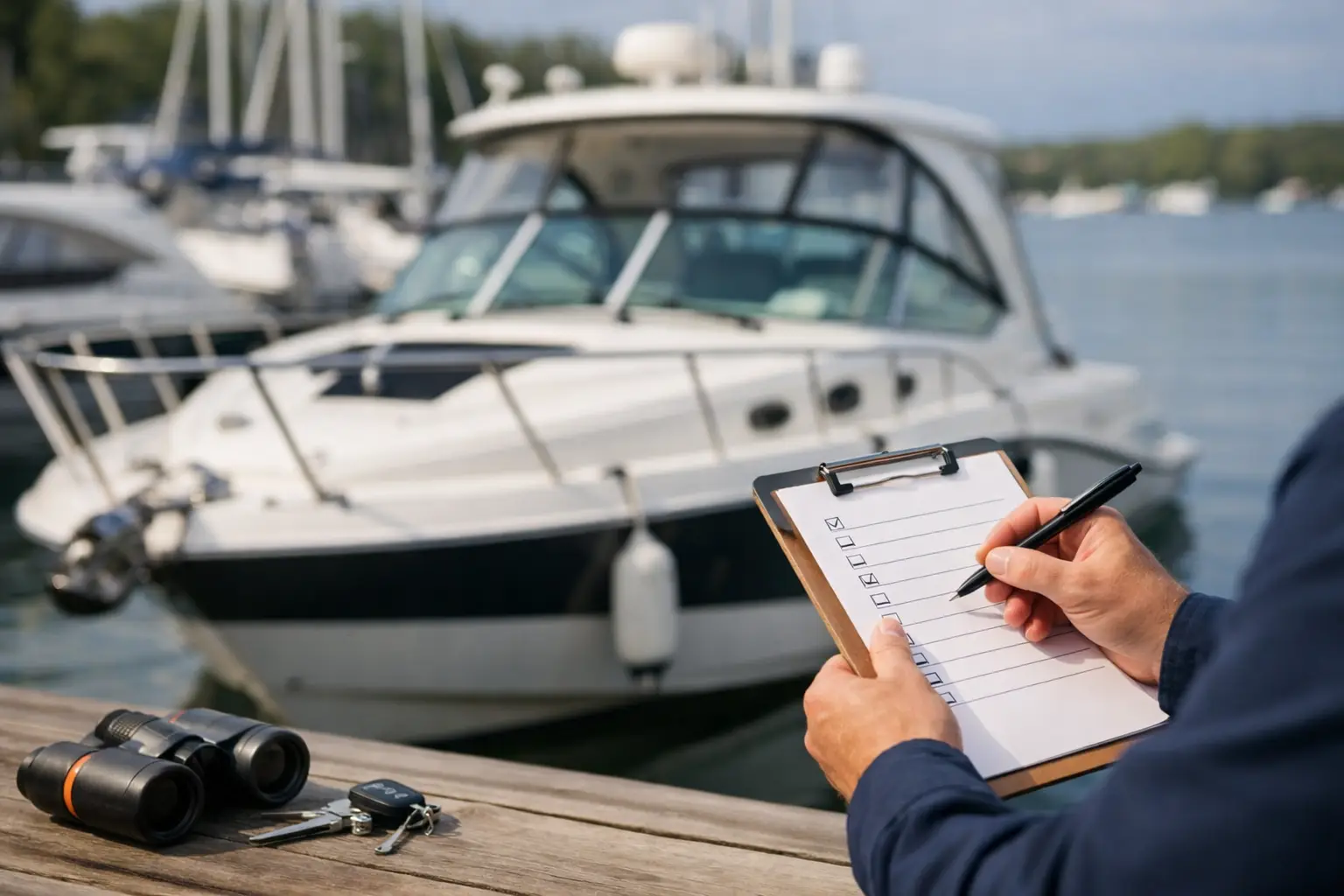
According to the latest trends, Boaters are skipping the high-priced newer boats for older ones. But there are some things to keep in mind before you buy. A shiny gelcoat can hide a tired boat. That is why a solid used boat buying checklist matters more than a polished sales pitch. If you are shopping for a center console, bay boat, pontoon, or family cruiser, the goal is simple – find the real condition of the boat before the real bills start showing up.
Buying used can be a smart move, especially in Florida and other coastal markets, where there is a steady supply of boats and many owners who upgrade often. But salt, sun, and inconsistent maintenance can age a boat fast. A good deal on day one can turn into an expensive project by month two if you skip the basics.
A proper checklist is not there to help you admire the boat. It is there to help you verify it. Anyone can fall for clean upholstery and a smooth idle at the dock. What matters is whether the hull is sound, the engine has been maintained, the systems work under load, and the paperwork is clean enough to transfer without trouble.
That also means understanding your own use before you inspect anything. A flats boat for weekend fishing has very different priorities than a pontoon for family cruising or a dual console for nearshore runs. Storage, fuel burn, draft, trailer fit, and passenger layout all matter, so the right boat is not always the newest or best-looking one. It is the one that matches how you actually boat.
Start with the overall impression, but do not stop there. Walk around the boat slowly and look at how it has been kept. A boat that is generally clean, organized, and well-maintained often reflects an owner who stays ahead of service. A dirty boat is not always a bad boat, but neglect tends to leave clues.
Look closely at the hull and deck. Check for cracks, repairs, blisters, soft spots, and uneven areas in the fiberglass. Small cosmetic scratches are common. Structural issues are a different story. If the deck feels spongy underfoot, especially near hatches, consoles, or seats, you may be dealing with water intrusion or rot in older construction.
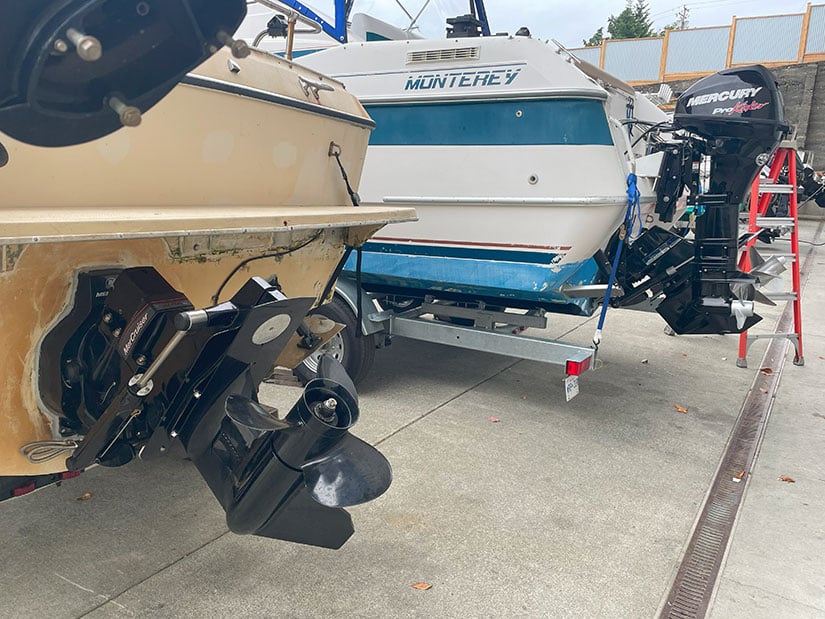
Inspect the transom carefully, especially on outboard boats. Stress cracks around motor mounts, flexing when the engine is trimmed, or signs of previous repair deserve extra attention. Transom work can be done right, but it needs to be evaluated honestly because it can also become one of the most expensive surprises on the boat.
If the boat comes with a trailer, inspect it with the same level of scrutiny. Tires, hubs, bunks, lights, brakes, straps, and the frame all matter. A neglected trailer can ruin a good purchase fast, and in some cases, the trailer is what keeps the boat safe on its way to and from service, storage, and the ramp.
It does. Engine condition is usually the biggest factor in the value of a used boat. Hours matter, but they do not tell the whole story. A well-maintained outboard with higher hours can be a better buy than a low-hour engine that sat unused for long stretches with old fuel and minimal service.
Ask for maintenance records before you get too deep into the deal. You want to see routine service, water pump changes, lower unit service, oil changes on four-strokes, and any major repairs or recalls. If records are missing, that does not automatically kill the deal, but it should affect how cautious you are and what price makes sense.
Open the cowling and look for corrosion, oil residue, cracked hoses, loose wiring, and signs of overheating. Check the propeller and skeg for impact damage. Pull the engine oil dipstick if applicable and look for contamination or neglect. On the lower unit, milky gear lube can point to water intrusion.
Compression testing and engine diagnostics are where the conversation moves from seller claims to facts. On modern outboards, a scan can confirm hours, RPM history, and fault codes. On older motors, compression and leakdown results can reveal issues that a dockside idle never will. If you are serious about the boat, this is money well spent.
Used boats often fail buyers in the systems, not just the structure. Turn everything on. Navigation lights, bilge pumps, livewells, washdowns, horn, trim tabs, gauges, stereo, electronics, freshwater pumps, and head systems should all be tested. A few minor items may not be deal-breakers, but a pile of small failures can signal years of deferred maintenance.
Open bilge compartments and battery areas. Corroded terminals, messy wiring, household connectors, standing water, and weak battery mounting all tell a story. Boats live in a harsh environment, and clean electrical work matters. Sloppy wiring jobs can lead to frustrating faults and real safety concerns.
Check the fuel system for age and condition. Brittle fuel lines, leaking primer bulbs, corroded tanks, and strong fuel odors deserve attention. Ethanol-related issues have caused plenty of trouble in older boats, especially if they sat for long periods or were serviced inconsistently.
Never buy a used boat without a sea trial unless the price already assumes serious unknowns. At the dock, many boats sound fine. Under load, issues appear. Hard starting, poor acceleration, vibration, steering problems, overheating, charging problems, and electrical glitches often reveal themselves only when the boat is actually run.
During the trial, watch cold start behavior, idle quality, hole shot, cruising RPM, top-end performance, steering feel, trim response, and whether the boat tracks properly. Look at gauges and verify that electronics function while underway. If the seller says a feature works but cannot demonstrate it on the water, assume it needs attention until proven otherwise.
This is also the time to notice how the boat fits you. Is the helm comfortable? Is visibility good? Is there enough storage for your gear? Does the layout work for fishing, sandbar days, or taking the grandkids out? A used boat can check out mechanically and still be the wrong boat for your life on the water.
For many buyers, the best money spent is on a marine surveyor. On larger boats, older boats, or any purchase with enough dollar value to sting if things go sideways, a survey is not overkill. It is basic protection. A good surveyor brings objectivity and catches issues most buyers miss.
Paperwork deserves the same attention as the hull and engine. Confirm title status, registration, hull identification number, trailer VIN, lien release if applicable, and matching serial numbers on the engine. If anything feels vague, delayed, or inconsistent, slow down. A boat with paperwork issues can become your problem very quickly.
Ask what equipment is included in the sale. Safety gear, trolling motor, anchors, electronics, covers, spare prop, life jackets, and trailer accessories all have value, but only if they are actually part of the deal. It helps to put every included item in writing before money changes hands.
Used boat pricing is rarely as simple as comparing asking prices online. Condition, engine age, trailer condition, electronics, service history, and local demand all move the number. In Florida, for example, clean boats with solid maintenance records often command higher prices because buyers know the season is long and demand remains strong.
A cheap boat with immediate needs is not always cheaper. If the boat needs tires, batteries, a bilge pump, updated safety gear, trailer work, and a major engine service, you can burn through the price gap fast. Sometimes the better-maintained boat with the higher asking price is the better financial decision.
That is where a calm, practical mindset helps. Build a repair estimate before you negotiate. Price the known issues honestly. Then decide whether the final number still makes sense for the kind of boating you want to do. A boat that needs a little cosmetic work can be fine. A boat with uncertain structure, questionable paperwork, and a tired powerplant is a different category entirely.
Before you hand over a deposit, revisit your used boat buying checklist one more time. Confirm the sea trial happened, the paperwork is clean, the engine checks out, and the systems you care about actually work. If you are bringing the boat home right away, make sure the trailer is roadworthy and the required safety gear is on board.
There is no perfect used boat. Every pre-owned boat comes with some wear, and honest sellers know that. The key is separating normal wear from expensive neglect. Take your time, trust what you can verify, and do not let a pretty hull rush a decision you may live with for years.
A good used boat should make you eager to launch, not nervous about what you will find next weekend.
Safe boating,
William B.
A good day on the water can turn expensive fast when a lower unit meets an unmarked obstruction, a storm
A calm morning at the ramp can make any boat look like the right boat. The real difference shows up