
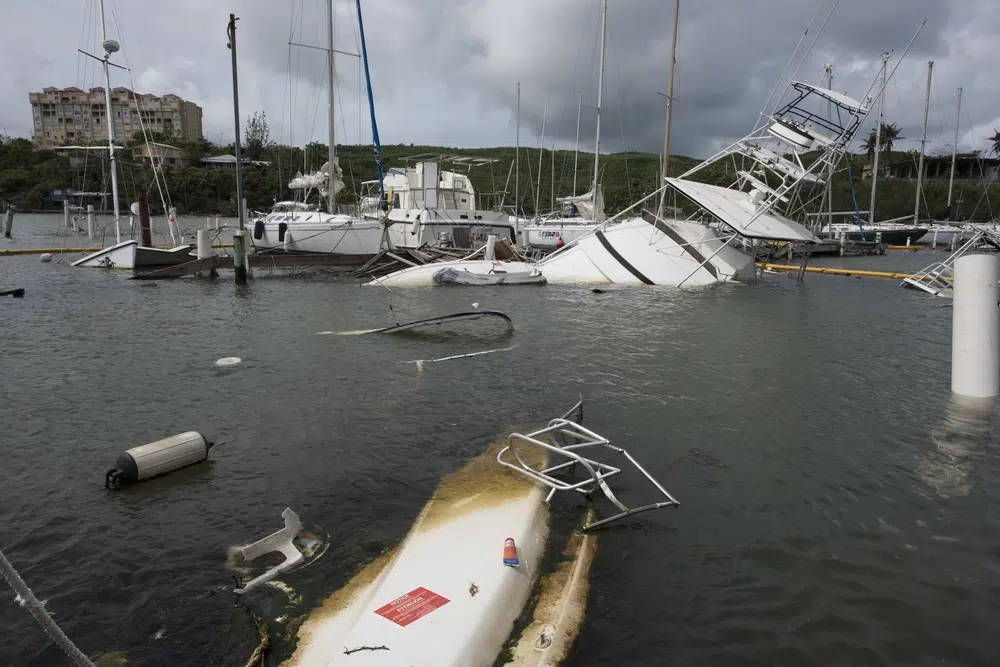
Best Boat Insurance for Florida Boat Owners
A good day on the water can turn expensive fast when a lower unit meets an unmarked obstruction, a storm
You can run offshore in a chop, pick your way through a skinny channel, and still feel your pulse jump when the dock comes into view. That is normal. For most boaters, learning how to dock a boat is less about bravery and more about timing, control, and keeping things simple when the pressure is on.
The good news is docking is a skill you can improve fast once you stop treating it like a test of reflexes. A clean landing usually comes down to three things – slow speed, a clear plan, and knowing what the wind and current are about to do to your boat before you ever touch the throttle.
Most docking mistakes happen before the boat reaches the dock. Boaters come in too fast, change their mind halfway through, or wait too long to get lines and fenders ready. That creates stress for everyone onboard.
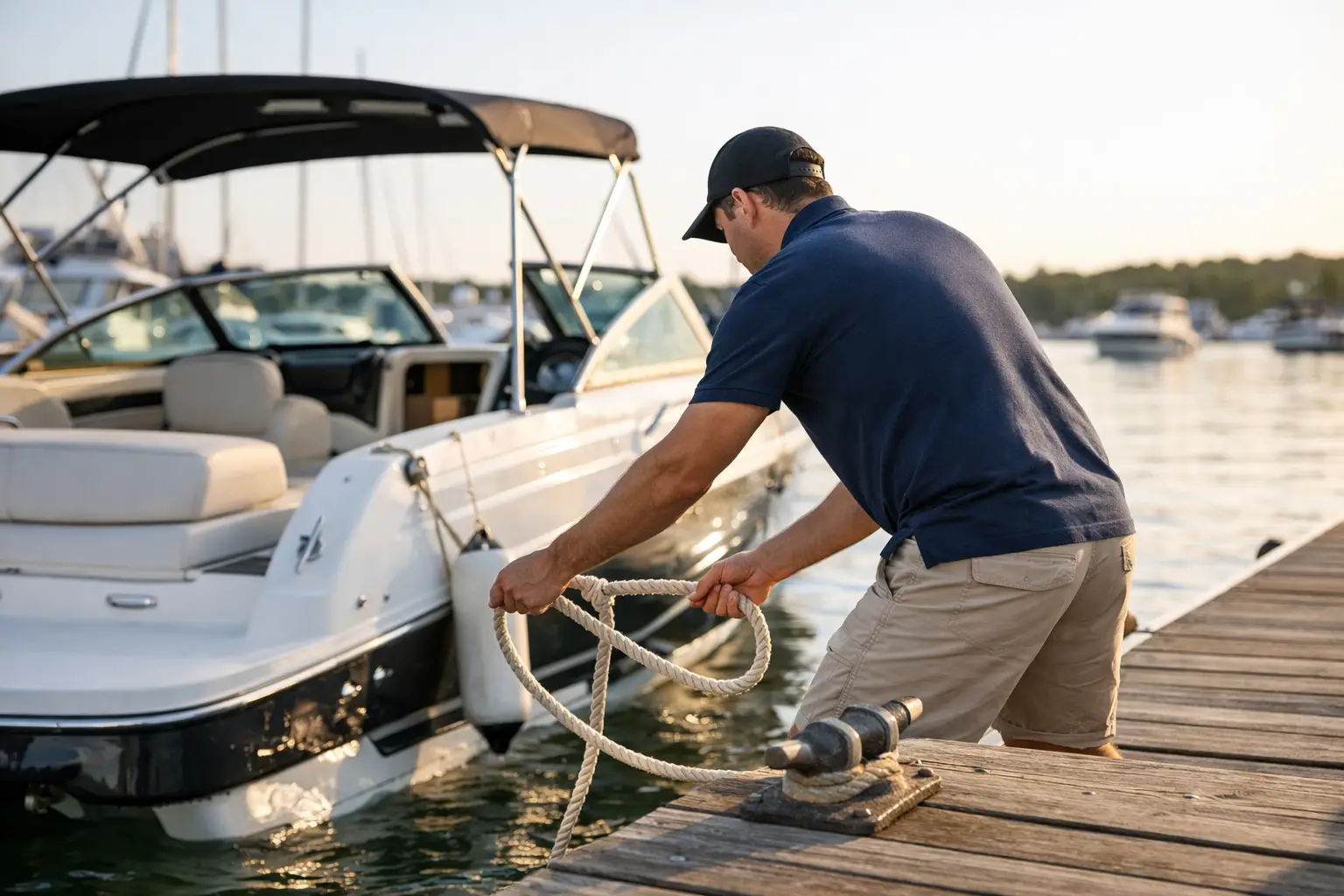
Before your approach, get your boat set up. Put fenders on the side that will meet the dock and hang them at the right height for your hull. Have your dock lines ready, not buried under a seat cushion or wrapped into a knot from last weekend. Decide who handles the bow line, who handles the stern line, and who stays seated and out of the way.
If you have inexperienced passengers, keep their jobs simple. Asking someone to jump to the dock or fend off with hands or feet is how people get hurt. It is far better to tell them, clearly, to wait until the boat is secure and step off only when you say so.
The next step is reading the conditions. Wind and current matter more than many new boaters expect. A light crosswind can push a high-sided center console or pontoon off line in seconds. Current can either help you stop or carry you right past your target. If both are present, the current usually deserves your attention first because it affects the hull below the surface throughout the approach.
Take a slow pass if needed. There is no shame in looking things over before committing.
If there is one rule worth remembering every time you dock, it is this: never approach faster than you are willing to hit. That old saying sticks around because it is true.
Boats do not have brakes. Your control comes from momentum, prop wash, steering response, and short, deliberate shifts in and out of gear. Idle speed is usually all you need. In many cases, less than idle thrust applied in brief bumps is enough to move the boat exactly where it needs to go.
Newer boaters often leave the engine in gear too long. That builds speed, then panic follows, then comes a hard correction. A better habit is to use short bursts. Shift into gear, let the boat respond, then shift back to neutral and evaluate. Those pauses give you time to feel what the boat is doing.
The trade-off is that every hull responds a little differently. A single-engine outboard will not behave exactly like a twin-engine center console, and neither will handle like a sterndrive or trawler. The principle stays the same, though: small inputs, patient timing, and as little speed as possible.
This is where docking turns from basic boat handling into real seamanship. Calm days are forgiving. Windy afternoons at a crowded marina are not.
Whenever possible, approach the force that gives you the most control. Often that means heading into the wind or current, because it slows the boat and makes your movements more predictable. If you can choose between a docking angle that lets the breeze push you gently onto the dock versus one that blows you off it, choose the easier setup and save yourself the drama.
A crosswind deserves respect. If the wind is pushing you away from the dock, you may need a slightly steeper approach angle and a little more power in short bursts to maintain steerage. If it is pushing you toward the dock, the challenge is opposite – less angle, less speed, and a willingness to back out and reset if the boat starts drifting in too quickly.
Current can be even trickier because it is less obvious at first glance. Watch pilings, dock lines in the water, or debris moving past the slips. If current is setting you sideways, account for it early. Waiting until the last boat length is usually too late.
And if the conditions are ugly, remember this: going around is smart boat handling, not embarrassment. Seasoned captains do it all the time.
For a straight-in approach to a slip or alongside a dock, line up early and keep your turns gradual. Come in at idle with the boat under control, not charging in and trying to stop at the last second.
As you near the dock, aim to arrive at a shallow angle, often around 20 to 30 degrees, for coming alongside. That angle gives you room to correct without slamming the hull against the dock. Too steep and you risk hard contact. Too shallow and you may run out of turning room.
Use short shifts into forward or reverse as needed to check momentum. On many boats, a brief bump in reverse is enough to stop forward movement. Once the boat settles, use neutral and let the hull drift the final bit if conditions allow.
If you are docking alongside with wind or current pushing you onto the dock, life gets easier. Let the conditions help you, but stay ahead of them. If they are pushing you off, secure a line quickly once the bow or midship cleat is in range. A properly placed line can do more for control than a lot of last-second throttle.
There is a reason experienced boaters focus on preparation. Good fender placement and smart line handling cover a lot of small approach errors.
Your fenders should protect the boat where contact is most likely, not where they look nice from the dock. On fixed docks, that may mean setting them lower. On floating docks, they can usually ride a bit higher. Check them before you commit to the approach.
When it comes to lines, the first line aboard often matters most. If you can secure a bow line, stern line, or spring line early, you gain control quickly. Which line comes first depends on the setup, your cleat positions, and how wind or current are working on the boat.
Spring lines deserve special mention because they are one of the most useful tools in docking. A spring line can hold the boat from surging forward or aft and let the engine pivot the boat into position. For boaters who only think in terms of bow and stern lines, learning to use spring lines is often the moment docking starts to feel easier.
A lot of docking trouble is self-inflicted. Coming in hot is the big one, but it is not the only one.
Do not ask people to grab pilings with their bare hands or try to stop the boat with their legs. The boat always wins. Do not rely on shouting once the approach begins. Brief your crew before you start, especially if you boat with family or guests who are not used to docking. And do not get so locked into one plan that you force a bad approach to work.
Another common mistake is staring only at the dock. You also need to watch the stern swing, neighboring boats, pilings, and how the bow is reacting to the wind. Docking is not one point of focus. It is situational awareness in a small space.
The best way to get better at docking is to practice on a quiet day when nobody is watching and nothing is at stake. Pick an empty face dock or open area and work on idle control, shifting between forward and reverse, and stopping the boat exactly where you want it.
Practice approaching from both sides. Practice in light wind. Practice backing into a space if your boat and local setup make that useful. The goal is not to become flashy. It is to make the basics automatic, so when the marina is busy and the breeze is up, you are still thinking clearly.
If your boat has trim tabs, joystick control, or a trolling motor with advanced positioning features, learn what they can and cannot do around the dock. Helpful technology is still no substitute for judgment, and some systems create false confidence if the operator has not practiced without them.
For many boaters, especially those running in Florida wind and current around busy ramps and marinas, confidence comes from repetition. Boatsmans was built around that kind of real-world boating mindset – reliable gear, practical know-how, and no nonsense.
Docking never becomes completely automatic because conditions always change. But it does get calmer. The more you slow down, set up early, and let the boat respond before making the next move, the more docking feels like boat handling instead of damage control. Next time you come into the marina, treat it like a measured maneuver, not a last-second save.
Safe Boating,
William B.
A good day on the water can turn expensive fast when a lower unit meets an unmarked obstruction, a storm
A calm morning at the ramp can make any boat look like the right boat. The real difference shows up