
Is Marine Supply Pricing Transparent? A Buyer’s Guide
Marine supply pricing is transparent only when you check the full cost. Our Florida veteran’s checklist shows how to compare the full cost before you buy.
Use code SAVE25 for 25% off!
Discount may not be used for Weems and Path products Dismiss

Many people today think that because they have a cell phone, they will be fine in an emergency. Not true. Once offshore, cell service is spotty at best. A VHF radio can get you help when a cell phone cannot, but only if you know which button to press and which channel to use. VHF radio channels are organized for specific jobs: distress traffic, calling another vessel, weather forecasts, bridge openings, and routine conversation. Treating them all like a party line creates confusion when clear communication matters most.
For Florida boaters, that matters on crowded weekends, during fast-moving summer storms, and anywhere cell coverage fades behind a barrier island or out in the Gulf. A fixed-mount VHF with a properly installed antenna usually delivers better range and reliability than a handheld alone, but the best radio in the world does little good if the operator is on the wrong channel.
Channel 16 is the international distress, safety, and calling channel. Keep your radio tuned to it or use dual-watch/tri-watch so you can monitor it while listening to a working channel. A mayday, pan-pan, or securite call begins here, as do many initial calls to another boat or a marina.
Use Channel 16 for an actual emergency, an urgent situation, a navigational safety announcement, or brief initial contact. Do not carry out a long conversation there. Once the other station answers, move to an agreed-upon working channel.
Use mayday for grave and imminent danger, such as a sinking vessel, fire, or person overboard, when immediate help is needed. Pan-pan is for urgent situations that are serious but not immediately life-threatening, such as a disabled boat drifting toward a hazard. Securite is used to announce important safety information, including navigation hazards. The wording matters because it tells nearby vessels and the Coast Guard how quickly they need to react. DO NOT. DO NOT conduct radio checks on 16.
Channel 9 is widely used for recreational calls. It is often the better choice when you need to reach a friend, another boat in your group, a dock, or a marina without tying up Channel 16. Call briefly, identify your vessel, and ask to switch channels.
For example: “Sea Breeze, Sea Breeze, this is Bluewater at the inlet. Switch and answer six-eight.” That is all the call needs to be. If there is no reply, wait a reasonable amount of time before trying again. Repeated calls clog the channel and can cover someone else’s safety traffic.
Channel 13 is used for bridge-to-bridge navigational communication between vessels, especially commercial traffic. Recreational boaters should monitor it in areas with heavy ship movement, narrow channels, bends, and restricted visibility. A captain moving a large vessel has limited room to maneuver and may use Channel 13 to coordinate a safe passing arrangement. Bridge-to-bridge does not mean physical landmarks. The “Bridge” of one ship to the “Bridge” of another ship.
Do not use Channel 13 for casual conversation. If you are in a small center console, bay boat, or cruiser near tugs, towboats, ferries, or ships, listening can provide a valuable heads-up about traffic you may not yet see.
The Coast Guard often directs non-emergency communications to Channel 22A after initial contact on Channel 16. This may include weather or safety broadcasts, information after an incident, and communications with boaters asked to switch from the distress channel.
You should not call the Coast Guard on Channel 22A unless directed to do so. Start on Channel 16 for distress, urgency, or a safety matter, then follow the instructions you receive. Local practices can differ, so listen before transmitting. They may also use 83A.
Channel 70 is reserved for Digital Selective Calling, or DSC. You do not speak on it. A DSC-equipped radio can send a digital distress alert containing your vessel’s Maritime Mobile Service Identity number and, when connected to GPS, your position. It can also call another equipped vessel directly without broadcasting a voice hail to everyone nearby.
If your VHF has DSC, register for an MMSI, enter it correctly into the radio, and connect the radio to a GPS source if it isn’t already integrated. Test your understanding before an emergency, not during one. The red distress button is a serious tool, not a test feature.
NOAA Weather Radio broadcasts on dedicated marine weather channels, typically labeled WX1 through WX10 or similar. These channels provide marine forecasts, wind and wave conditions, storm warnings, and other hazards. The exact broadcast you receive depends on your location and the transmitter you can reach.
Before clearing the inlet or running a long stretch of open water, listen to the marine forecast. Then check it again if clouds start building, wind direction changes, or your plans keep you out longer than expected. Florida’s afternoon weather can turn a calm ride home into a rough, lightning-filled run in short order.
Recreational boaters commonly use channels such as 68, 69, 71, 72, and 78A for routine ship-to-ship communication after hailing. However, the best working channel varies by harbor, marina, or fishing area. One channel may be busy with a local fleet, while another is quiet. Some channels also have specific restrictions or are assigned differently by region.
That is why a good radio habit is simple: make contact on Channel 9 or 16, agree on a working channel, and move there promptly. Keep the conversation short and professional. Save fishing reports, dock plans, and friendly banter for a clear channel, and remember that anyone within range can hear you.
Channel 6 is also widely recognized for intership safety communications. It can help when vessels need to coordinate immediate maneuvering or assistance, but it isn’t a casual chat channel. In a close-quarters situation, plain language works best: state your boat name, location, direction of travel, and what you intend to do.
Many Florida drawbridges monitor a published VHF channel, commonly Channel 9 or another locally assigned channel. Marinas may do the same. The bridge tender’s signage, local notices, and cruising guides are more reliable than assumptions, because bridge operating procedures and monitored channels can vary.
When calling, use the facility’s name first, then your boat name and a short request. For example: “Hillsboro Inlet Bridge, Hillsboro Inlet Bridge, this is the motor vessel Bluewater southbound, requesting an opening.” Do not call repeatedly while the bridge is opening, and stay clear of the span until you have room and a safe approach.
At a marina, a short call before entering can help you confirm your slip, get dockhand assistance, and learn about fuel dock traffic. Once you’re directed to a working channel, move there and keep Channel 9 or 16 open for other boaters.
Radio etiquette is essential. If you don’t know how to use a VHF radio properly, seek out your nearest Coast Guard Auxiliary flotilla. They can teach you.
Radio technique starts with properly installed and maintained equipment. A fixed-mount VHF should have a quality marine antenna mounted as high and clear as practical, sound wiring, and a protected power connection. Antenna height strongly affects range because VHF communication is largely line-of-sight. A powerful radio cannot overcome a poor antenna installation.
A handheld VHF is an excellent backup, especially if it is waterproof, charged, and stored where you can reach it quickly. It is not always a replacement for a fixed unit, particularly on a larger boat or during an emergency when range is critical. Many prudent boaters carry both.
Before departure, check that the radio receives weather broadcasts, confirm the GPS position appears on the DSC screen (if applicable), and make sure every regular operator aboard knows how to select Channel 16 and send a distress alert. Keep your vessel name, registration or documentation number, location, and emergency contacts readily available. Under stress, simple reference information is worth far more than a vague memory.
At Boatsmans, boaters can find VHF radios, handheld backup units, antennas, GPS and navigation electronics, and the safety gear that belongs alongside them. The right combination depends on your boat, where you run, and how far offshore you travel.
A calm, clear radio call is part of good seamanship. Learn the channels before you cast off, monitor the ones that protect you, and save the chatter for later. When the weather shifts or another boater needs help, that discipline keeps the airwaves open for what matters.
Safe boating,
William B.
Marine supply pricing is transparent only when you check the full cost. Our Florida veteran’s checklist shows how to compare the full cost before you buy.
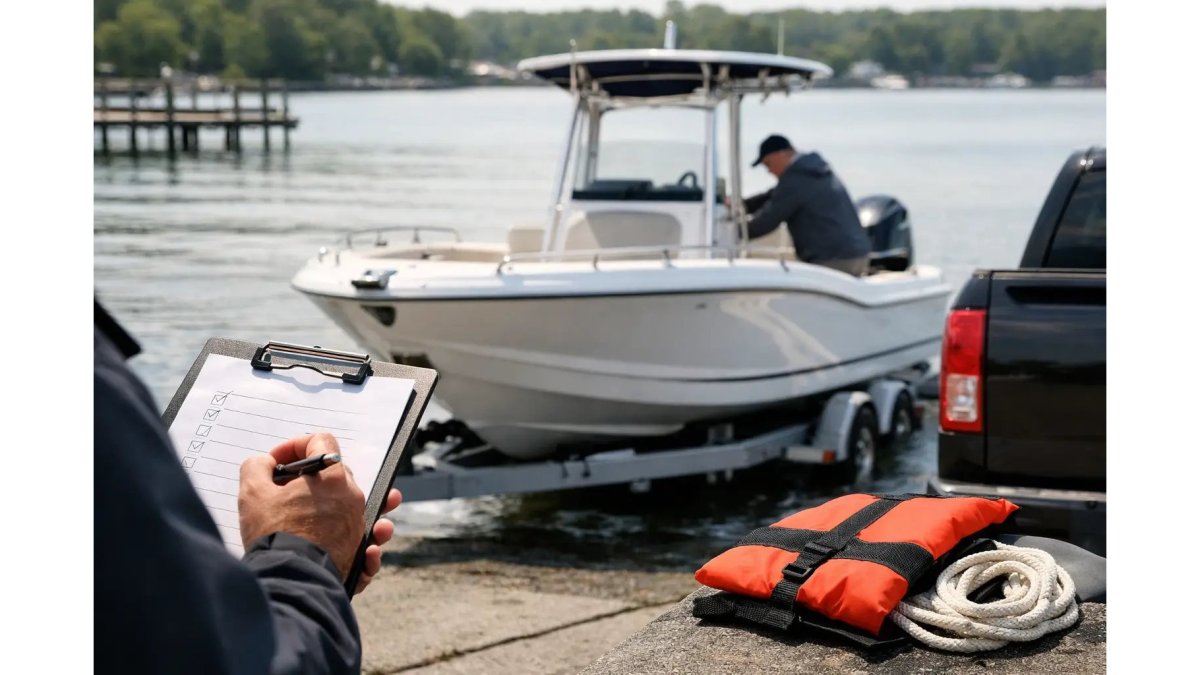
Affordable marine gear for center consoles starts with safety, lighting, and corrosion protection. Compare real prices and find gear that fits your layout.