Is Marine Supply Pricing Transparent? A Buyer’s Guide
Marine supply pricing is transparent only when you check the full cost. Our Florida veteran’s checklist shows how to compare the full cost before you buy.
Use code SAVE25 for 25% off!
Discount may not be used for Weems and Path products Dismiss
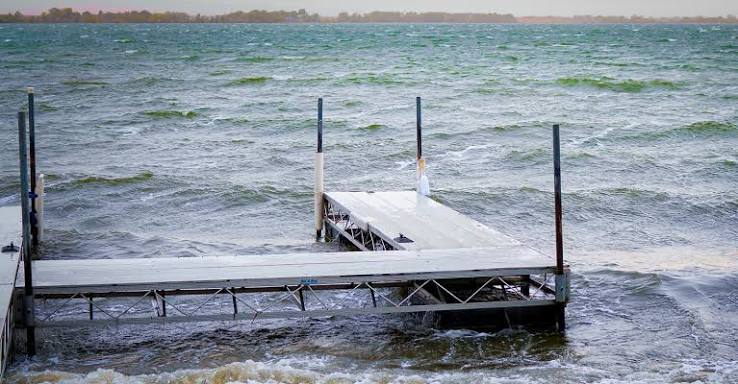
A crosswind can make a familiar slip feel half its size. The key to learning to dock in crosswinds isn’t charging in with more throttle or asking a crewmember to make a heroic leap. It is slowing the situation down, understanding what the wind is doing to your hull, and arriving with a simple plan everyone aboard understands.
Even experienced boaters get humbled at the dock. Wind catches high-sided center consoles, cabin cruisers, T-tops, canvas, and outriggers differently. Add current, a tight fairway, or an audience at the marina, and the pressure can build fast. The good news is that crosswind docking is a skill you can practice deliberately.
Start assessing conditions before you turn toward your slip. Look at flags, dock lines, nearby boat covers, channel markers, and ripples on the water. Those clues show the true wind direction better than a gust hitting you between buildings or boats.
Then separate wind from current. Wind moves the upper works of the boat – the hull above the waterline, console, rails, canvas, and cabin. Current pushes the underwater hull and running gear. In many Florida marinas and coastal canals, current can be just as influential as wind, especially near an inlet or on a strong tide. If the boat reacts in a way that doesn’t match the flags, current may be part of the equation.
Identify whether the wind is pushing you onto the dock or off it. A wind blowing you onto the dock is generally more forgiving because it helps hold the boat alongside once you arrive. A wind blowing you off the dock is the tougher scenario. It may require a more deliberate approach and a spring line to keep the boat from drifting back into the fairway.
Before making the approach, decide where you will abort if it stops looking right. No one wins by forcing a bad landing. A clean circle around the basin is often the smartest move a captain can make.
Most docking problems begin before the boat reaches the slip. Get fenders out early, set at the height of the dock or the likely contact point on a piling. In a crosswind, place an extra fender near the widest part of the boat. A fender does not replace boat handling, but it gives you a margin when a gust changes the plan.
Have dock lines ready, coiled, and knot-free. For most recreational boats, the priority is usually a bow line, stern line, and at least one spring line. If you have crew aboard, assign each person one clear job. “You have the midship line” is useful. “Grab something when we get close” is not.
No one should jump from a moving boat to a dock. No one should try to stop the boat with a hand, foot, or body between the hull and a piling. A boat can be repaired. A broken ankle or crushed hand can end a boating season.
If you are docking alone, simplify further. Pre-rig a line from the midship cleat where you can reach it quickly, and choose a dock cleat or piling you can safely loop. Single-handing in a crosswind takes patience, and there is nothing wrong with waiting for a lull or choosing an easier tie-up when available.
When the wind is pressing the boat toward the dock, use it as an ally. Approach at a shallow angle, often around 20 to 30 degrees, with the bow aimed slightly upwind of where you want to land. Your exact angle depends on the wind strength, your boat’s windage, and the room available.
Come in at dead-slow speed. You need enough way on to maintain steering, but no more. Think of the dock as a place to arrive beside, not a target to hit. As the bow nears the dock, shift to neutral and allow the wind to set the boat gently alongside. You may need a brief bump in gear to control the final few feet, but avoid trying to hold a perfect line with constant throttle corrections.
Once a line is ashore, secure the boat before making the next adjustment. The wind will help keep the hull close, but it can also slide the boat forward or aft along the dock. A spring line controls that movement better than repeatedly bumping the engine.
This is the time to be patient with fenders. Let them do their job while you get proper lines on. Scrambling to pull a fender away too soon is how minor dock contact becomes a gelcoat repair.
A wind blowing off the dock requires more planning because the boat wants to leave the moment you lose momentum. Do not come in parallel and hope the crew can catch a cleat. Instead, approach at enough of an angle to bring the bow or midship area within safe line-handling distance before the wind carries the hull away.
A useful technique is to bring the boat in at roughly 30 to 45 degrees, with the bow aimed toward a point upwind on the dock. As the boat reaches the dock, secure a spring line first, if possible. On many boats, a midship spring line is the most effective line for gaining control because it is near the boat’s pivot point.
Once that spring line is secure, use gentle engine pressure against the line to bring the boat alongside. The details depend on your propulsion setup, dock layout, and which direction the boat is facing. With an outboard or sterndrive, steering angle changes the force substantially. With an inboard, prop walk and rudder response matter. Practice this maneuver in open water or on a quiet dock before relying on it in a crowded marina.
The rule is simple: use the line and engine together, gently. Do not wrap a line around a cleat by hand while it is under load, and never let a line run through your fingers. If your first attempt doesn’t put you in control, back away safely and reset.
Crosswind docking is mostly about managing momentum. A boat moving too fast gives the wind less time to push it, but it also leaves you with less time to correct and more energy to absorb if you touch the dock. A boat moving too slowly may lose steerage and get blown sideways before it reaches the slip.
The answer is controlled momentum: enough speed for steering, followed by short shifts into neutral and small, deliberate bursts of power. Avoid long bursts of throttle. They create more speed than most dock situations can tolerate and make the next correction larger.
Use reverse early when you need to stop. Many operators wait until the bow is nearly at the dock, then apply too much reverse and lose the angle they worked to create. A brief reverse application while you still have room is calmer and more effective.
Your boat will also have its own personality. A single-engine boat may back more willingly in one direction because of prop walk. A twin-engine boat can pivot with differential thrust but still gets pushed sideways by gusts. Bow thrusters are helpful, but they are not a substitute for speed control and line handling. Learn what your boat does at idle in open water, then bring that knowledge to the dock.
Docking gets harder when everyone is talking at once. Before entering the marina, tell your crew the plan in a few plain words: which side is coming alongside, which line goes first, and what to do if you wave off.
Use simple calls such as “neutral,” “line on,” “hold that fender,” and “we’re backing out.” Avoid giving a running commentary that distracts the person at the helm. The captain should be able to focus on wind, motion, gear shifts, and boat traffic.
If a crewmember misses a cleat or cannot safely reach it, say so immediately. There is no shame in backing out and trying again. The safest crews are not the ones that never miss. They are the ones that do not turn a missed line into an emergency.
Pick a quiet weekday, an open section of dock, and moderate wind. Practice approaching and backing away without tying up. Try holding position near a piling, then move away and repeat. Notice how quickly your boat drifts at idle and how much throttle is needed to counter the wind.
It also helps to practice spring-line control with an experienced boater aboard. The technique is valuable, but only when everyone understands where the load is going and keeps hands clear. Good dock lines, properly sized fenders, and dependable cleats make that practice safer and more productive.
Crosswind docking never becomes completely automatic because every marina, tide, boat, and gust is different. But a calm approach, prepared lines, slow speed, and a willingness to go around will handle most situations. The dock will still be there after one more lap, and arriving under control is always the best landing. Remember to use Mother Nature to help you, not hurt you.
Safe Boating,
William B.
Marine supply pricing is transparent only when you check the full cost. Our Florida veteran’s checklist shows how to compare the full cost before you buy.

Affordable marine gear for center consoles starts with safety, lighting, and corrosion protection. Compare real prices and find gear that fits your layout.