
Best Boat Insurance for Florida Boat Owners
A good day on the water can turn expensive fast when a lower unit meets an unmarked obstruction, a storm
A calm morning at the ramp can make any boat look like the right boat. The real difference shows up after a long run through a Florida chop, when it is time to fish the transom, service the engine, or rinse off after a saltwater day. When weighing outboard versus sterndrive engines, the better choice is not about what is objectively best. It is about where you run, how you use the boat, and how hands-on you want to be with maintenance.
For many coastal boaters, outboards have become the default. They are easy to trim up, accessible for service, and well suited to shallow-water use. Sterndrives still earn their place, particularly on certain runabouts, cruisers, and watersports boats where a clean swim platform, quiet ride, and balanced handling matter. Knowing the practical trade-offs before you buy can save you from owning a boat that fights the way you actually spend time on the water.
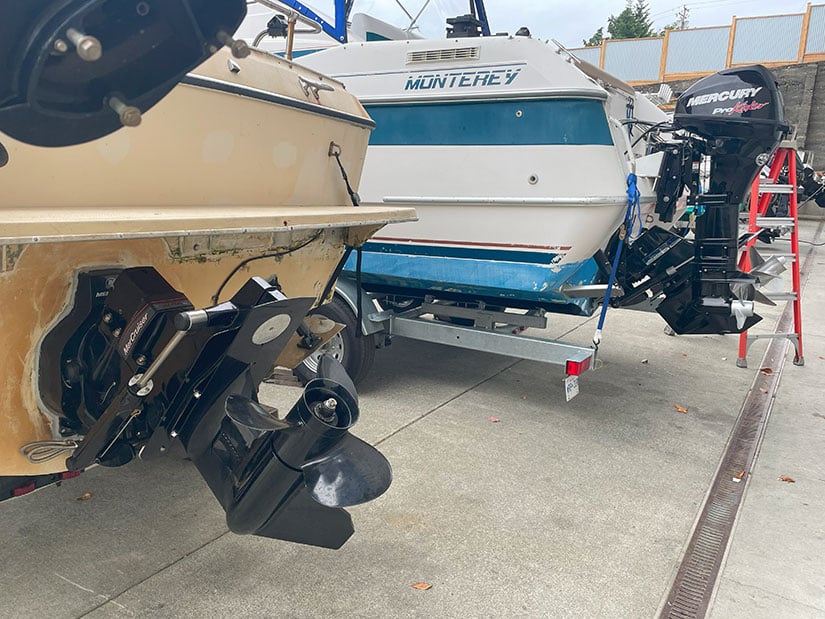
An outboard mounts outside the hull on the transom. The engine, gearcase, and propeller are all one self-contained unit that tilts clear of the water. A sterndrive, sometimes called an inboard/outboard or I/O, places the engine inside the boat and sends power through a drive unit mounted at the transom.
That basic difference affects almost every ownership decision. Outboards leave more usable space inside the boat, provide straightforward access for repowering, and can be raised when the boat is stored or working near skinny water. Sterndrives keep the engine weight lower and farther forward, often giving a larger boat a planted feel and leaving the stern clear for swimming and tow sports.
Neither setup excuses a neglected maintenance schedule. In Florida saltwater especially, clean flushing, corrosion checks, proper anodes, and careful inspection of bellows, hoses, and wiring help protect your investment.
Outboards fit the way many anglers and family boaters use center consoles, bay boats, pontoons, and dual consoles. The biggest advantage is access. Routine checks and many service tasks happen right at the transom, rather than down in an engine compartment. If major work or replacement is needed years down the road, removing an outboard is generally less complicated than pulling an inboard engine from a sterndrive boat.
Trim capability is another major benefit. Lift the engine fully at the dock to keep the lower unit out of the water, an especially practical habit in warm saltwater marinas where growth and corrosion are constant concerns. On a shallow flat or near a sandbar, the ability to trim up can also make the difference between a minor bump and a damaged prop or lower unit. That does not make an outboard invincible, but it gives the operator more options.
Modern four-stroke outboards are also quiet, fuel-efficient, and available in a broad range of horsepower. Multiple outboards provide redundancy on larger offshore boats. For boaters who make longer Gulf or Atlantic runs, having a second engine can offer meaningful peace of mind, though it also doubles certain service costs.
The trade-off is visible stern space. One or more engines occupy the transom, which can limit a full-width swim platform and put machinery right where some families prefer an open boarding area. High-horsepower outboards can also carry a substantial purchase price. On certain boats, especially larger cabin models, multiple outboards may not deliver the same low-speed torque or interior layout benefits as a sterndrive installation.
A sterndrive puts the engine inside the hull, so the boat can have a clear, broad swim platform at the stern. That remains a strong selling point for families who spend their afternoons anchored at a sandbar, swimming, or towing riders. No outboard cowling sits between the kids and the water.
Because the engine sits lower in the boat, sterndrives can lower the center of gravity and deliver a composed ride in certain deep-V runabouts and cruisers. They can also deliver strong torque to get a loaded boat on plane or pull a wakeboarder. The engine is protected from direct sun exposure and, depending on the layout, the boat may have a cleaner exterior profile.
For freshwater boaters or owners who keep a boat on a trailer and stay current with service, a sterndrive can be a very sensible and enjoyable choice. It can also be the right answer if you find a well-maintained used boat with the layout, condition, and price you want.
The catch is that sterndrives demand attention below and behind the boat. The drive remains in the water when the boat is kept in a slip, and saltwater use places extra pressure on corrosion protection. Bellows, gimbal bearings, shift cables, trim systems, and the drive itself require periodic inspection. Access to the engine can be tight, particularly in smaller runabouts where routine work means reaching into a compact compartment.
A sterndrive isn’t automatically expensive to own, and an outboard isn’t automatically cheap. But deferred maintenance on an I/O can quickly become costly. A pre-purchase survey and a qualified engine inspection are particularly valuable when buying a used sterndrive boat.
Maintenance is often the deciding factor for Florida buyers. With either propulsion system, flush according to the engine manufacturer’s guidance after saltwater use, inspect sacrificial anodes, watch for damaged paint or exposed metal, and address small leaks before they become large repairs.
Outboards make daily checks easier. You can see the engine, tilt it up, inspect the prop, and spot fishing line around the prop shaft without crawling into a bilge. Annual service still matters: engine oil and gear lube where applicable, water pump service on schedule, fuel-system checks, and battery connections all deserve attention.
Sterndrives add components that live at the transom and inside the boat. Bellows are critical because they help keep water out where the drive passes through the transom. A cracked or aging bellows is not a part to ignore. The engine compartment also needs dependable ventilation, clean bilge conditions, and regular leak checks. If your boat stays in saltwater year-round, be realistic about the care this arrangement requires.
For a boater who likes to handle basic upkeep, either system is manageable with good habits and the right manuals. For someone who wants the simplest path to routine inspection and service, an outboard usually has the edge.
Your preferred day on the water should steer the decision more than a brochure horsepower number. Serious inshore and offshore anglers often favor outboards because they pair naturally with open decks, easy shallow-water operation, and fishable transoms. They also make sense for owners who trailer regularly and want to raise the engine completely after retrieval.
Family day boaters can go either direction. A dual console with an outboard gives you flexibility for fishing, beach runs, and casual cruising. A sterndrive bowrider can offer a generous swim platform, social seating, and a quiet tow-sports setup. The question is whether that open stern is worth the added systems complexity.
For wakeboarding and waterskiing, sterndrives have historically been common because the propeller sits beneath the boat rather than behind the transom. That positioning reduces the risk of contact around a swim platform, though safe engine-off boarding procedures are still nonnegotiable. Purpose-built inboards are another category entirely and are usually the better fit for dedicated wake sports.
In many coastal markets, outboard-powered boats attract a broad pool of buyers. Their popularity can support resale value, particularly on fishing-oriented hulls. Repowering is also more straightforward in concept: you can remove an old outboard and mount a new engine, assuming the transom, rigging, controls, and horsepower rating are appropriate.
A sterndrive boat can still be an excellent used value. Buyers sometimes overlook them, which may create an opportunity to get more boat for the money. The condition has to justify the deal. Ask for complete service records, check the drive and transom assembly carefully, inspect the engine compartment, and do not skip a sea trial. Watch for shifting, cooling temperature, vibration, steering response, and any signs of water intrusion.
With either type, the hull condition, service history, and the quality of the previous owner’s care matter more than the badge on the engine cover. A well-maintained sterndrive is a better purchase than a poorly maintained outboard, every time.
If you fish coastal Florida, use shallow ramps, keep the boat in a saltwater slip, or want simpler service access, an outboard is usually the practical call. If your boating centers on swimming, towing, freshwater cruising, and a spacious stern platform, a sterndrive may suit your crew better.
Before deciding, picture the boat at the end of a normal Saturday: rinsing it at the ramp, loading guests aboard, navigating the dock, and scheduling its next service. The propulsion system that makes those ordinary moments easier is the one that will keep you boating more often.
Safe boating,
William B.
A good day on the water can turn expensive fast when a lower unit meets an unmarked obstruction, a storm
Trust me. Being on the water with a dead battery absolutely sucks. Even with a jump pack on board, you